
Adverse Drug Events: Definition, Types, and How to Prevent Them

Every year, adverse drug events send over a million people to emergency rooms in the U.S. - and many of these aren’t accidents. They’re preventable. Whether it’s a senior taking too much insulin, a patient on warfarin bleeding internally because their blood test was missed, or someone mixing painkillers with alcohol and ending up in the hospital, these aren’t rare outliers. They’re the result of gaps in how we manage medications - gaps that we now know how to fix.
What Exactly Is an Adverse Drug Event?
An adverse drug event (ADE) isn’t just a side effect. It’s any harm caused by a medication - whether it was used correctly or not. That includes allergic reactions, overdoses, drug interactions, and mistakes in prescribing or giving the drug. The key distinction? An ADE happens when the patient gets hurt. Not just because the drug has a known side effect, but because something went wrong in the process.
The Institute of Medicine first brought this into the spotlight in 2000 with its report To Err is Human, revealing that medication errors alone were killing at least 7,000 people in U.S. hospitals each year. Since then, the data has only grown more alarming. Today, ADEs contribute to 125,000 hospital admissions, 1 million emergency room visits, and 3.5 million doctor’s office visits annually in the U.S. That’s more than diabetes complications or heart failure hospitalizations in some years.
It’s not just about quantity - it’s about preventability. The World Health Organization calls ADEs one of the top global patient safety issues. And here’s the hard truth: nearly half of them shouldn’t have happened at all.
The Five Main Types of Adverse Drug Events
Not all ADEs are the same. Understanding the type helps you know how to stop it.
- Adverse drug reactions (ADRs) - These are harmful responses that happen even when the drug is taken correctly. Think of a rash from penicillin or dizziness from blood pressure meds. About 80% of these are Type A reactions: predictable, dose-related, and often avoidable with better monitoring.
- Medication errors - These are preventable mistakes. A nurse gives the wrong dose. A pharmacist misreads a handwritten script. A doctor prescribes a drug that clashes with another the patient is already taking. These aren’t random glitches - they’re system failures.
- Drug-drug interactions - When two or more medications change how each other works. Warfarin and certain antibiotics? That combo can cause dangerous bleeding. Statins and grapefruit juice? That can spike toxicity levels.
- Drug-food interactions - Food isn’t harmless. Grapefruit, dairy, leafy greens - they all interfere with how drugs are absorbed or broken down. A patient on blood thinners eating large amounts of kale might see their INR levels swing unpredictably.
- Overdoses - Both accidental and intentional. Opioids are the biggest culprit here. In 2021, over 70,000 overdose deaths in the U.S. involved synthetic opioids like fentanyl. Many of these happened because patients didn’t understand the risks or were given too much too soon.
Some ADEs are delayed. Type D reactions - like cancer from long-term use of certain drugs - show up years later. Type E reactions occur when you stop taking a drug too fast, like rebound high blood pressure after abruptly quitting beta-blockers. These are often missed because they don’t show up right away.
The Big Three: Highest-Risk Medications
Not all drugs are equal when it comes to danger. Three classes stand out as the most dangerous - and the most preventable.
Anticoagulants (like warfarin) - These thin the blood to prevent clots, but they’re a tightrope walk. Too little, and you get a stroke. Too much, and you bleed internally. Warfarin alone causes 33% of all anticoagulant-related ADEs. Why? Because it interacts with dozens of other drugs, foods, and even changes in liver function. A 2018 study found that in 35% of outpatient cases, patients’ INR levels - the measure of blood thinning - were outside the safe range. That’s not bad luck. That’s poor monitoring.
Diabetes medications (especially insulin) - Hypoglycemia from insulin is the #1 reason for ADE-related ER visits in people over 65. One in four of these cases happens because the patient doesn’t understand when to take it, how much to take, or what to do when they feel shaky. Many are on multiple diabetes drugs, and their doctors never re-evaluated the regimen as their health changed.
Opioids - From prescription painkillers to illicit fentanyl, opioids are responsible for 40% of all medication-related deaths. The problem isn’t just addiction. It’s dosing. Patients are often given high doses without proper tapering plans. Elderly patients on long-term opioids are especially vulnerable to accidental overdose because their bodies process drugs slower.
These aren’t just “risky drugs.” They’re drugs we know how to manage safely - if we use the right tools and systems.
How to Prevent Adverse Drug Events: Proven Strategies
Prevention isn’t about hoping for the best. It’s about building systems that catch mistakes before they hurt someone.
- Medication reconciliation - When a patient moves from hospital to home, or from one doctor to another, their meds often get lost in translation. A 2020 study showed that formal medication reconciliation - comparing what the patient says they take, what the pharmacy has on file, and what the doctor prescribed - reduces post-discharge ADEs by 47%. That’s nearly half of all preventable harm eliminated with one process.
- Electronic prescribing (e-prescribing) - Handwritten scripts are a relic. They cause 25% of all prescribing errors. E-prescribing cuts those errors by 48%. It flags drug interactions in real time, checks for allergies, and ensures the right dose and frequency are sent directly to the pharmacy.
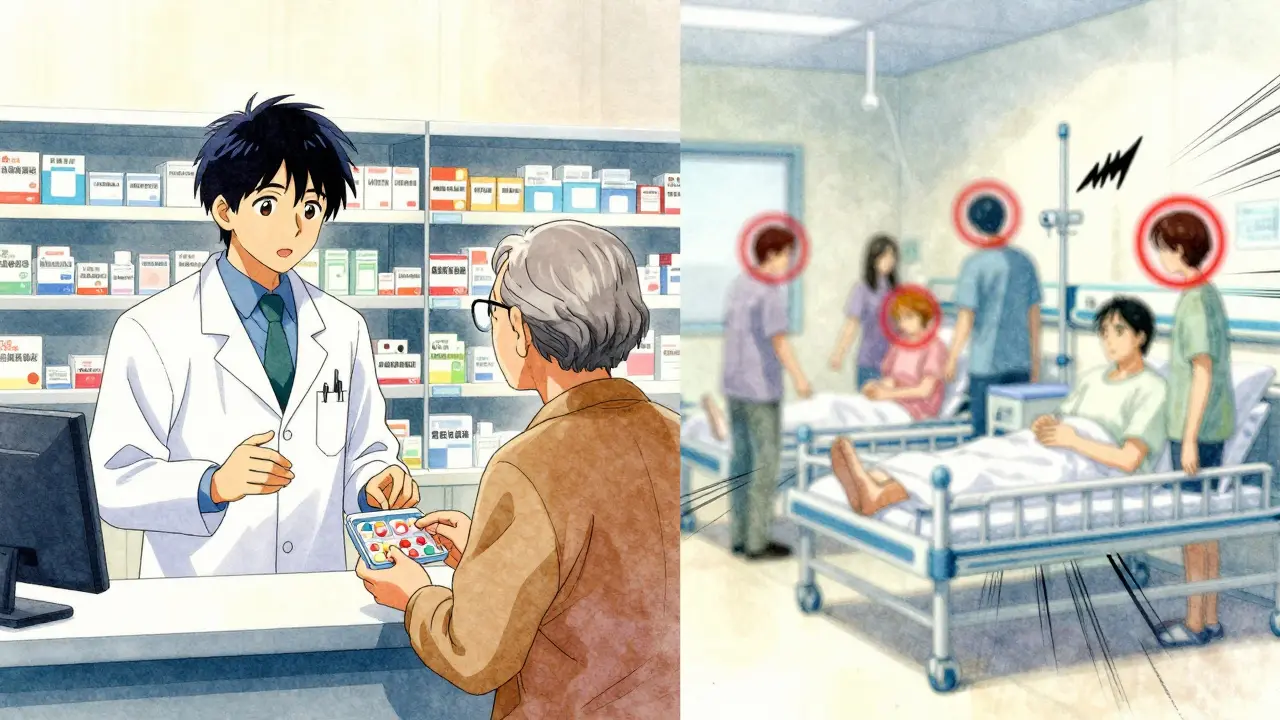
- Pharmacist-led medication therapy management (MTM) - Pharmacists aren’t just dispensers. In VA hospitals, pharmacists review every patient’s full list of meds, catch duplicate prescriptions, spot dangerous combinations, and educate patients. One study found they resolve an average of 4.2 medication problems per patient - and reduce ADEs by 32%.
- Deprescribing - Many older adults take 10 or more pills a day. Some of those drugs are outdated, unnecessary, or even harmful. Anticholinergics, for example, increase dementia risk. The VA’s structured deprescribing protocol cut anticholinergic-related ADEs in seniors by 40%. But here’s the catch: only 15% of primary care doctors routinely screen for these inappropriate meds, even though guidelines have existed for years.
- Technology that predicts risk - AI is no longer science fiction in patient safety. Johns Hopkins ran a pilot using machine learning to analyze 50+ patient variables - age, lab results, current meds, kidney function, even sleep patterns - to predict who was most likely to have an ADE. The result? A 17% drop in events. It’s not magic. It’s math.
- Pharmacogenomic testing - Your genes affect how you respond to drugs. Some people metabolize warfarin slowly. Others need higher doses of clopidogrel to prevent clots. Testing for these variations isn’t common - only 5% of patients get tested today. But by 2027, that number could hit 30%. That could prevent 100,000 ADEs a year.
Why Patients Are Still Getting Hurt
Even with all this knowledge, ADEs keep happening. Why?
First, fragmented care. A patient sees a cardiologist, a rheumatologist, a primary care doctor - each writes their own prescriptions. No one sees the full picture. Second, poor communication. Patients forget what they’re taking. They don’t know why. They don’t ask questions. Third, underused tools. Many clinics have e-prescribing systems but don’t turn on the safety alerts. Others have clinical decision support but ignore the warnings.
And then there’s the human factor. Doctors are rushed. Pharmacists are overloaded. Nurses are stretched thin. We’re asking people to do more with less - and then blaming them when mistakes happen.
The solution isn’t more staff. It’s better systems. Better coordination. Better use of data.
What’s Changing Now - And What’s Next
The U.S. government’s National Action Plan for ADE Prevention, updated in 2023, now includes monitoring for monoclonal antibodies and antipsychotics - two drug classes that have seen a spike in serious reactions. The FDA’s reporting system flagged over 12,000 serious events from these drugs in 2022 alone.
Meanwhile, the WHO’s global campaign, Medication Without Harm, reduced harm by 18% between 2017 and 2022 - close, but not enough. Their goal was 50%. We’re halfway there.
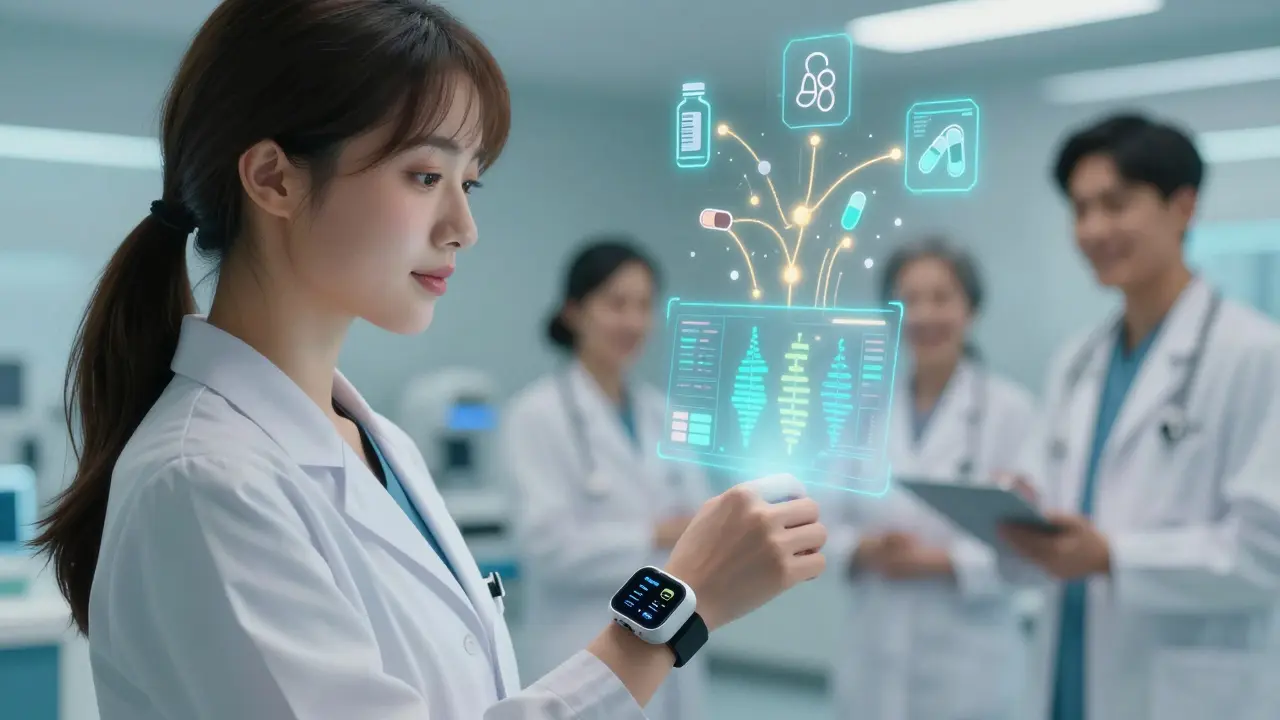
The future is personalized. Pharmacogenomics. AI-driven alerts. Real-time monitoring of blood levels via wearable sensors. Imagine a patient on warfarin getting a text alert: “Your INR is trending low. Skip your dose today and call your clinic.” That’s not fantasy. It’s coming.
But progress won’t happen unless we stop treating ADEs as individual tragedies and start treating them as system failures - and fix the systems.
What You Can Do Right Now
If you or someone you care about is on multiple medications:
- Keep a written list of every drug - including supplements and OTC meds - and update it every time something changes.
- Ask your pharmacist: “Could any of these interact with each other or with my food?”
- Ask your doctor: “Is this still necessary? Could we stop or lower any of these?”
- Know the signs of danger: unusual bruising, confusion, dizziness, nausea, or extreme fatigue - and call your provider immediately if they show up.
- Use one pharmacy for all prescriptions. It lets them track interactions better.
Medication safety isn’t just a hospital issue. It’s a daily practice. And it starts with asking questions - and never assuming the system has your back.
What’s the difference between an adverse drug reaction and an adverse drug event?
An adverse drug reaction (ADR) is a harmful response to a drug taken correctly - like a rash from penicillin. An adverse drug event (ADE) is any harm caused by a drug, whether it was used correctly or not. That includes ADRs, but also medication errors, overdoses, and drug interactions. So all ADRs are ADEs, but not all ADEs are ADRs.
Which drugs cause the most adverse drug events?
The top three are anticoagulants (especially warfarin), diabetes medications (particularly insulin), and opioids. Warfarin causes 33% of anticoagulant-related ADEs due to its narrow safety window and many interactions. Insulin leads to 100,000 ER visits a year from hypoglycemia, mostly in older adults. Opioids caused over 70,000 overdose deaths in 2021, mostly from synthetic opioids like fentanyl.
Can pharmacists really help prevent adverse drug events?
Yes - and they’re one of the most underused tools in patient safety. Pharmacists review all medications, catch duplicates, spot dangerous interactions, and educate patients. In VA hospitals, pharmacist-led medication reviews resolve an average of 4.2 problems per patient and reduce ADEs by 32%. They’re trained to see the full picture - something most doctors don’t have time to do.
Are adverse drug events more common in older adults?
Absolutely. Older adults are more likely to take multiple medications, have slower metabolism, and have conditions like kidney or liver disease that affect drug processing. About 60% of insulin-related hypoglycemia ER visits involve patients over 65. Anticholinergic drugs - which can cause confusion and falls - are still prescribed to seniors despite clear guidelines against it. Deprescribing is critical for this group.
How effective are electronic prescribing systems at preventing ADEs?
E-prescribing cuts prescribing errors by 48%, according to the Agency for Healthcare Research and Quality. It prevents wrong doses, alerts for allergies, blocks dangerous interactions, and ensures the pharmacy gets the exact prescription. But only 45% of U.S. hospitals have fully integrated clinical decision support - meaning many alerts are turned off or ignored. Turning them on is the next big step.
What’s being done to reduce ADEs in the future?
The biggest advances are coming from personalized medicine. Pharmacogenomic testing - checking your genes to see how you’ll respond to drugs - is expected to rise from 5% to 30% adoption by 2027. AI tools that predict individual ADE risk using patient data are already reducing events by 17% in pilot programs. The goal is to move from one-size-fits-all dosing to precision dosing - tailored to your body, your genes, and your lifestyle.


Natasha Sandra
December 25, 2025 AT 07:48Rajni Jain
December 26, 2025 AT 23:22Fabio Raphael
December 27, 2025 AT 09:24Amy Lesleighter (Wales)
December 28, 2025 AT 15:17roger dalomba
December 29, 2025 AT 21:04Nikki Brown
December 31, 2025 AT 11:01Becky Baker
December 31, 2025 AT 16:13Sumler Luu
January 2, 2026 AT 14:00