How to Confirm Pediatric Dosing on a Child’s Prescription Label: A Step-by-Step Safety Guide
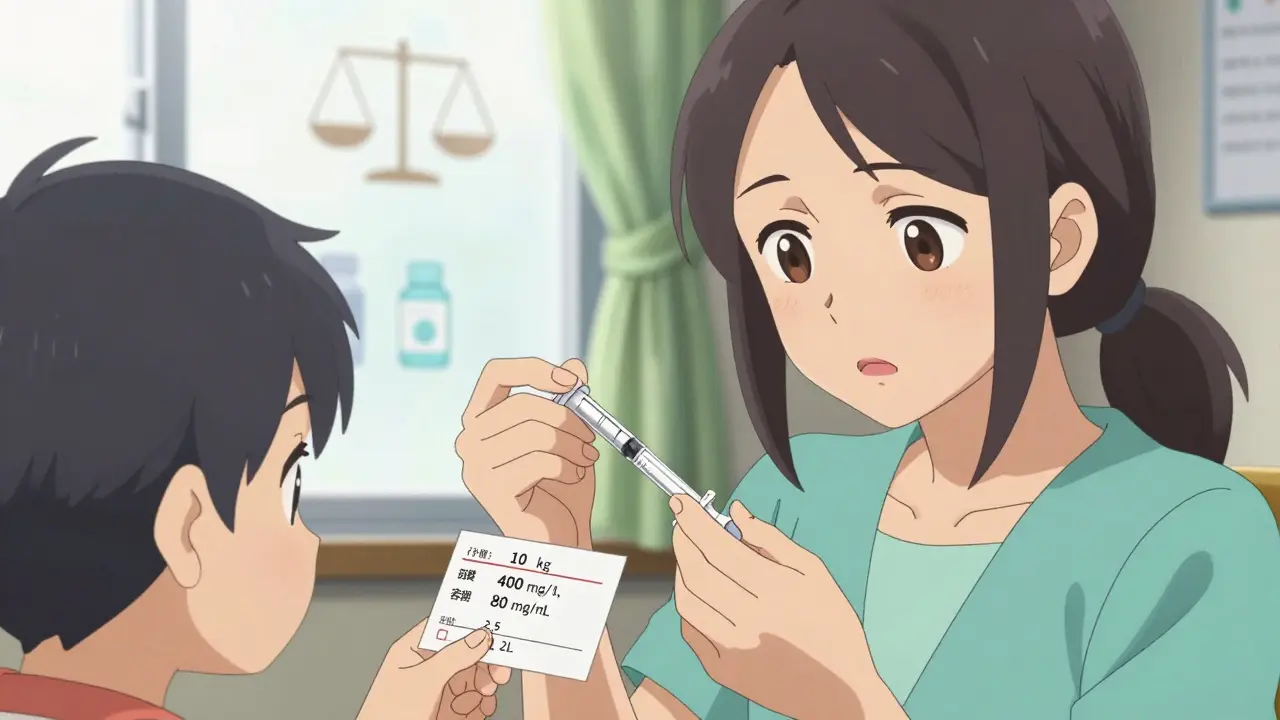
When your child gets a new prescription, the label might say 10 mL - but what does that actually mean for their body? Many parents assume the dose is safe because it came from a doctor. But in pediatric care, the difference between the right dose and a dangerous one can be as small as a fraction of a milliliter. A child’s weight, age, and even the concentration of the liquid matter more than you think. In fact, pediatric dosing errors are the most common type of medication mistake in kids, and most of them are preventable.
Why Pediatric Dosing Is Different
Children aren’t just small adults. Their bodies process medicine differently. A dose that’s safe for a 150-pound teen could be deadly for a 20-pound toddler. That’s why every pediatric prescription must be calculated using the child’s exact weight - not age, not guesswork, not what worked for an older sibling. According to the Institute for Safe Medication Practices, kids are three times more likely to get a medication error than adults. Over half of those errors are dosing mistakes. And the biggest culprit? Confusing volume (milliliters) with amount (milligrams). A label might say “10 mL,” but if you don’t know how many milligrams are in each mL, you have no idea how much medicine your child is getting.What to Look for on the Prescription Label
The label should include four non-negotiable items:- The child’s weight in kilograms (kg)
- The dose in milligrams (mg)
- The concentration of the liquid (e.g., 80 mg/mL)
- The volume to give per dose (e.g., 2.5 mL)
How to Verify the Dose Yourself
You don’t need to be a pharmacist to catch a mistake. Here’s how to double-check:- Find the child’s weight in kg. If the label says “22 lb,” divide by 2.2. That’s 10 kg. Never estimate - use the exact number the doctor recorded.
- Check the dose per kg. Look for something like “40 mg/kg/day.” Multiply that by the child’s weight in kg. For a 10 kg child: 40 × 10 = 400 mg/day.
- Divide by frequency. If it’s given twice a day, divide the daily dose by 2. 400 mg ÷ 2 = 200 mg per dose.
- Match the volume. If the concentration is 80 mg/mL, then 200 mg equals 2.5 mL (200 ÷ 80 = 2.5). The label should show this clearly.
Watch Out for Concentration Confusion
This is where most parents get tripped up. Two different bottles of amoxicillin might both say “amoxicillin,” but one is 80 mg/mL and the other is 40 mg/mL. If you give the same volume from each, you’re giving double the medicine with the stronger version. A 2021 CDC report found that 37.2% of liquid medication errors in children under 2 years came from this exact mistake. Always check the concentration on the bottle. If it’s not clearly printed, ask the pharmacist to write it on the label. Never assume.
Use the Right Measuring Tool
Never use a kitchen spoon. They vary wildly in size - a teaspoon can hold anywhere from 3 mL to 7 mL. Always use the dosing syringe or cup that comes with the medicine. If it’s not included, ask for one. Most pharmacies will give you one for free. Some parents think, “It’s just a little extra,” but in children, even 0.5 mL too much can cause serious side effects. A Reddit parent shared a near-miss story: their 4-year-old’s prescription said “10 mL” - but the doctor meant 200 mg, and the concentration was 80 mg/mL. That meant the correct dose was 2.5 mL, not 10 mL. If the parent hadn’t questioned it, the child would have gotten 2.5 times the intended dose.What Pharmacists Should Do (And What You Can Expect)
Hospitals and pharmacies are required to use dual verification for pediatric doses. That means two trained staff members check the math independently. One calculates using weight in kg, the other uses a different method - like body surface area for chemo drugs. Ask your pharmacist: “Did you verify this dose using the child’s weight?” If they say yes, ask them to show you the calculation. A good pharmacist will be happy to walk you through it. The average verification takes 2.7 minutes per prescription - that’s time they’re spending to keep your child safe.Technology Is Helping - But Don’t Rely on It Alone
Many EHR systems like EPIC and Cerner now have built-in dose-checking tools. They flag doses that are too high or too low based on weight. DoseSpot’s AI tool, approved by the FDA in 2023, cross-references over 15,000 dosing guidelines and has 99.2% accuracy in trials. But technology can still miss things. If the child’s weight is entered wrong in the system, the algorithm will just calculate the wrong dose faster. That’s why human verification - and your own checks - still matter.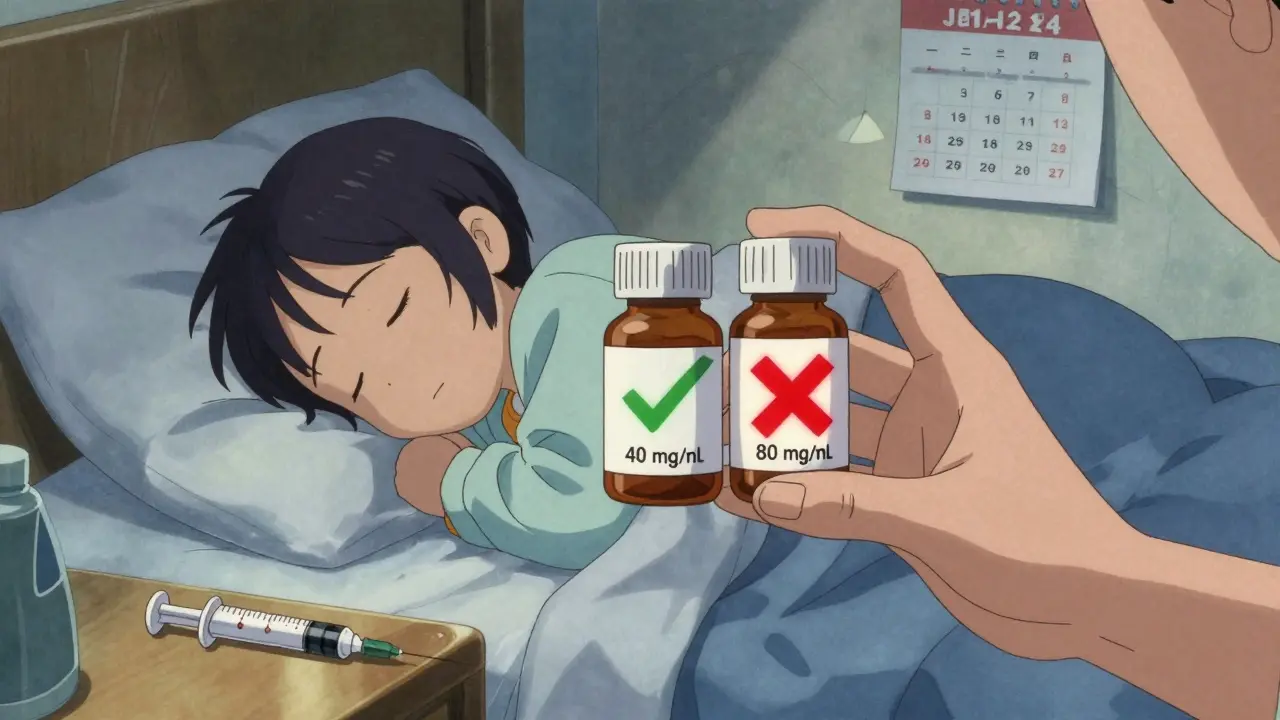
When to Call the Doctor or Pharmacist
Trust your gut. If the dose seems too small or too large, ask. Here are three questions to always ask:- “What is the exact dose in milligrams, not milliliters?”
- “Is this dose appropriate for my child’s current weight?”
- “Can you show me how to measure this dose with the provided device?”
What to Do If You Spot an Error
If you find a mistake - whether it’s the wrong weight, wrong concentration, or wrong volume - don’t just assume it’ll get fixed. Call the pharmacy and the prescribing doctor. Say: “I’ve reviewed the prescription and noticed a possible dosing error. Can we confirm the correct dose?” Most providers will thank you. In fact, the Pennsylvania Patient Safety Authority found that 83% of serious pediatric dosing errors were prevented because a parent or nurse spoke up.Final Reminder: Never Guess
Medicine for children is not a guessing game. Every number on that label has meaning. The weight in kg. The dose in mg. The concentration in mg/mL. The volume in mL. All four must match up. If they don’t, stop. Ask. Verify. Your child’s safety doesn’t depend on the doctor’s handwriting or the pharmacy’s system. It depends on you being informed - and brave enough to ask questions.What should I do if my child’s prescription doesn’t list their weight in kilograms?
Do not fill the prescription. Call the prescribing doctor or pharmacy immediately and ask them to correct the label. As of January 1, 2024, the American Academy of Pediatrics requires all pediatric prescriptions to include the child’s weight in kilograms. Without it, the dose cannot be safely verified.
Is it safe to use a kitchen spoon to measure liquid medicine?
No. Kitchen spoons vary in size and are not accurate. A teaspoon can hold between 3 mL and 7 mL - that’s a 130% difference. Always use the dosing syringe or cup that comes with the medication. If it’s not included, ask the pharmacy for one - they’re required to provide it for free.
Why do some liquid medicines have different concentrations?
Manufacturers make different concentrations for ease of dosing. For example, amoxicillin might come as 40 mg/mL or 80 mg/mL. A higher concentration means less volume to measure - helpful for small doses. But if you switch between them without adjusting the volume, you risk overdosing. Always check the concentration on the bottle and match it to the prescribed dose in milligrams.
Can I trust the dose shown on the pharmacy label if it’s printed by a computer?
Computer systems help, but they’re only as good as the data entered. If the child’s weight is typed in wrong - say, 40 lbs instead of 20 lbs - the system will calculate a dose twice as high. Always verify the weight and dose yourself using the steps in this guide. Technology is a tool, not a replacement for your vigilance.
What should I do if my child accidentally gets the wrong dose?
Call Poison Control immediately at 1-800-222-1222. Do not wait for symptoms. Even if your child seems fine, some medication overdoses take hours to show effects. Keep the medicine bottle and label handy when you call - they’ll need the exact name, concentration, and amount given.