
Hyperglycemia: Recognizing High Blood Sugar Symptoms and What to Do in an Emergency

When your blood sugar climbs above 180 mg/dL, your body starts sending warning signals-some subtle, others impossible to ignore. For people with diabetes, hyperglycemia isn’t just a number on a meter; it’s a red flag that something’s off, and if left unchecked, it can turn life-threatening in hours. You might feel tired, thirsty, or foggy-headed, but those symptoms are easy to brush off as stress, lack of sleep, or a bad day. The truth? By the time you notice them, your blood sugar could already be dangerously high. And if you’re not acting fast, you could be heading toward diabetic ketoacidosis (DKA) or hyperosmolar hyperglycemic state (HHS)-two emergencies that land people in the hospital, sometimes with lasting damage or worse.
What High Blood Sugar Really Feels Like
Early signs of hyperglycemia are simple but easily missed. You’ll notice you’re peeing more than usual-sometimes more than 2.5 liters a day. That’s not just drinking too much coffee; it’s your kidneys trying to flush out excess sugar. Along with that comes intense thirst, often so bad you’re drinking four liters or more of water a day and still not satisfied. Your vision gets blurry-not because you need new glasses, but because high glucose changes the shape of the lens in your eye. And then there’s the fatigue. Not just "I didn’t sleep well" tired. This is the kind that makes climbing stairs feel like scaling a mountain, even if you’ve had eight hours of rest.
As blood sugar rises past 250 mg/dL, things get worse. Headaches become frequent. You struggle to focus at work or forget simple tasks. Unexplained weight loss kicks in-even if you’re eating normally. Your body isn’t using glucose for energy, so it starts breaking down fat and muscle instead. That’s why some people lose 5% or more of their body weight in a few months without trying. These aren’t "normal" side effects of aging or busy schedules. They’re your body screaming for help.
When It Turns Into an Emergency
When blood sugar hits 300 mg/dL or higher, you’re in danger zone. At this point, your body may start producing ketones-acidic chemicals created when fat burns instead of glucose. That’s diabetic ketoacidosis (DKA). It hits fast, especially in type 1 diabetes. You’ll notice a fruity smell on your breath, like nail polish remover. Your breathing becomes deep and rapid, a sign your body is trying to blow off acid. You might have stomach pain, nausea, or vomiting. DKA can lead to coma or death if not treated within hours.
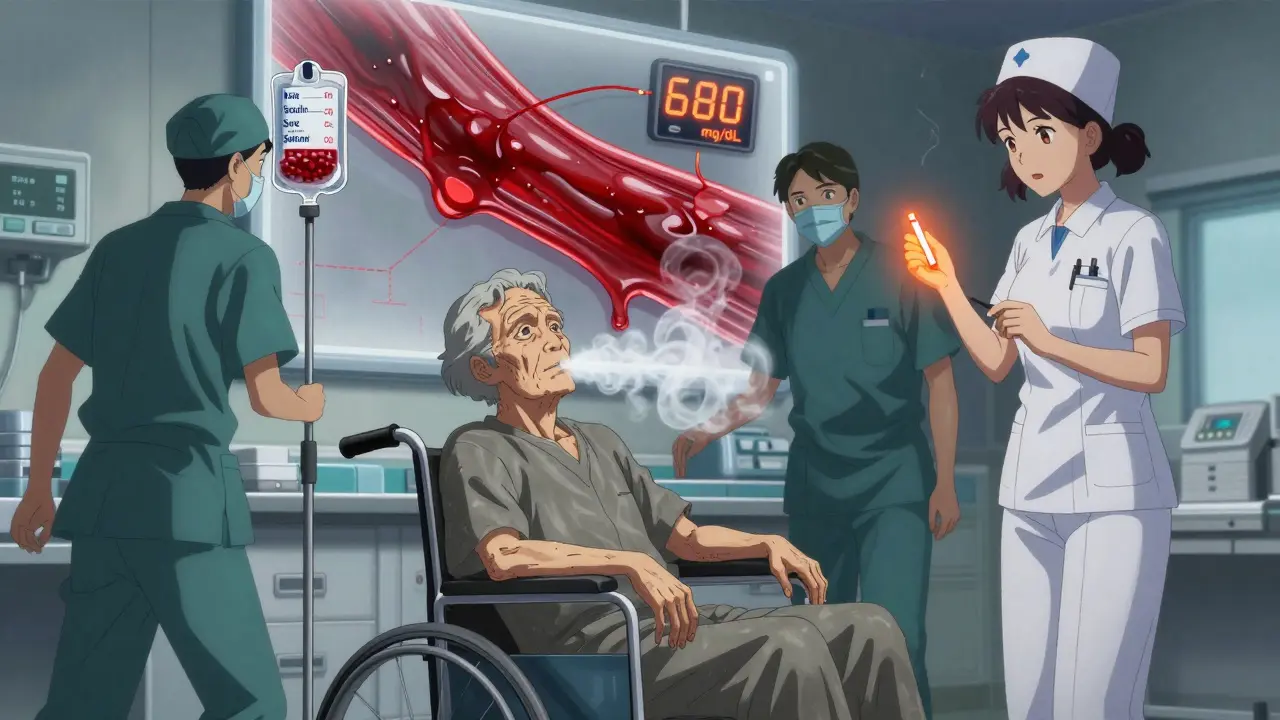
Hyperosmolar hyperglycemic state (HHS) is slower but deadlier. It mostly affects older adults with type 2 diabetes. Blood sugar climbs above 600 mg/dL, and your blood becomes thick and syrupy from dehydration. You feel extremely weak, confused, or even disoriented. Some people can’t stand up. Others slip into a coma. Unlike DKA, HHS doesn’t usually cause ketones or vomiting-but it kills more people. About 15-20% of HHS cases end in death, especially in patients over 65. And here’s the cruel part: many don’t realize they’re in trouble until it’s too late. They think they’re just "getting old" or "coming down with something."
What Triggers a Spike?
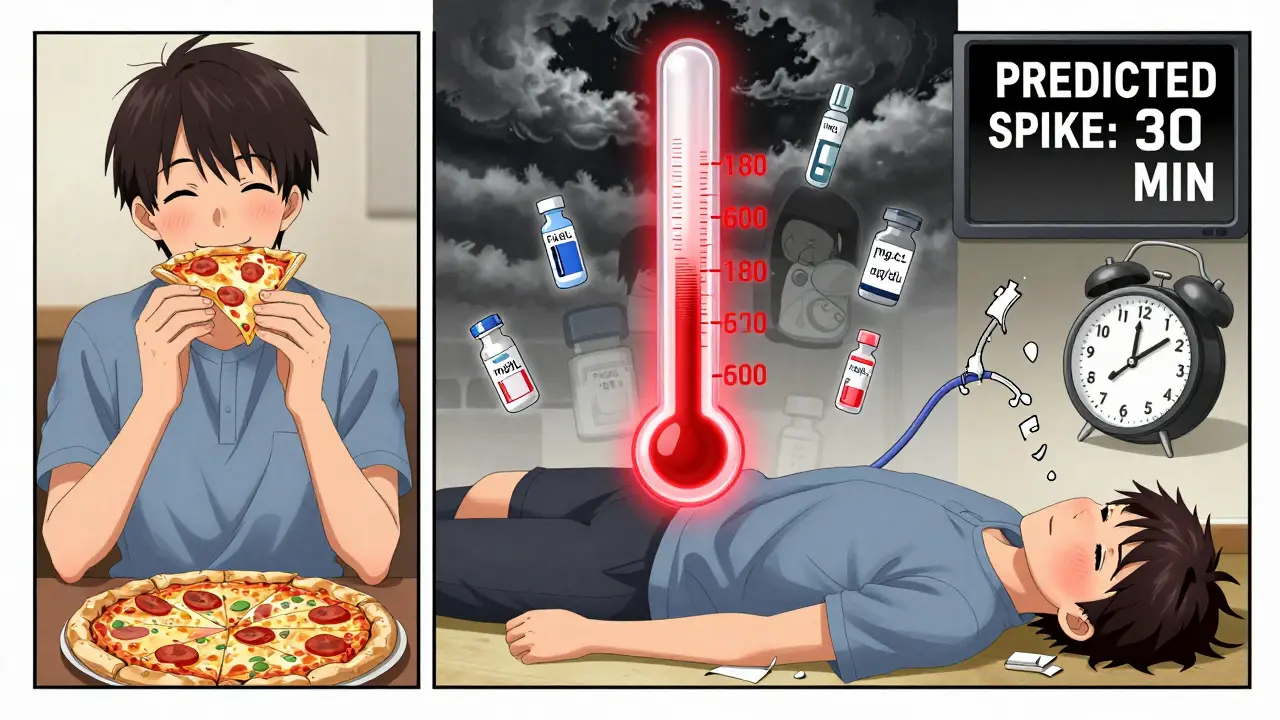
It’s not always about eating too much sugar. Sometimes, it’s something you didn’t expect. Illness is the biggest trigger-cold, flu, infection. When you’re sick, your body releases stress hormones that raise blood sugar, even if you’re not eating. Insulin pump failures happen more often than people admit. A kinked tube or empty reservoir can cause your sugar to climb overnight. Missing insulin doses? That’s common. So is miscounting carbs. One extra slice of pizza or a large soda can push you over the edge.
Stress plays a role too. Emotional stress, like a fight with a loved one or losing a job, can spike glucose. So can certain medications. Steroids, used for arthritis or allergies, can raise blood sugar by 50 to 100 mg/dL. Even some antipsychotics and antidepressants have this effect. And then there’s the "dawn phenomenon"-a natural hormone surge between 4 and 8 a.m. that lifts blood sugar by 30 to 50 points. Many people think their morning high is from eating too much the night before. It’s not. It’s your body’s biology.
What to Do When Blood Sugar Is Too High
If your blood sugar is over 240 mg/dL, don’t wait. Test for ketones right away using a urine strip or blood ketone meter. If ketones are moderate to high, do not exercise. Moving around when ketones are present can make things worse by pushing your body into deeper acidosis.
Drink water. Lots of it. Eight to 16 ounces every hour. Sugar-free fluids only. No soda, juice, or sports drinks-they’ll make it worse. Then, take your insulin correction dose. Most people use 1 unit of rapid-acting insulin for every 10 to 15 grams of carbs they normally eat. But your personal ratio might be different. Ask your doctor to help you calculate it. Never guess.
If you’re using an insulin pump, check for blockages or air bubbles. Replace the infusion set if it’s been in for more than three days. If you’re on injections, make sure you’re using fresh needles and proper technique. Insulin can degrade if left in heat or sunlight. A single bad vial can send your sugar sky-high.
When to Call 911 or Go to the ER
Don’t wait to see if it gets better. Call for help if:
- Your blood sugar stays above 300 mg/dL for more than two checks, 2 hours apart
- You have moderate to large ketones in your urine or blood
- You’re vomiting, confused, or can’t stay awake
- Your breathing is fast and deep
- You have a fruity smell on your breath
- You’re extremely dehydrated-no urine for 8+ hours, dry mouth, sunken eyes
These aren’t "maybe" situations. They’re emergencies. Hospitals treat DKA and HHS with IV fluids, insulin, and electrolyte replacement. The sooner you get there, the better your chances. Delaying care increases the risk of brain swelling, kidney failure, or cardiac arrest.
How to Prevent It Before It Starts
The best way to avoid a hyperglycemic emergency is to catch it early. Continuous glucose monitors (CGMs) are game-changers. They don’t just show your current number-they predict where it’s going. Dexcom’s Glucose Guardian, approved in early 2024, gives you a 30-minute heads-up before your sugar spikes. People using CGMs reduce severe hyperglycemia by 57%, according to the Diabetes Technology Society.
Learn your triggers. Keep a log: what you ate, what meds you took, how you felt, your activity level. Over time, patterns emerge. Maybe your sugar always jumps after pasta. Or every time you skip breakfast. Or after a bad night’s sleep. Knowledge is power.
Get educated. Programs like the CDC’s Diabetes Self-Management Education cut emergency visits by 42%. They teach you how to adjust insulin, read labels, handle illness, and recognize early signs. And don’t ignore mental health. Diabetes distress is real. Feeling overwhelmed, guilty, or hopeless makes you less likely to check your sugar or take insulin. Talk to someone-a counselor, a support group, a friend who gets it.
The Bigger Picture
Hyperglycemia isn’t just a personal problem-it’s a public health crisis. In the U.S., it causes over 1.2 million hospital visits each year. The cost? $327 billion annually. Black patients are 2.3 times more likely to have emergency hyperglycemia than white patients-not because of lifestyle, but because of access. Insulin is still too expensive. Many people ration it. Others skip doses because they can’t afford the test strips.
But there’s hope. Newer insulin formulations, smarter CGMs, and AI-driven alerts are making prevention easier. Medicare now covers CGMs for more people. Hospitals are required to follow standardized glucose protocols. And research is moving fast. The NIH’s $150 million Hyperglycemia Prevention Initiative is testing wearable sensors that detect sugar spikes before they happen.
Still, the most powerful tool remains you. Knowing your numbers. Listening to your body. Acting fast. You don’t need to be perfect. You just need to be aware.
What is considered a dangerously high blood sugar level?
A blood sugar level above 300 mg/dL is considered severe and requires immediate action. Levels above 600 mg/dL can lead to hyperosmolar hyperglycemic state (HHS), a life-threatening condition. For people with type 1 diabetes, readings above 250 mg/dL with ketones present signal diabetic ketoacidosis (DKA), which is also an emergency. These thresholds are based on guidelines from the American Diabetes Association and Mayo Clinic.
Can high blood sugar cause long-term damage even if it’s not an emergency?
Yes. Even moderate, repeated spikes in blood sugar-like staying above 180 mg/dL for weeks or months-damage blood vessels and nerves. This leads to complications like kidney disease, vision loss, nerve pain (neuropathy), heart disease, and poor wound healing. The goal isn’t just to avoid emergencies; it’s to keep average glucose levels as close to normal as possible over time to protect your organs.
Is it safe to exercise when my blood sugar is high?
Only if your blood sugar is high but you have no ketones. If your glucose is over 250 mg/dL and ketones are present, exercise can make things worse by increasing ketone production. Check your ketones with a meter or test strip before moving. If ketones are low or absent, light activity like walking can help lower blood sugar. But if ketones are moderate to high, rest and hydrate instead.
Why does my blood sugar go up when I’m sick?
When you’re sick, your body releases stress hormones like cortisol and adrenaline to fight infection. These hormones tell your liver to dump more glucose into your bloodstream-your body’s way of giving energy to fight illness. But if you have diabetes, your body can’t use that extra sugar properly, so levels rise. That’s why you need to check your sugar more often when sick and adjust insulin as needed, even if you’re not eating much.
Can non-diabetics have hyperglycemia?
Yes. People without diabetes can experience high blood sugar during severe illness, trauma, or after taking certain medications like steroids or antipsychotics. Conditions like Cushing’s syndrome, pancreatitis, or pancreatic cancer can also cause hyperglycemia. In these cases, the body’s ability to produce or respond to insulin is temporarily or permanently impaired. It’s less common than in diabetes, but still possible.
How do I know if I’m having DKA or HHS?
DKA usually happens fast and affects people with type 1 diabetes. You’ll feel sick, vomit, have fruity breath, and breathe deeply and fast. HHS develops slowly over days and is more common in type 2 diabetes, especially older adults. You’ll be extremely dehydrated, confused, weak, and may not vomit. Blood tests are needed to confirm: DKA shows ketones and low blood pH; HHS shows very high glucose, high sodium, and no ketones. If you’re unsure, treat it as an emergency and get medical help.
What’s the best way to prevent recurrent hyperglycemia?
Use a continuous glucose monitor (CGM) to catch trends early. Stick to a consistent meal plan and insulin schedule. Learn your insulin-to-carb ratio and correction factor. Check your blood sugar before bed, after meals, and when you feel off. Keep sick-day rules handy-drink fluids, take insulin even if you’re not eating, and call your doctor if sugar stays high for more than 24 hours. And don’t ignore mental health-burnout leads to skipped doses and higher numbers.
What Comes Next
If you’ve had one high-blood-sugar episode, you’re not alone. But you also shouldn’t wait for the next one. Talk to your doctor about adjusting your insulin plan. Ask about CGM coverage through your insurance. Join a diabetes education class-even one session can change how you manage your health. And if you’re caring for someone with diabetes, learn the signs. You might save their life.
Hyperglycemia doesn’t have to be a surprise. It’s predictable. It’s preventable. And with the right tools and knowledge, you can stay ahead of it-not just survive it.



Bennett Ryynanen
December 31, 2025 AT 17:36Bro, I had a 420 mg/dL reading last week and thought I was dying. Didn’t even realize I was in DKA until my breath smelled like a nail salon exploded. Got rushed to the ER, lost two days of my life, and now I’m on a CGM 24/7. Don’t wait like I did. Your body ain’t lying.
Chandreson Chandreas
January 1, 2026 AT 13:07Life’s weird, huh? One minute you’re just trying to get through the day, next minute your body’s screaming in ketones. 🤯 I used to think high sugar was just ‘bad habits’… turns out it’s your cells begging for mercy. Stay hydrated, check those ketones, and don’t beat yourself up. We’re all just trying not to turn into syrup.
Darren Pearson
January 3, 2026 AT 01:51While the article presents a clinically accurate overview of hyperglycemic emergencies, it lacks a rigorous citation of peer-reviewed guidelines from the ADA’s Standards of Medical Care in Diabetes-2024. Furthermore, the casual tone undermines the gravity of DKA and HHS, potentially leading to misinterpretation among non-clinical audiences. A more formal, evidence-based exposition would better serve public health objectives.
Frank SSS
January 3, 2026 AT 19:48Ugh. Another ‘check your sugar’ post. Like I don’t already know. I’ve been diabetic since I was 12. I know what ketones smell like. I know the ‘fruity breath’ thing. But guess what? My insulin costs $400 a vial and my insurance only covers two. So yeah, I ration. And yeah, I skip doses. And yeah, I’m tired of being guilt-tripped by people who think ‘just check your numbers’ fixes everything.
Meanwhile, my mom’s on Medicare and still can’t afford strips. So don’t lecture me. Just fix the system.
Brady K.
January 5, 2026 AT 08:37Let’s be real-90% of people with diabetes are just lazy. You think your ‘dawn phenomenon’ is some mystical force? Nah. You skipped your basal last night. You ate pizza at midnight. You didn’t adjust for stress. CGMs don’t fix bad habits-they just make you feel guilty while you’re doing it. Stop blaming biology and start owning your choices. Or don’t. Just don’t expect me to feel sorry when your A1C hits 14.
Also, ‘drink water’? Bro, it’s 2024. We know. You’re not the first to say it. Get creative.
Kayla Kliphardt
January 6, 2026 AT 07:26I’m curious-how do you know when to trust your symptoms vs. your meter? Sometimes I feel fine but my CGM’s screaming, and other times I feel awful but the number’s ‘only’ 220. It’s like my body and my tech are speaking different languages.
John Chapman
January 7, 2026 AT 06:34YOU GOT THIS 💪 Seriously. I used to panic every time I hit 250. Now I just grab water, take my correction, and chill. It’s not perfect, but I’m alive. And so are you. Keep going. One test at a time. 🙌
Urvi Patel
January 7, 2026 AT 17:39Why do people still use urine strips when blood ketone meters exist? This is 2024 not 2004. Also why is everyone still using old insulin types? New analogs are cheaper now. Stop being outdated. You’re not helping anyone.