
Common Pharmacist Concerns About Generic Substitution: What They Really Think

Generic substitution isn’t just a paperwork task-it’s a daily balancing act for pharmacists
Every day, pharmacists face a quiet but persistent dilemma: replace a brand-name drug with a cheaper generic version, or hand over the original prescription as written. It sounds simple-same active ingredient, lower price, FDA-approved. But in practice, it’s anything but. Behind the counter, pharmacists aren’t just filling prescriptions. They’re managing patient fears, physician skepticism, and confusing regulations-all while trying to save money without risking health.
Most patients assume generics are just as good. And for the most part, they are. The FDA requires generics to match brand-name drugs in strength, dosage, and how the body absorbs them-within an 80% to 125% range. That’s a tiny difference: on average, only 3.5% in absorption between brand and generic. But patients don’t see numbers. They see a pill that looks different. They feel different. And sometimes, they stop taking it.
Patients don’t trust generics-and pharmacists are stuck explaining why
One of the biggest headaches for pharmacists? Patient mistrust. It’s not just about price. It’s about perception. Many patients believe a cheaper pill must be weaker. Some think generics are made in foreign factories with lower standards. Others worry that changing the shape, color, or size of their pill means it’s not the same medicine.
Studies show that about one-third of patients report negative experiences after switching to a generic. Some say they feel worse. Others notice side effects they never had before. In reality, these changes are often due to inactive ingredients-fillers, dyes, coatings-that differ between brands. But patients don’t know that. They blame the generic.
And here’s the kicker: 64% of patients say their doctor never told them substitution was even an option. That means the pharmacist is the first-and sometimes only-person to explain why a $5 pill can do the same job as a $50 one. Imagine trying to do that in 90 seconds while the line builds behind you.
Chronic disease patients are the hardest to convince
It’s easier to switch someone taking ibuprofen for a headache than someone on epilepsy medication or blood thinners. For drugs with a narrow therapeutic index-where the difference between a helpful dose and a dangerous one is tiny-pharmacists get nervous. Anti-seizure drugs, thyroid meds, warfarin, lithium. These aren’t the kind of pills you want to swap out without serious thought.
Even though the FDA says generics are bioequivalent, some doctors still refuse to allow substitution for these drugs. And some patients, especially those with long-term conditions, have been on the same brand for years. They’re stable. They feel fine. Why change? When a pharmacist tries to switch them, they push back hard. One study found patient acceptance for chronic conditions was only 72%, compared to 82% for short-term illnesses.
And then there’s the mental health angle. Patients with depression, anxiety, or dementia are especially vulnerable to confusion. A change in pill appearance can trigger anxiety, cause missed doses, or lead to outright refusal. Pharmacists in Australia reported spending extra time with these patients-not just explaining, but reassuring, repeating, and sometimes calling the doctor just to get permission to dispense the generic.

Doctors aren’t always on board-and that makes things worse
Doctors know generics save money. Surveys show 87% think it’s economically smart. But only 70% believe it’s clinically safe. That gap is huge. It means when a pharmacist calls to confirm a substitution, the doctor might say, “Just give them the brand.” Or worse, they don’t answer at all.
Some physicians still believe generics are “inferior.” They’ve heard anecdotes. They’ve seen patients report side effects after switching. Even though large-scale studies show no difference in outcomes, those stories stick. And when a doctor doesn’t support substitution, the pharmacist is caught in the middle. They can’t override a prescription. They can’t force a switch. But they also can’t ignore the cost burden on the patient.
The result? A lot of generics sit on the shelf. Patients leave with the more expensive version, even if they can’t afford it. And pharmacists watch it happen-helpless, frustrated, and guilty.
The education gap is real-and it’s falling on pharmacists
Pharmacists are expected to be the experts on generics. But no one trained them to be patient educators, insurance negotiators, and clinical advisors all at once. A survey found that while nearly 80% of patients were told substitution was possible, only 38% were told they could refuse it. Only 52% were told about price differences. That’s not informed consent. That’s an information vacuum.
So pharmacists fill it. They print handouts. They explain FDA standards. They show patients the 3.5% absorption difference. They point out that the same company often makes both the brand and the generic. They talk about how generics are used in hospitals, by the VA, and by Medicare.
But here’s the problem: most of these conversations happen during a 2-minute counseling window. Patients are tired. They’re in pain. They’re worried about bills. They’re not ready to learn pharmacology. And if the pharmacist doesn’t get it right the first time? The patient walks out confused-and may never come back.
State laws vary. That makes everything harder
In some states, pharmacists can substitute without asking. In others, they need written consent. Some require the prescriber to check “do not substitute” on the prescription. Others allow substitution only for certain drug classes. And then there’s the mess of biosimilars-biologic drugs like insulin or rheumatoid arthritis treatments. These aren’t like regular generics. They’re more complex. The FDA hasn’t fully settled how to handle substitutions for them. Pharmacists are left guessing.
One pharmacist in Pittsburgh told me: “I spent 20 minutes on the phone with a patient’s insurance company just to find out if they’d cover the brand because the generic wasn’t on their formulary. Meanwhile, the patient sat there holding a $200 pill they couldn’t afford.”
There’s no national standard. No clear guide. Just a patchwork of rules that change by county. Pharmacists have to memorize them all-or risk legal trouble.
What’s the solution? It’s not just about drugs-it’s about communication
There’s no magic fix. But the best pharmacists have found a few things that work:
- Start early. If the prescriber mentions substitution at the appointment, patients are far more likely to accept it. One study showed acceptance jumped by 40% when doctors talked about it first.
- Be honest. Don’t pretend generics are identical. Say: “The active ingredient is the same, but the filler might be different. That’s why it looks different. Most people feel the same way on it.”
- Give options. Always remind patients they can refuse. Offer to call the doctor if they’re unsure.
- Use data. Show them: “The FDA approved this generic after reviewing over 2,000 studies. It’s used in hospitals across the country.”
- Track outcomes. If a patient reports feeling worse after switching, follow up. It might be coincidence. Or it might be a real reaction. Either way, you’re building trust.
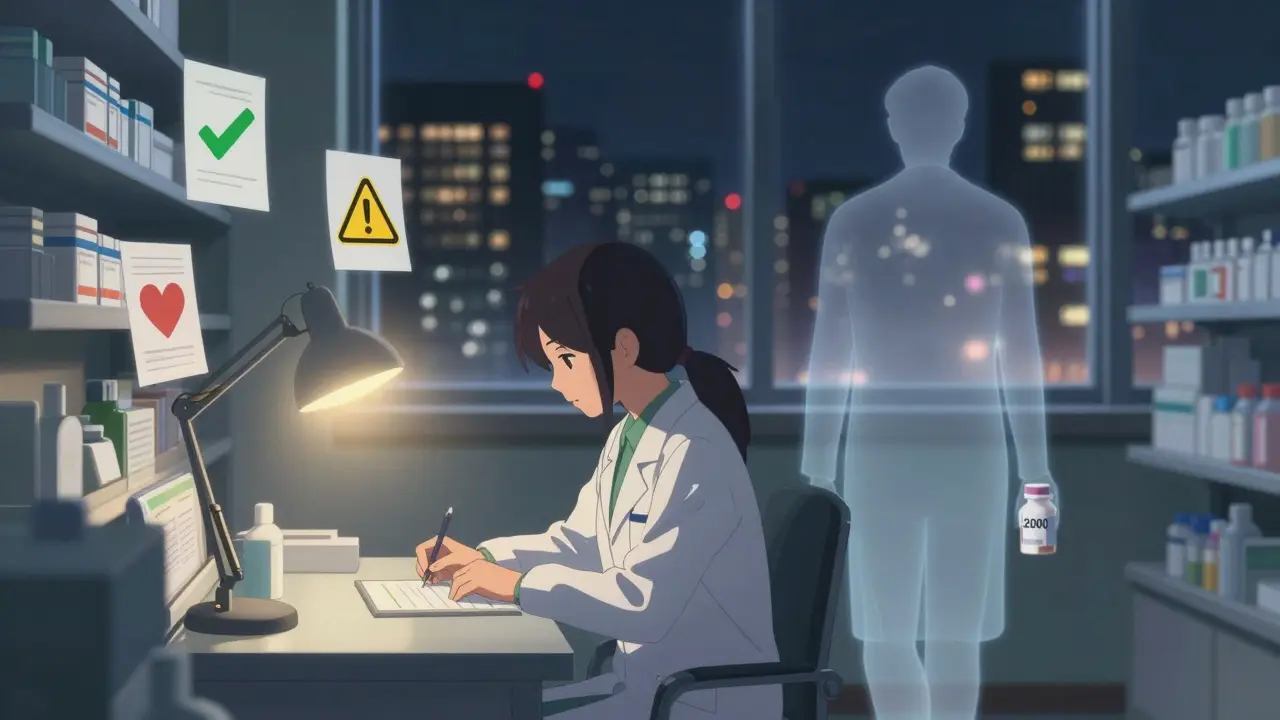
Some pharmacies now use printed cards with simple icons: a green check for “safe to switch,” a yellow warning for “talk to your doctor first.” Others have pharmacists spend 5 extra minutes with high-risk patients-those on multiple meds, elderly, or with mental health conditions. It’s not required. But it makes a difference.
It’s not about saving money. It’s about saving lives
Generic substitution saves patients an average of 21% on their medication costs. That’s thousands of dollars a year for someone on multiple prescriptions. But if a patient stops taking their pill because they’re scared, confused, or think it’s weak? That’s not saving money. That’s costing lives.
Pharmacists know this better than anyone. They see the refill rates drop. They see the ER visits climb. They see the patients who come back saying, “I didn’t feel right after the switch.”
The goal isn’t to push generics. It’s to make sure every patient gets the right medicine-affordable, effective, and understood. That’s the real job. And it’s one no algorithm, no formulary, no price tag can solve alone.
Are generic drugs really as effective as brand-name drugs?
Yes. The FDA requires generics to have the same active ingredient, strength, dosage form, and route of administration as the brand-name drug. They must also be bioequivalent-meaning they’re absorbed into the body at the same rate and to the same extent, within a 3.5% average difference. Over 2,000 studies support this. Most patients experience no difference in effectiveness or side effects.
Why do generic pills look different from brand-name ones?
The appearance-color, shape, size, and markings-isn’t part of the FDA’s bioequivalence requirement. Brand-name companies often trademark the look of their pills. Generic manufacturers must make theirs look different to avoid infringement. But the active ingredient is identical. The difference in appearance doesn’t affect how the drug works.
Can pharmacists substitute any drug with a generic?
Not always. Pharmacists avoid substitution for drugs with a narrow therapeutic index-like warfarin, lithium, or anti-seizure medications-where even small changes in absorption can cause problems. Some states also restrict substitution for these drugs. Additionally, biosimilars (like insulin or biologic treatments) require special handling and aren’t automatically interchangeable like traditional generics.
Can I refuse a generic substitution?
Yes. Federal and state laws give patients the right to refuse a generic substitution and request the brand-name drug instead. Pharmacists are required to inform you of this right, though many don’t. If you’re unsure, ask: “Can I get the brand instead?” You can also ask your doctor to write “dispense as written” or “do not substitute” on the prescription.
Why do some doctors oppose generic substitution?
Some doctors worry about clinical outcomes, especially for complex or chronic conditions. They may have seen patients report side effects after switching-even if studies show no consistent pattern. Others are simply unfamiliar with the latest FDA data or are influenced by outdated beliefs. Many also don’t realize how much patients benefit financially, and they prioritize consistency over cost.
What should I do if I feel worse after switching to a generic?
Don’t stop taking the medication. Contact your pharmacist or doctor right away. You may be reacting to an inactive ingredient, or it could be a coincidence. Your pharmacist can help determine if the issue is related to the switch and may suggest switching back or trying a different generic manufacturer. Keep a symptom journal-timing, dosage, and how you feel-to help your provider make the best decision.




Rob Webber
February 1, 2026 AT 01:18Diksha Srivastava
February 2, 2026 AT 22:58Sidhanth SY
February 4, 2026 AT 21:37Adarsh Uttral
February 5, 2026 AT 07:50Sazzy De
February 6, 2026 AT 01:29Blair Kelly
February 6, 2026 AT 01:44Gaurav Meena
February 6, 2026 AT 12:51Katie and Nathan Milburn
February 7, 2026 AT 01:43kate jones
February 8, 2026 AT 17:11Natasha Plebani
February 8, 2026 AT 21:10Darren Gormley
February 9, 2026 AT 23:10Mike Rose
February 10, 2026 AT 12:30KATHRYN JOHNSON
February 11, 2026 AT 08:11Carolyn Whitehead
February 12, 2026 AT 07:14Amy Insalaco
February 13, 2026 AT 14:44