Cost Savings from Generic Combinations: Individual Generics vs. Combination Products
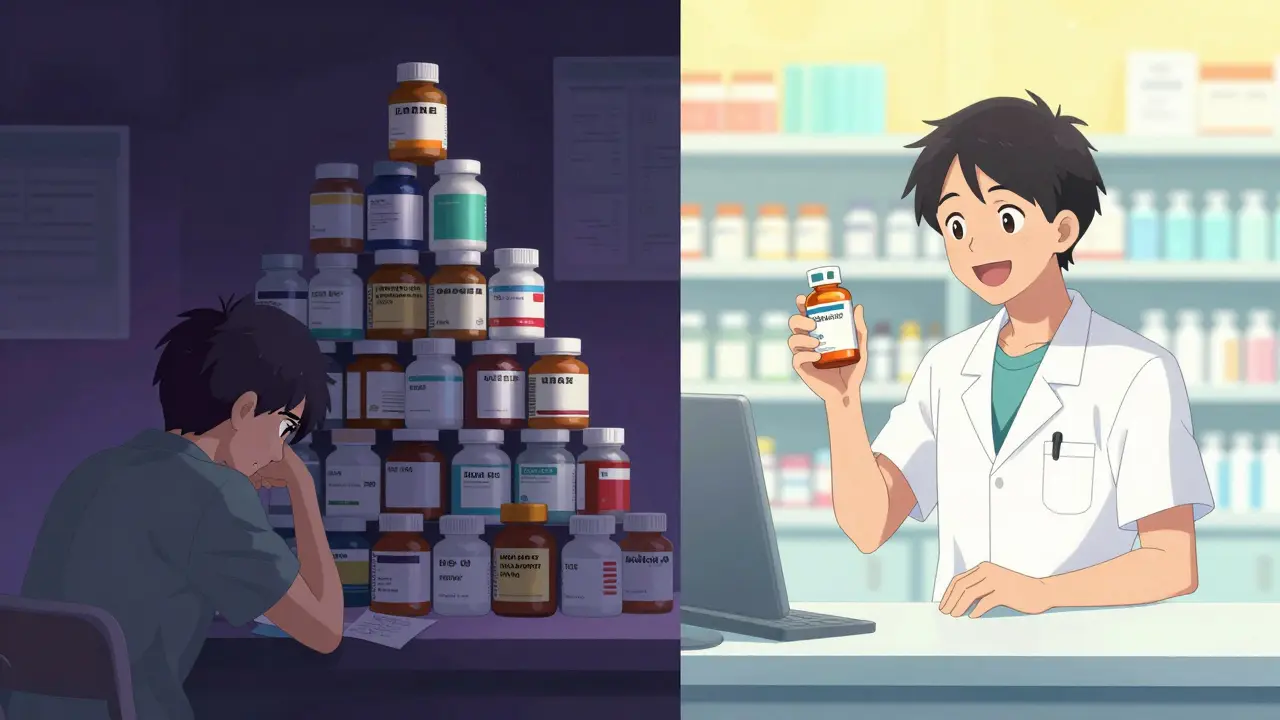
Imagine paying for a medication that costs $7.5 million for a group of patients, only to find out that a different version of the exact same treatment would have cost less than $900,000. That isn't a hypothetical scenario; it's a reality documented in recent healthcare data. Many people assume that once a drug goes "generic," the price is as low as it gets. However, the generic market is surprisingly volatile, and the way a drug is packaged-whether as an individual pill or a generic combinations product-can create a massive gap in what you pay at the pharmacy counter.
The core problem is that not all generics are priced equally. Some remain expensive due to market quirks, while others drop in price rapidly as more companies enter the fray. Understanding the difference between substituting a high-cost generic for a therapeutic alternative and choosing a combination product over multiple individual generics is the key to slashing your healthcare spending without sacrificing clinical results.
The Hidden Cost of "Expensive" Generics
Most patients believe that if a pharmacist says a drug is generic, it's the cheapest option. But research shows this isn't always true. Some generics are associated with disproportionately higher costs despite providing the same clinical benefit as a much cheaper alternative. A study published in JAMA Network Open analyzed Colorado's claims database and found 45 high-cost generics that had therapeutic alternatives with equivalent clinical value. In these cases, the expensive generics were, on average, 15.6 times more costly than their alternatives.
The most surprising part? Over 60% of these savings came from simply switching to a different dosage form or strength of the same drug. For instance, switching to a different dosage form provided an average discount of nearly 95%. This means the active ingredient is the same, but the way it's delivered-perhaps a different milligram strength that you take twice instead of one high-dose pill-can save you a fortune. Therapeutic Substitution is the process of replacing a medication with another drug that is not chemically identical but provides the same therapeutic effect. It is a simple pathway to lower costs for both patients and insurers.
Comparing Individual Generics to Combination Products
A common dilemma in pharmacy is whether to take two separate generic pills or one "combination product" that merges both ingredients into one dose. This is frequently seen in respiratory health. For example, Advair Diskus is a brand-name combination of an inhaled corticosteroid (ICS) and a long-acting beta-agonist (LABA). When a generic alternative like Wixela Inhub a generic version of Advair Diskus entered the market, the financial impact was staggering. The average cost for a single inhaler dropped from $334 to $115, a 65.6% reduction.
While combination products offer convenience and usually a lower price than two separate brand-name drugs, the real savings happen when those combinations also go generic. The introduction of generic ICS/LABA drugs led to an estimated annual cost savings of $941 million in the U.S. alone. If you are taking multiple medications for the same condition, it's worth asking your doctor if a generic combination product exists, as it often reduces the monthly cost and the "pill burden" on the patient.
| Drug Example | Brand/Original Price | Generic Price | Approximate Savings |
|---|---|---|---|
| Crestor Generic | $5.78 per unit | $0.08 per unit | 99% |
| Prilosec Generic | $3.31 per unit | $0.05 per unit | 98% |
| Advair Diskus $\rightarrow$ Wixela Inhub | $334 per inhaler | $115 per inhaler | 65.6% |

Why Some Generics Stay Expensive
You might wonder why some generic drugs don't drop in price immediately. The answer usually lies in market competition. The FDA (Food and Drug Administration) has found a direct correlation between the number of competitors and price declines. When only a few companies make a generic, prices stay high. Once a market hits about three competitors, prices typically drop by 20% within three years. The more companies that enter, the steeper the price crash.
However, "patent thickets" can block this process. Pharmaceutical companies sometimes file dozens of secondary patents on a drug's delivery system or a specific salt form to keep competitors out of the market. This is why you might see one generic drug that is incredibly cheap and another similar one that remains expensive. This is where the Orange Book the official FDA publication listing all approved drug products with therapeutic equivalence evaluations becomes vital. Pharmacists use this to identify "A-rated" generics, which are confirmed to be substitutable and often more affordable.
Real-World Savings: Insurance vs. Out-of-Pocket
Your savings depend heavily on how you pay for your meds. Recent data from the Mark Cuban Cost Plus Drug Company shows that uninsured individuals actually see the highest median savings-about $6.08 per prescription-because they aren't tied to a restrictive insurance formulary. People with private insurance see lower median savings (around $3.69) because their plans often dictate which specific generic must be used.
Interestingly, the distribution of savings is wide. While about 50% of prescriptions see savings under $5, nearly 30% of users save more than $10 per fill. For those with chronic conditions requiring multiple medications, these small per-pill savings compound into thousands of dollars per year. For example, in 2016, the difference between brand-name combination treatments and generic equivalents in rheumatology was estimated at $925 million.

How to Maximize Your Pharmacy Savings
Navigating the generic landscape requires a proactive approach. You can't always rely on the pharmacy to automatically give you the cheapest version if your doctor specified a particular brand or a high-cost generic.
- Ask for Therapeutic Alternatives: Ask your doctor, "Is there a lower-cost therapeutic alternative with the same clinical value?" Sometimes a different strength or a similar drug in the same class is significantly cheaper.
- Check the Combination Option: If you're taking two separate generics for one condition (like blood pressure or asthma), ask if a generic combination pill exists. This can reduce the number of copays you pay.
- Review Your Formulary: If you have insurance, check your plan's formulary quarterly. Insurance companies update their preferred drug lists, and a drug that was expensive last year might now be on a lower tier.
- Compare Out-of-Pocket Prices: For those without insurance, use transparent pricing tools to compare the cost of individual generics versus a combination product.
Are generic combination products as effective as individual generics?
Yes, provided they are approved by the FDA. Combination products are designed to provide the same therapeutic benefit as taking the individual components separately, often with the added benefit of better patient compliance because there are fewer pills to remember.
What is the difference between a generic and a therapeutic alternative?
A generic is chemically identical to the brand-name drug. A therapeutic alternative is a different drug or a different dosage form of the same drug that achieves the same clinical goal but may have a different chemical structure or delivery method.
Why does my insurance make me use a specific generic?
Insurance companies negotiate contracts with Pharmacy Benefit Managers (PBMs) and manufacturers. They create a "formulary" that lists preferred drugs. If you want a different generic that isn't on the preferred list, you may have to pay a higher copay.
Can I switch from individual generics to a combination product without a new prescription?
No. Because a combination product is technically a different drug formulation, it requires a new prescription from your healthcare provider to ensure the dosages are correct and safe for your specific needs.
How can I tell if a generic is "high-cost"?
The best way is to use price comparison tools or ask your pharmacist for the "cash price" versus the insurance price. If the price seems high for a generic, ask the pharmacist if there is a therapeutic alternative available.
Next Steps for Patients and Caregivers
If you are currently managing a chronic condition with multiple medications, start by auditing your current prescriptions. List every drug and its monthly cost. Compare this list against available generic combinations or therapeutic alternatives. If you find a discrepancy, bring the list to your next doctor's appointment and specifically ask for a "therapeutic review" to see if your regimen can be optimized for cost without changing your health outcomes.
For those without insurance, exploring direct-to-consumer pharmacy models can provide a baseline for what a drug should cost. This gives you leverage when discussing options with your provider or insurance company. Remember, the goal isn't just to find the cheapest pill, but to find the most cost-effective way to get the necessary treatment.