
How Comorbidities Increase Drug Side Effects and What You Need to Know

Comorbidity Medication Risk Calculator
How Your Conditions Affect Medication Safety
Your body processes medications differently when you have multiple health conditions. This tool estimates your risk of serious side effects based on the number and types of conditions you have.
When you’re taking medication, you expect it to help. But if you have one or more chronic health conditions, that medication might be doing more harm than good. It’s not just about the drug itself-it’s about how your body, already under stress from other illnesses, reacts to it. People with comorbidities-two or more chronic conditions at once-are three times more likely to have serious side effects from their medications than those without. This isn’t rare. It’s the new normal.
Why Comorbidities Make Drugs More Dangerous
Your body doesn’t handle drugs the same way when you have heart disease, diabetes, kidney problems, or liver damage. These conditions change how your body absorbs, breaks down, and gets rid of medications. For example, if your liver is damaged from years of alcohol use or fatty liver disease, it can’t process drugs like it used to. That means the same dose that’s safe for a healthy person could build up in your system and cause toxicity. The same goes for kidneys-if your glomerular filtration rate (GFR) is low, drugs that are cleared through urine stick around longer, increasing the chance of side effects like dizziness, confusion, or even kidney failure. This isn’t theoretical. In one large study, 66% of all reported adverse drug reactions happened in patients with comorbidities. Only 34% occurred in people with no other health issues. The symptoms weren’t random, either. Weakness showed up in 36% of cases, dizziness in 12%, nausea in 5%, and insomnia in 3%. These aren’t just minor annoyances-they’re signs your body is overwhelmed.Polypharmacy: The Perfect Storm
Most people with multiple chronic conditions are on multiple medications. On average, adults over 65 with three or more conditions take 4 to 6 drugs daily. That’s not unusual-it’s expected. But each additional pill increases the risk of dangerous interactions. In one study of elderly patients, nearly half had at least one major drug-drug interaction. That means two or more of their medications were working against each other in ways that could cause falls, heart rhythm problems, or organ damage. Cancer patients are especially vulnerable. In a group of 100 cancer patients, researchers found 65 different drug interactions. More than one-third were classified as major-potentially life-threatening. And it’s not just the drugs themselves. Conditions like chronic pain often lead to opioid use, which can interact dangerously with antidepressants, sleep aids, or even over-the-counter pain relievers. In fact, 10% of chronic pain patients end up misusing their prescriptions, turning treatment into a new risk.Who’s Most at Risk?
It’s not just age. While older adults are hit hardest-45% of those over 65 are prescribed at least one medication listed as inappropriate for their age group-certain combinations are especially dangerous. Take someone with heart disease and depression. They might be on a beta-blocker, an antidepressant, and a blood thinner. Each of these drugs affects the heart and liver differently. Put them together, and you’ve got a recipe for low blood pressure, bleeding, or even sudden cardiac events. Women over 75 are nearly three times more likely to be given medications on the Beers Criteria list-drugs that are known to be risky for older adults. That’s not because they need them more. It’s because doctors often don’t have the time or tools to untangle the full picture. Substance use disorders add another layer. Up to 93% of people in treatment for alcohol or opioid addiction also smoke. Nicotine changes how the liver breaks down medications, which can make antidepressants, antipsychotics, or even blood pressure pills less effective-or more toxic.How Your Body Changes the Rules
There are two main ways comorbidities increase risk: pharmacokinetics and pharmacodynamics. Pharmacokinetics is about what your body does to the drug. Liver disease can cut your body’s ability to break down medications by 30-50%. Kidney disease slows how fast drugs leave your system. Both mean drugs stick around longer, building up to dangerous levels. Pharmacodynamics is about what the drug does to your body. If you have Parkinson’s, your brain is already sensitive to movement disorders. Add an antipsychotic to treat psychosis, and you’re far more likely to develop severe stiffness or tremors than someone without Parkinson’s. If you have low blood pressure from heart failure, even a small dose of a blood pressure pill can send you into a dangerous drop. The scary part? Most clinical trials exclude people with multiple conditions. That means the safety data for your drug was tested on healthy 30-year-olds-not on someone with diabetes, COPD, and arthritis. So when your doctor says, “This is safe,” they’re relying on incomplete information.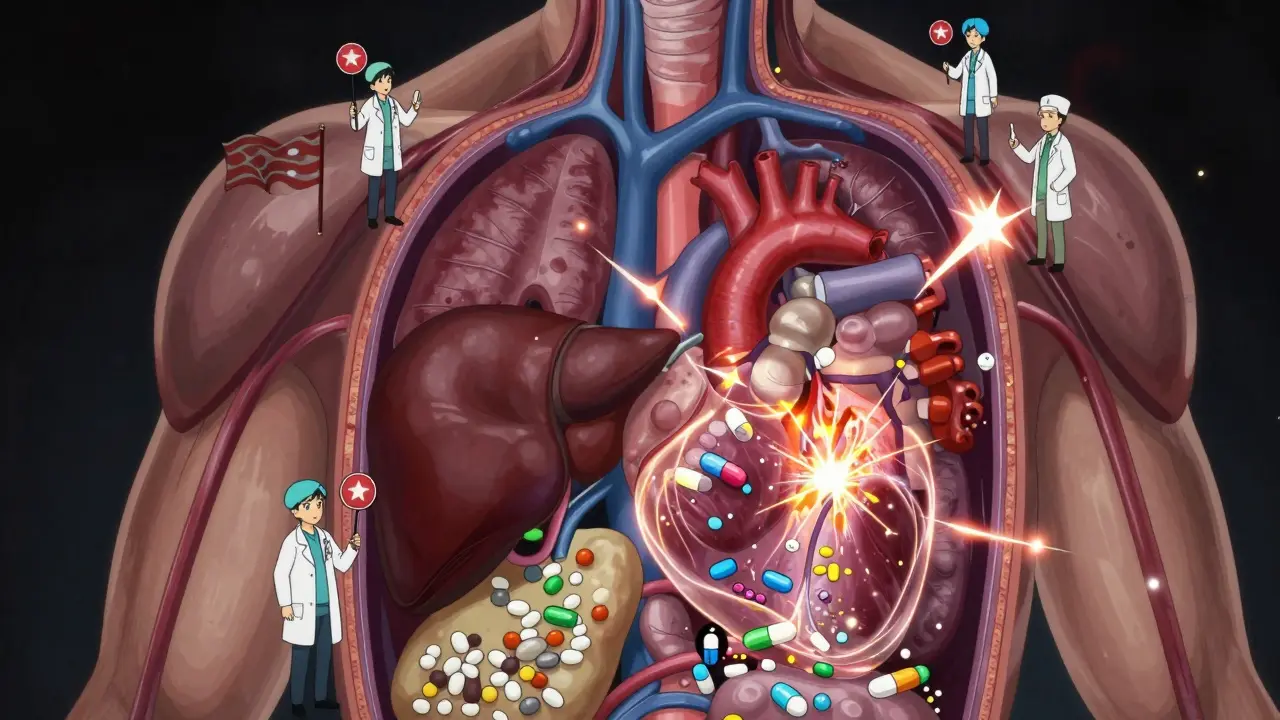
What Happens When Things Go Wrong
Adverse drug reactions don’t just cause discomfort-they send people to the hospital. Patients with three or more chronic conditions are 2.5 times more likely to be admitted because of a bad reaction. In cancer care, drug interactions lead to preventable errors in 30% of cases, adding $1,200 to $2,500 in extra costs per incident. In primary care, 40-60% of medication problems come from managing multiple conditions. The worst offenders? Blood thinners, high blood pressure meds, and psychiatric drugs. These are the ones that need the closest monitoring.What Can Be Done?
There’s good news: we know how to fix this. The most effective step? A full medication review by a clinical pharmacist. In one study, this simple intervention reduced adverse reactions by 22%. Pharmacists don’t just look at your pills-they check for overlaps, outdated prescriptions, and dangerous combinations you might not even know about. Electronic health records with built-in decision support are helping too. Systems like Epic and Cerner now flag when a patient with kidney disease is prescribed a drug that could harm their kidneys. One hospital system saw a 35% drop in inappropriate prescriptions after adding these alerts. Tools like STOPP/START criteria help doctors know when to stop a drug and when to start one. In elderly patients, using these guidelines cut hospital visits for drug reactions by 17%.The Future Is Personalized
The next big leap is personalization. The NIH just launched a new database that pulls data from 12 million patient records to find hidden drug-comorbidity risks. Already, it’s flagged 217 new dangerous combinations. Machine learning is predicting adverse reactions with 89% accuracy-far better than traditional methods. And new tools like the American Medical Association’s 2025 Comorbidity Assessment Tool adjust risk scores in real time based on lab results, blood pressure, and even recent hospital visits. Early trials of genetic and comorbidity-based dosing are showing a 40% drop in side effects. Imagine a future where your medication dose isn’t based on age or weight-but on your specific combination of diseases, liver function, kidney health, and even your genes.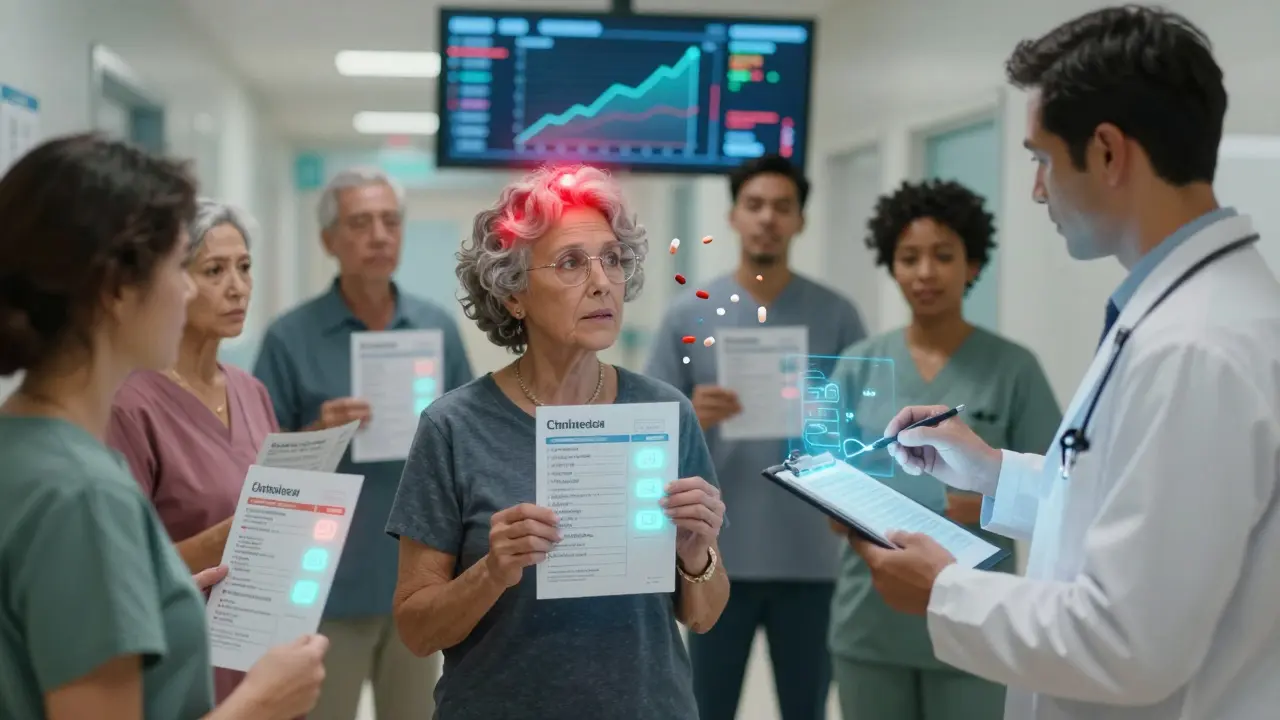
What You Can Do Today
You don’t have to wait for the future to protect yourself.- Keep a written list of every medication, supplement, and herb you take-including dosages and why you take them.
- Ask your doctor or pharmacist: “Could any of these interact with my other conditions?”
- Don’t assume a new prescription is safe just because it’s from a specialist. They may not know what you’re taking for your other conditions.
- Ask if any drugs can be stopped. Many people take pills they no longer need.
- Get your kidney and liver function checked at least once a year if you’re on multiple meds.
Frequently Asked Questions
Can a single chronic condition increase the risk of drug side effects?
Yes. Even one chronic condition like liver disease, kidney impairment, or heart failure can significantly alter how your body handles medications. For example, liver disease can reduce drug metabolism by up to 50%, leading to dangerous buildup in the bloodstream. The same dose that’s safe for a healthy person may cause toxicity in someone with a single organ dysfunction.
Why are older adults more affected by comorbidity-related drug risks?
Older adults are more likely to have multiple chronic conditions and are often prescribed more medications. By age 65, 90% will have at least two chronic illnesses. Their bodies also process drugs more slowly due to reduced liver and kidney function. Plus, they’re often excluded from clinical trials, so safety data doesn’t reflect their real-world risk.
What are the most dangerous drug combinations for people with comorbidities?
The highest-risk combinations include blood thinners (like warfarin) with NSAIDs or antidepressants, beta-blockers with certain diabetes drugs, and antipsychotics with Parkinson’s medications. Opioids combined with benzodiazepines or sleep aids are especially dangerous due to the risk of respiratory depression. These combinations are common in patients with heart disease, depression, chronic pain, or diabetes.
How can I tell if a side effect is from a drug interaction and not just my condition?
Look for timing. Did the symptom start shortly after a new medication was added or a dose changed? If you’ve had dizziness for years but it got worse after starting a new pill, that’s a red flag. Also, if symptoms appear that aren’t typical for your condition-like sudden confusion, unexplained bruising, or severe fatigue-it’s worth investigating drug interactions. Always bring this up with your pharmacist or doctor.
Is it safe to stop a medication if I think it’s causing side effects?
Never stop a medication without talking to your doctor. Some drugs, like blood pressure or seizure medications, can cause dangerous rebound effects if stopped suddenly. Instead, document your symptoms, note when they started, and bring them to your provider. They can help determine if it’s the drug, an interaction, or your condition-and guide you on the safest way to adjust your treatment.


linda permata sari
December 31, 2025 AT 03:46Okay but have you ever tried explaining to your grandma that her 12 pills aren't just 'a little something for everything' and now she's dizzy every time she stands up? I swear, my Nana thinks her blood pressure med is a vitamin. She calls it 'the red one that makes the world stop spinning.' 🤦♀️
Brandon Boyd
January 1, 2026 AT 06:42This is so real. My dad’s on 8 meds for diabetes, heart disease, and depression. Last month he ended up in the ER because his new antidepressant messed with his blood pressure med. The doctor didn’t even know he was taking the OTC sleep aid. We need pharmacists on every care team-not just as an afterthought.
Branden Temew
January 1, 2026 AT 12:00So let me get this straight-we’ve got AI predicting drug reactions with 89% accuracy, but my 78-year-old aunt still gets prescribed a new pill every time she sneezes? The system isn’t broken. It’s intentionally designed to keep the pills flowing. Profit over prognosis. Again.
And don’t get me started on how clinical trials exclude anyone over 65 with more than one condition. We’re not testing drugs on people-we’re testing them on hypotheticals.
Frank SSS
January 2, 2026 AT 06:38Yeah, sure. The system’s broken. But let’s be real-most people don’t even know what their meds are for. I had a coworker who took a blood thinner because ‘it was the blue pill’ and didn’t realize it was for atrial fibrillation. He thought it was a ‘heart health supplement.’
Doctors aren’t evil. They’re just drowning in paperwork. And patients? They’re too tired to ask questions. We’re all just winging it.
Paul Huppert
January 2, 2026 AT 14:31My mom’s on five meds. She keeps a notebook. I printed out the Beers Criteria and highlighted the ones she’s on. We brought it to her appointment. The doctor actually listened. It’s not hard. Just… nobody does it.
Hanna Spittel
January 3, 2026 AT 14:23Big Pharma is hiding this. They don’t want you to know your meds are killing you. They pay doctors. They fund studies. They even control the FDA. 😈💊 #WakeUp
Brady K.
January 3, 2026 AT 16:42Let’s not romanticize the ‘pharmacist review’ as some magic bullet. It’s a band-aid on a hemorrhage. We’re talking about a healthcare system that treats comorbidities like a checklist, not a symphony. You can’t fix polypharmacy with a checklist when the entire model is built on siloed specialists who don’t talk to each other.
And yes, machine learning can predict interactions-but only if the data’s clean. Which it isn’t. Half the records are missing meds, dosages, or even the patient’s actual diagnosis. We’re training AI on garbage. And we wonder why it fails.
Kayla Kliphardt
January 4, 2026 AT 13:44I’ve been reading this whole thing and I’m just… overwhelmed. I have two conditions and I’m already scared to start anything new. Thank you for the list. I’m printing it.
John Chapman
January 5, 2026 AT 11:51THIS. SO. MUCH. 🙌 My uncle died from a drug interaction no one saw coming. He was on warfarin, ibuprofen, and an SSRI. All prescribed by different docs. We need a central hub. Like a drug dashboard. Not a list on a napkin. 💥
Urvi Patel
January 6, 2026 AT 12:54Why are you all so obsessed with pills? In India we treat with herbs and yoga. Western medicine is a scam. Your liver can’t handle all these chemicals. You are poisoning yourselves. Why not just eat turmeric and meditate? 🤷♀️
anggit marga
January 7, 2026 AT 07:08Who even cares about your American drug problems? In Nigeria we don’t have 12 pills a day we have one pill and hope it works. You think you have it bad? We don’t even have the drugs you’re complaining about. Stop being soft
Joy Nickles
January 8, 2026 AT 19:10Okay but did you know that 78% of elderly patients are prescribed at least one drug that’s contraindicated?? I mean, I read this article and then I checked my mom’s meds and she’s on a benzodiazepine AND an NSAID AND an SSRI AND a beta-blocker AND a statin?? And her kidney function is 45?? I’m not even mad, I’m just… shaking? And I’m not even the one taking them??
Emma Hooper
January 10, 2026 AT 03:51My aunt got prescribed a new antidepressant after her hip surgery and suddenly she was hallucinating, talking to her dead husband, and trying to ‘fix’ the TV with a hammer. We found out later the med was flagged for dementia patients. She didn’t even have dementia. Just old. And tired. And alone. The doctor didn’t ask about her meds. Just wrote the script. It’s not negligence. It’s neglect.
Marilyn Ferrera
January 10, 2026 AT 05:07Always ask: ‘Is this still necessary?’ And ‘What happens if I stop?’ These two questions have saved me from three unnecessary prescriptions. You don’t need to take everything they hand you. Your body isn’t a vending machine.
Aaron Bales
January 10, 2026 AT 10:15Biggest takeaway: If you’re on 4+ meds, get a pharmacist to do a med review. Seriously. It’s free through most insurance. And they’ll catch things your doctor missed. I did it for my mom. They found three duplicates and two that were outdated since 2018. One pill was for a condition she’d had surgery for 10 years ago. She stopped it. Her energy improved immediately.
linda permata sari
January 10, 2026 AT 20:47Wait-so you’re telling me my Nana’s ‘red pill’ isn’t just for dizziness? She’s been taking it for 12 years. And now you’re saying it’s the reason she’s confused in the mornings? 😳