
Pain Catastrophizing: CBT Tools to Reduce Distress

What Is Pain Catastrophizing?
Imagine you wake up with a sharp ache in your lower back. Instead of thinking, “This is annoying, but I’ll move carefully and it’ll ease up,” your mind jumps to: “This is going to get worse. I’ll never be able to walk again. My life is over.” That’s pain catastrophizing - not just feeling pain, but drowning in worst-case scenarios about it.
It’s not just being negative. Pain catastrophizing is a real psychological pattern recognized by scientists since the 1990s. Researchers like Dr. Michael Sullivan developed the Pain Catastrophizing Scale (PCS), a tool that measures how much someone tends to ruminate on pain, magnify its threat, or feel helpless. A score above 30 out of 52 means you’re experiencing clinically significant catastrophizing.
This isn’t just in your head. Brain scans show that when you catastrophize, areas linked to emotion and threat detection light up - the same areas that process physical pain. So your fear of pain actually makes the pain feel worse. It’s a feedback loop: pain triggers fear, fear amplifies pain, and the cycle keeps spinning.
Why CBT Works When Other Things Don’t
Medications might dull the pain, but they don’t touch the spiral of thoughts that make it unbearable. Physical therapy helps your body, but not your mind. That’s why CBT - cognitive behavioral therapy - stands out.
A 2023 review by the International Association for the Study of Pain found that when studies focused specifically on reducing pain catastrophizing, CBT was the only treatment that consistently delivered strong results. Its effect size was nearly double that of other therapies. Even better, when CBT was combined with movement and exercise, results jumped even higher.
Why? Because CBT doesn’t try to erase pain. It teaches you to change how you relate to it. You learn to spot the thoughts that make pain feel like a disaster - and replace them with something more realistic. It’s not about pretending everything’s fine. It’s about stopping the mental explosion before it takes over.
Three CBT Tools That Actually Help
CBT isn’t one trick. It’s a toolkit. Here are the three most effective tools used in real-world pain clinics:
- Self-Monitoring - Start by writing down your pain episodes. Not just the intensity (1-10), but what you were thinking right before and during it. Did you think, “This will never end”? “I can’t handle this”? Write it. This simple act breaks the automatic nature of catastrophizing. You start seeing patterns: “Every time I bend over, I think I’m hurting my spine forever.” That’s data - not destiny.
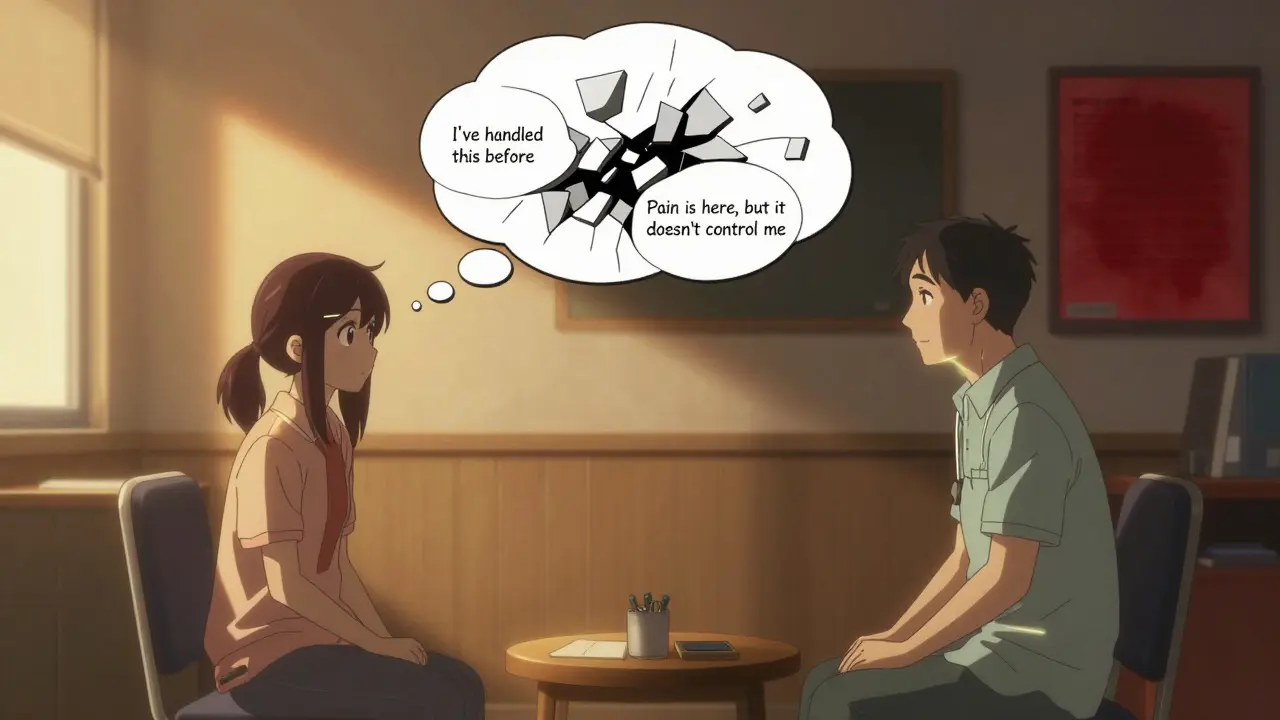
- Cognitive Restructuring - Once you spot a catastrophic thought, challenge it. Ask: “What’s the evidence this is true?” “Has this happened before?” “What’s a more balanced way to see this?” Instead of “My pain means I’m broken,” try “My body is sensitive right now, but I’ve managed flare-ups before.” This isn’t positive thinking. It’s accurate thinking.
- Behavioral Activation - Catastrophizing leads to avoidance. You stop walking, lifting, even getting out of bed because you’re scared it’ll make things worse. But avoidance feeds fear. CBT pushes you to do small, safe activities - even if pain is present. Start with five minutes of walking. Then ten. Each time you do it and survive, your brain learns: “Pain doesn’t mean disaster.”
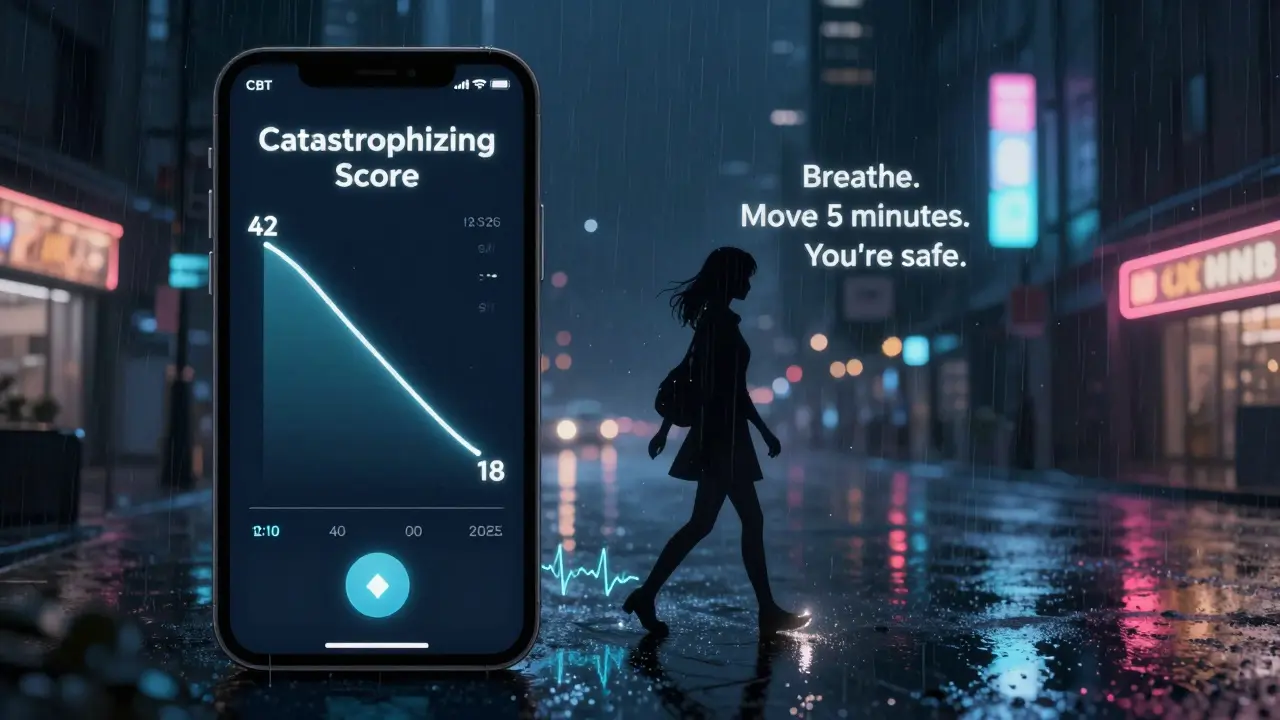
One 45-year-old woman with fibromyalgia went from a PCS score of 42 to 18 in 12 weeks using these tools. Her pain intensity dropped by half. She returned to part-time work. She didn’t become pain-free - but she became free from the fear that made the pain unbearable.
What It Feels Like to Do CBT - Real Stories
People on Reddit’s chronic pain forums say the same thing: “CBT helped me recognize when I’m catastrophizing.” One user wrote: “I used to scream when my knee flared up. Now I say, ‘Okay, this is pain. It’s not a sign I’m dying.’ And I breathe.”
But it’s not easy. Another user said: “When my pain hits 8/10, I don’t have the mental energy to think clearly. All I can do is cry.” That’s real. CBT isn’t a magic fix. It’s a skill. And like any skill, it’s harder when you’re exhausted, stressed, or in high pain.
That’s why most programs run for 8 to 12 weeks. The first few weeks are about noticing. Weeks 4 to 8 are about practicing. By week 10, many people start to feel a shift - not because the pain disappeared, but because they stopped letting it control them.
Who Benefits Most - And Who Might Struggle
CBT works best for people who are willing to look at their thoughts, even when they’re ugly. It helps most when pain is chronic but not caused by a sudden injury or active disease. People with fibromyalgia, lower back pain, arthritis, or nerve pain often see the biggest gains.
But it’s not for everyone. If you’re dealing with severe depression, PTSD, or active substance use, CBT for pain might not be enough. Those issues need their own treatment first. Also, people with little education or who expect quick fixes often drop out. Studies show dropout rates are around 22% - mostly because they think, “This isn’t helping right now.” But the help isn’t in the moment. It’s in the rewiring.
And here’s something surprising: people with at least some college education are 37% more likely to stick with CBT. Not because they’re smarter - but because they’re more used to learning new systems, analyzing patterns, and giving themselves time to improve.
What’s New in CBT for Pain
Technology is making CBT more accessible. Apps like Curable and PainScale now offer guided CBT exercises you can do on your phone. The VA is rolling out a digital dashboard across all its clinics to track catastrophizing scores in real time. By the end of 2024, every veteran with chronic pain will have their PCS score monitored.
Even more exciting: researchers are testing “micro-interventions.” Imagine your phone buzzing when you’re having a flare-up. Instead of a notification to take a pill, it says: “You’re catastrophizing. Breathe. What’s one thing you can do right now that won’t hurt?” These tiny nudges, delivered in the moment, are showing promise in early trials.
But here’s the truth: no app replaces a good therapist. The real magic happens when someone listens, asks the right questions, and helps you see your own patterns. Technology supports. It doesn’t substitute.
How to Get Started
You don’t need a referral to begin. Start here:
- Take the Pain Catastrophizing Scale (it’s free, 13 questions). If your score is above 30, you’re likely catastrophizing.
- Download a pain journal app or use a notebook. Record pain level, thoughts, and actions for 7 days.
- Look for patterns. What triggers your worst thoughts?
- Ask your doctor for a referral to a psychologist trained in CBT for chronic pain. If that’s not available, search for online CBT programs certified by the American Psychological Association.
Don’t wait for the pain to disappear before you start. Start now - even if you’re in pain. Because the goal isn’t to eliminate pain. It’s to stop letting pain control your life.
What to Expect - And What Not To
CBT won’t make your pain vanish. It won’t cure your arthritis. It won’t fix your slipped disc. But it can make the pain feel less overwhelming. Less scary. Less like a sentence.
You might feel frustrated at first. You might think, “This is just talking.” But talking changes your brain. Repeatedly choosing a new thought over a catastrophic one rewires your neural pathways. It’s neuroscience, not wishful thinking.
And if you miss a day? Skip a session? That’s okay. CBT isn’t about perfection. It’s about persistence.
Is pain catastrophizing the same as being anxious about pain?
It’s related, but not the same. Anxiety is a general feeling of worry. Pain catastrophizing is a specific pattern of thoughts focused on pain: ruminating on it, believing it’s worse than it is, and feeling helpless. You can be anxious without catastrophizing, and you can catastrophize without having an anxiety disorder.
Can I do CBT on my own, or do I need a therapist?
You can start on your own with journals, apps, and free online resources. Many people see improvement this way. But for deeper patterns - especially if you’ve been in pain for years - working with a trained CBT therapist gives you accountability, feedback, and personalized strategies that self-help can’t match.
How long until I see results from CBT?
Most people start noticing changes in 4 to 6 weeks. By 8 to 12 weeks, many report feeling less trapped by their pain. The key is consistency - practicing the tools daily, even on good days. Results aren’t about pain disappearing. They’re about your relationship to pain changing.
Does CBT work for acute pain, like after surgery?
CBT is most effective for chronic pain - pain lasting longer than 3 to 6 months. For acute pain, it can help prevent the development of catastrophizing, which reduces the risk of pain becoming chronic. Early intervention is powerful.
If I stop CBT, will the catastrophizing come back?
Like any skill, if you stop practicing, you can lose momentum. But the tools you learn don’t disappear. Once your brain learns to spot catastrophic thoughts and replace them, you can return to them anytime. Think of it like learning to ride a bike - you might wobble at first, but once you’ve got it, you don’t forget.
Final Thought: You’re Not Broken
Pain catastrophizing isn’t weakness. It’s not laziness. It’s not “all in your head.” It’s your brain’s attempt to protect you - even if it’s overprotecting. You didn’t choose this pattern. But you can change it.
Every time you notice a catastrophic thought and choose to pause - even for a breath - you’re taking power back. Not from pain. From fear.
And that’s where real healing begins.



kabir das
January 28, 2026 AT 20:51Kacey Yates
January 29, 2026 AT 03:34ryan Sifontes
January 29, 2026 AT 18:00Eli In
January 29, 2026 AT 19:53Ryan Pagan
January 30, 2026 AT 01:56Paul Adler
January 30, 2026 AT 21:24Andy Steenberge
February 1, 2026 AT 01:36DHARMAN CHELLANI
February 1, 2026 AT 13:38Laura Arnal
February 1, 2026 AT 15:34rajaneesh s rajan
February 2, 2026 AT 16:51Alex Flores Gomez
February 4, 2026 AT 14:40