
Post-Market Studies on Generic Drug Safety: What Happens After FDA Approval

When you pick up a generic pill at the pharmacy, you’re probably thinking about the price-not the science behind it. But here’s the truth: generic drugs don’t go through the same safety trials as brand-name drugs. They’re approved because they’re chemically identical and work the same way in the body. But identical on paper doesn’t always mean identical in real life. That’s why post-market studies on generic drug safety aren’t optional-they’re essential.
Why Generic Drugs Need Extra Monitoring
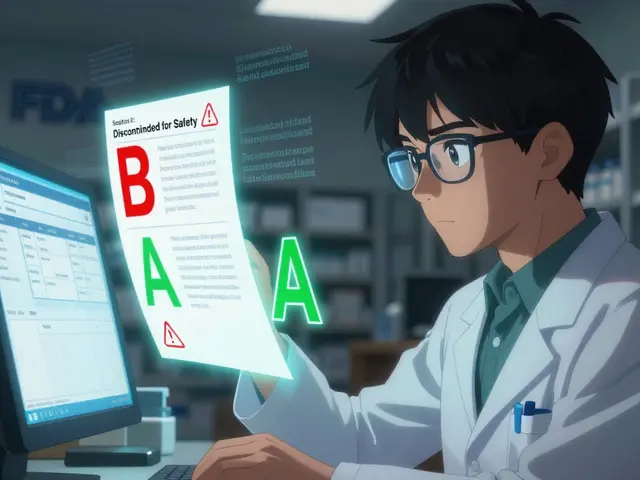
The FDA approves generic drugs based on bioequivalence: they must deliver the same amount of active ingredient into your bloodstream as the brand-name version, within a narrow range. That’s it. No new clinical trials with thousands of patients. No long-term studies on older adults, pregnant women, or kids. The original drug’s safety data is assumed to apply. But reality doesn’t always follow assumptions. In 2022, the FDA recorded 1,247 recalls of generic drugs-78% of all drug recalls that year. Many weren’t about contamination or mislabeling. They were about quality: tablets that didn’t dissolve properly, patches that fell off too soon, liquid meds that formed clumps. These aren’t manufacturing errors you’d catch in a lab. They show up when thousands of people take the drug daily for months or years. A 2021 study in JAMA Internal Medicine found that 68% of serious adverse event reports for cardiovascular generics weren’t listed in the drug’s original labeling. That means doctors didn’t know these risks existed until patients started having problems after switching to a generic version.How the FDA Tracks Problems After Approval
The FDA doesn’t wait for complaints. It uses multiple systems to catch signals early. The Sentinel Initiative, launched in 2008 and fully active by 2016, scans health records from over 300 million Americans. It looks for patterns: Did a spike in heart palpitations happen right after a new generic version of levothyroxine hit the market? Did more hospital visits for nausea follow a change in the manufacturer of a blood pressure pill? Sentinel doesn’t just react-it predicts. Then there’s MedWatch, the FDA’s voluntary reporting system. Doctors, pharmacists, and even patients can report side effects. In 2022, 27% of reports about transdermal patches mentioned they weren’t sticking. Another 23% pointed to inconsistent tablet dissolution. These aren’t rare complaints. They’re red flags. The FDA also uses FAERS-the Adverse Event Reporting System-to mine millions of reports. Algorithms flag unusual clusters: a sudden jump in liver enzyme reports tied to a specific generic version of a cholesterol drug. If the signal is strong enough, the FDA investigates.Who’s Responsible When Something Goes Wrong?
Manufacturers are legally required to report serious adverse events within 15 days. Other issues go into periodic safety reports. But here’s the catch: many patients don’t know which generic manufacturer made their pill. The label might say “Lisinopril 10mg,” but not “Made by Teva” or “Made by Mylan.” That’s a huge problem. If 10 different companies make the same generic drug, and one has a bad batch, the FDA can’t easily isolate it. Only 35% of adverse event reports in 2022 named the specific manufacturer. That makes it like trying to find a single faulty tire in a warehouse of 10,000 identical-looking tires. Dr. Aaron Kesselheim from Harvard put it bluntly: “The fragmented nature of generic manufacturing makes it nearly impossible to pin down the source of a safety issue.” Some companies are trying to fix this. Five major generic manufacturers are testing blockchain systems to track each batch from factory to pharmacy. It’s early, but if it works, it could change how safety data is traced forever.
Real Stories Behind the Numbers
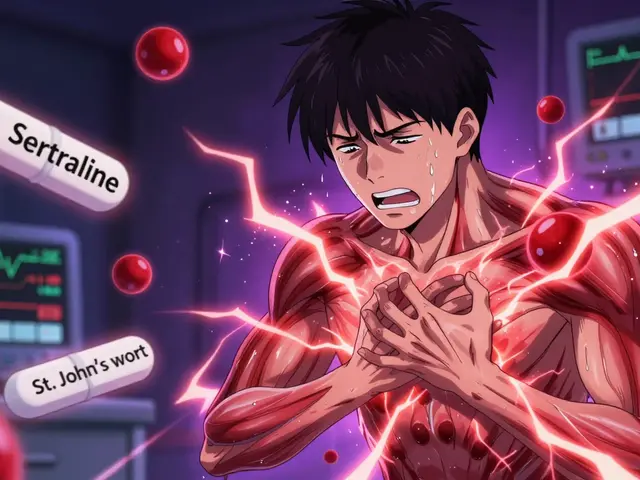
Behind every statistic is a person. One pharmacist in Pittsburgh told me about three patients who developed palpitations after switching from one generic levothyroxine to another. All three had been stable on their original version for years. Their TSH levels suddenly jumped. When they switched back, everything normalized. The new version had the same active ingredient-but different fillers. That’s enough to change how the hormone is absorbed. A Reddit thread from June 2023 had 147 comments from pharmacists and patients describing similar issues: dry mouth, dizziness, fatigue after switching generics. Not everyone had problems. But enough did to raise questions. On the flip side, 89% of patients in a 2023 Kaiser Family Foundation survey said they saw no difference when switching to generics for conditions like hypertension and diabetes. Cost savings kept them on their meds. That’s a win. The truth? Most generics are safe. But a small percentage-often linked to complex formulations like inhalers, injectables, or transdermal patches-carry higher risks.What’s Being Done to Improve Safety
The FDA isn’t standing still. In 2023, it launched GDUFA III, allocating $15 million specifically to boost generic drug surveillance. That’s not just money-it’s people. More inspectors. More data scientists. More focus on complex generics. The agency now requires product-specific surveillance plans for high-risk generics by 2025. That means if you make a generic inhaler with a known history of issues, you’ll need to prove you’re actively watching for problems-not just filing reports after the fact. The Sentinel system’s new “Common Data Model Plus” now includes social factors like income, access to care, and medication adherence. Why? Because safety isn’t just about the drug. It’s about who’s taking it, how often, and whether they can afford to refill. And the FDA is pushing manufacturers to use AI tools. Of the top 20 generic companies, 78% now use automated systems to detect safety signals. Smaller companies? Most still rely on manual reviews. That’s a gap.What You Can Do
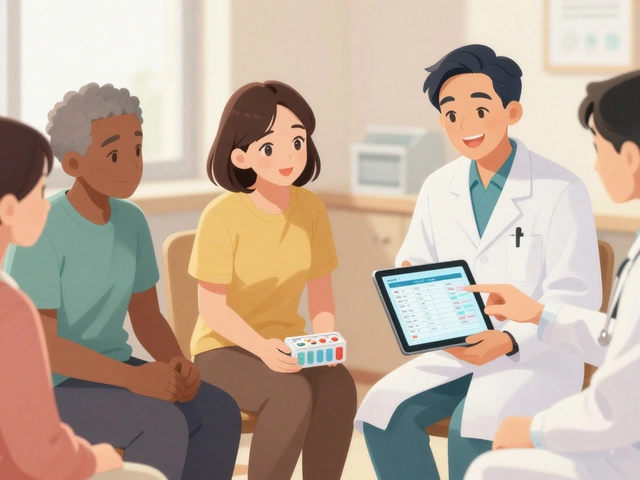
You don’t need to be a scientist to help. Here’s how:- If you notice a change after switching generics-fatigue, dizziness, stomach upset-talk to your doctor. Don’t assume it’s “just in your head.”
- Keep track of the manufacturer name on your prescription. It’s often printed on the bottle. Write it down.
- Report side effects to MedWatch. Even if you’re not sure it’s the drug. The FDA needs all the data.
- Ask your pharmacist: “Is this the same manufacturer as last time?” If not, ask if you can stick with the one that worked before.

The Bigger Picture
Generic drugs save the U.S. healthcare system over $100 billion a year. That’s huge. But safety can’t be an afterthought. The system works-most of the time. But when it fails, it fails hard. The goal isn’t to scare people away from generics. It’s to make sure the safety net is strong enough to catch the problems we can’t predict. The FDA doesn’t have a crystal ball. But with better data, smarter tools, and more transparency, it’s getting closer.Frequently Asked Questions
Are generic drugs less safe than brand-name drugs?
Most generic drugs are just as safe as brand-name versions. The FDA requires them to meet the same standards for strength, purity, and performance. But because they’re not tested in large, long-term trials before approval, rare or delayed side effects may only show up after thousands of people start using them. That’s why post-market surveillance is critical.
Why do some people have different reactions to different generic versions of the same drug?
Generic drugs must contain the same active ingredient, but they can use different inactive ingredients-fillers, binders, coatings. For most people, this doesn’t matter. But for drugs with a narrow therapeutic index-like levothyroxine, warfarin, or seizure meds-even small changes in how the drug is absorbed can cause noticeable effects. That’s why switching between manufacturers can sometimes trigger side effects.
How does the FDA decide which generic drugs to monitor more closely?
The FDA uses a risk-based approach. Complex products-like inhalers, injectables, transdermal patches, and drug-device combinations-are flagged first. So are generics with a history of recalls, reports of inconsistent performance, or those used by vulnerable populations like seniors or children. The more complex the delivery method, the higher the risk of hidden quality issues.
Can I find out which company made my generic drug?
Yes. The manufacturer’s name is usually printed on the prescription bottle or packaging. If it’s not clear, ask your pharmacist. Some pharmacies even provide a list of manufacturers for common generics. Keeping track helps you spot patterns-if you notice side effects only after switching to a specific brand, you can report it and ask to stay on the version that worked.
What should I do if I think a generic drug is causing side effects?
First, don’t stop taking your medication without talking to your doctor. Then, document your symptoms, when they started, and which generic version you were taking. Report it to your doctor and file a report with the FDA through MedWatch. Even one report can help build a pattern. If others have similar experiences, the FDA may investigate.


sue spark
December 16, 2025 AT 19:43My grandma switched to a generic blood pressure med last year and started feeling dizzy all the time. She didn’t say anything until she nearly fell in the shower. We switched her back to the brand and she’s been fine since. I never knew the filler stuff could matter so much.
Tiffany Machelski
December 17, 2025 AT 12:36i just checked my last rx bottle and it says teva on it. i have no idea if thats the same as last time. i think i need to start writing this stuff down before i forget.
SHAMSHEER SHAIKH
December 18, 2025 AT 17:44It is imperative to underscore, with the utmost gravity, that the regulatory framework governing generic pharmaceuticals in the United States remains fundamentally inadequate to address the nuanced pharmacokinetic variations inherent in complex drug delivery systems. The absence of longitudinal, population-specific clinical trials prior to market authorization constitutes a systemic vulnerability, particularly for geriatric and pediatric populations who are disproportionately affected by bioequivalence deviations. The Sentinel Initiative, while commendable, remains reactive rather than proactive, and must be augmented with mandatory real-time pharmacovigilance protocols by all manufacturers.
anthony epps
December 20, 2025 AT 13:46so like, if i switch generics and feel weird, should i just go back to the one i had before? seems simple enough.
Aditya Kumar
December 21, 2025 AT 11:22why are we even talking about this. generics work fine for most people. stop overthinking it.
Randolph Rickman
December 22, 2025 AT 10:34This is exactly why we need better tracking. I work in a clinic and I’ve seen patients get misdiagnosed because their symptoms were blamed on their condition when it was actually the new generic they got last month. If you’re on a med with a narrow window-like thyroid or seizure meds-don’t just accept a switch. Ask for the brand name. Your life might depend on it.
James Rayner
December 24, 2025 AT 06:56It’s strange how we trust pills so blindly. We don’t question the engine in our car unless it sputters, but we swallow chemicals every day without knowing who made them or what’s in the coating. Maybe safety isn’t about regulation-it’s about awareness. If we stopped treating medicine like a commodity and started treating it like a relationship, maybe we’d notice when something feels off before it breaks.
Josias Ariel Mahlangu
December 26, 2025 AT 01:29People who complain about generics are just lazy. If you can’t afford the brand name, you shouldn’t be taking the medicine at all. The system works. Stop whining.
Andrew Sychev
December 27, 2025 AT 16:43THEY’RE ALL A SCAM. I switched to a generic thyroid med and I turned into a zombie for three weeks. My doctor didn’t care. The FDA didn’t care. No one cares until you’re in the ER. This isn’t science-it’s corporate greed wrapped in a white coat.
Dan Padgett
December 29, 2025 AT 07:18You know, back home in Nigeria, we don’t even have this kind of system. People take whatever’s cheapest, whatever’s available. Some die. Some survive. But here? We got sensors, AI, blockchain, billions spent on tracking pills. And still, folks don’t know who made their medicine. That’s not progress. That’s irony with a prescription label.