
Psychiatric Medications: Class Interactions and Dangerous Combinations
Psychiatric Medication Interaction Checker
Check for Dangerous Combinations
This tool identifies dangerous interactions between psychiatric medications and common substances based on FDA warnings and clinical guidelines.
Interaction Result
When you're managing mental health with medication, the goal is simple: feel better without risking your life. But what happens when two prescriptions meant to help you start working against each other? Psychiatric medications don't exist in isolation. Even when taken exactly as prescribed, combinations can trigger dangerous reactions - some of them deadly. The truth is, many people don’t realize how risky mixing certain psychiatric drugs can be. And it’s not just about antidepressants and antipsychotics. It’s also about what’s in your medicine cabinet, your fridge, or even your coffee mug.
How Psychiatric Drugs Talk to Each Other
Psychiatric medications don’t just affect your mood - they change the chemistry of your brain. They work by tweaking neurotransmitters like serotonin, norepinephrine, and dopamine. Each class of drug targets these chemicals differently. For example, SSRIs like fluoxetine or sertraline boost serotonin levels. SNRIs like venlafaxine affect both serotonin and norepinephrine. Antipsychotics like risperidone or quetiapine block dopamine. MAO inhibitors like phenelzine go even further, preventing the breakdown of multiple neurotransmitters at once.The problem isn’t the drugs themselves. It’s what happens when you stack them. One drug might flood your system with serotonin. Another might stop your body from clearing it out. The result? A dangerous buildup. This is how serotonin syndrome happens - a condition that can turn mild symptoms like shivering or confusion into seizures, high fever, or even death.
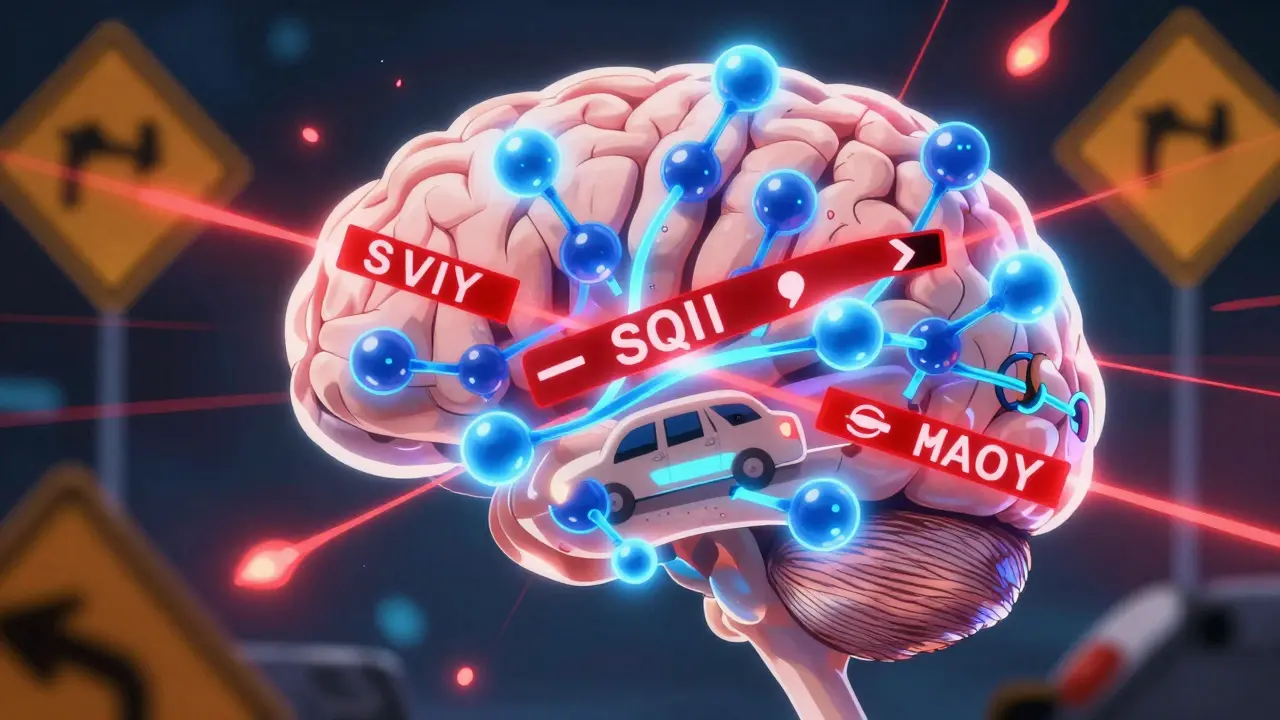
Think of it like traffic. Each drug is a car on the road. SSRIs are cars accelerating. MAO inhibitors are roadblocks that stop cars from leaving. Put them together, and you get a pileup. And unlike regular traffic, this pileup can kill you in hours.
The Most Dangerous Combinations
Some drug pairs are so risky that doctors avoid them entirely unless there’s no other option. Here are the most dangerous combinations you need to know:- MAO inhibitors + SSRIs or SNRIs: This is the classic deadly combo. Mixing phenelzine (Nardil), tranylcypromine (Parnate), or isocarboxazid (Marplan) with fluoxetine, sertraline, or venlafaxine can trigger serotonin syndrome. The risk is so high that you need a 2-week washout period between switching these drugs.
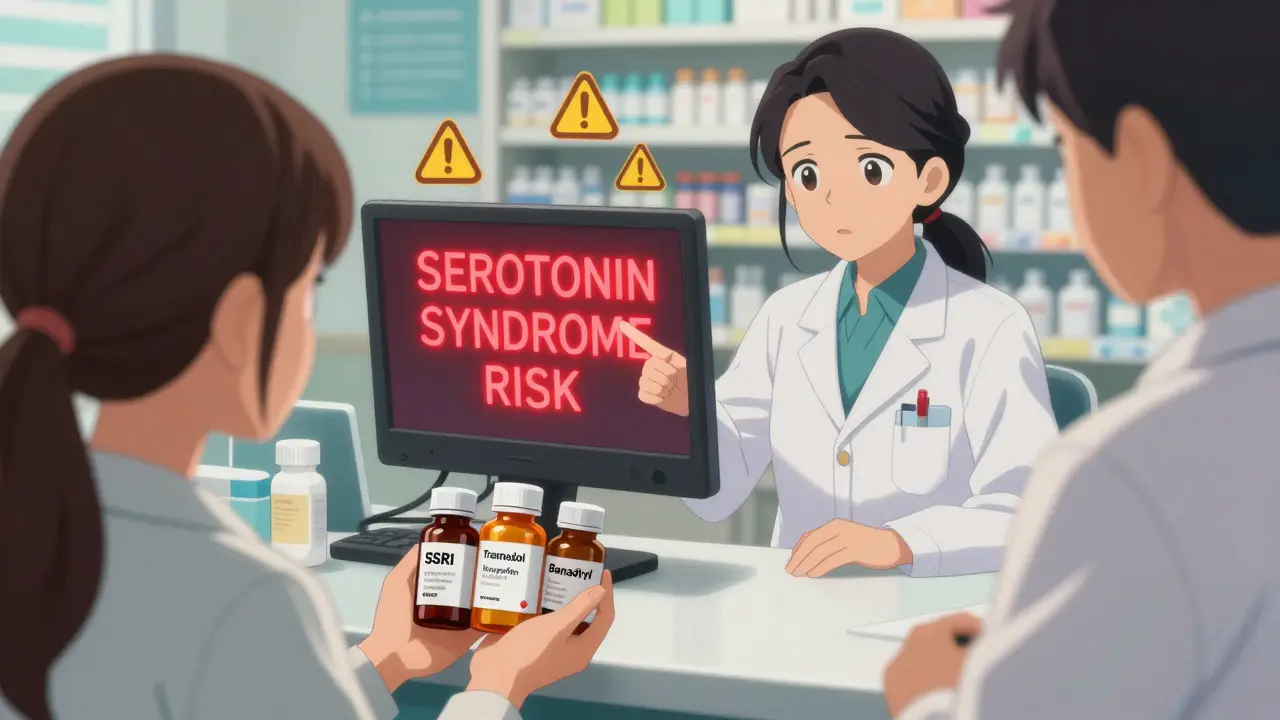
- SSRIs + tramadol or fentanyl: These opioids aren’t just painkillers - they also raise serotonin. Combine them with an SSRI, and you’re doubling the risk of serotonin syndrome. Tramadol is especially tricky because many people think it’s "just a pain med," not a psychiatric interaction risk.
- TCAs + alcohol or benzodiazepines: Tricyclic antidepressants like amitriptyline or nortriptyline already cause drowsiness. Add alcohol, sleeping pills, or even over-the-counter antihistamines like diphenhydramine (Benadryl), and your breathing can slow to dangerous levels. This combo has sent people to the ER for unexplained unconsciousness.
- Lithium + NSAIDs: Lithium is a mood stabilizer with a razor-thin safety window. Its therapeutic level is 0.6-1.0 mmol/L. Too high, and you get tremors, confusion, kidney damage. NSAIDs like ibuprofen or naproxen can push lithium levels up by 25-50%. A daily Advil for a headache could push you into toxicity.
- Quetiapine + CYP3A4 inhibitors: Quetiapine is broken down by the liver enzyme CYP3A4. If you’re taking it with drugs like ketoconazole, clarithromycin, or even grapefruit juice, your blood levels can spike. That means extreme drowsiness, low blood pressure, or heart rhythm problems.
These aren’t theoretical risks. In 2022, the FDA issued a warning after 17 cases of serotonin syndrome were linked to SSRI-tramadol combinations in a single year. Many of those patients weren’t told about the danger.
Why Some Drugs Are Safer Than Others
Not all psychiatric meds are created equal when it comes to interactions. Some are like landmines. Others are quiet and predictable.Fluvoxamine (Luvox) is one of the worst offenders. It strongly blocks the CYP1A2, CYP2C19, and CYP3A4 liver enzymes - the same ones that break down dozens of other drugs. If you’re on fluvoxamine, you’re at risk for interactions with blood thinners, statins, antifungals, and even some heart meds.
On the other hand, sertraline and citalopram are much quieter. They barely touch liver enzymes. That’s why many psychiatrists choose them for patients already on multiple medications. The same goes for vortioxetine (Trintellix) and vilazodone (Viibryd). They’re newer, with fewer known interactions.
Antipsychotics vary too. Quetiapine and aripiprazole have relatively low interaction risk. But risperidone and olanzapine? They’re more likely to mess with your metabolism, blood sugar, and heart rhythm - especially if you’re also on diabetes meds or statins.
Even "natural" supplements can be dangerous. St. John’s Wort, for example, acts like an SSRI. If you’re already on fluoxetine, adding this herbal remedy is like pouring gasoline on a fire. Melatonin, valerian, and even high-dose omega-3s can also increase sedation or bleeding risk when mixed with psychiatric drugs.
Monitoring: What Your Doctor Should Be Tracking
If you’re on more than one psychiatric drug, you need more than a yearly checkup. You need a plan.Here’s what serious monitoring looks like:
- Lithium levels: Tested every 3 months - or every 2 weeks after starting an NSAID or diuretic.
- INR for warfarin + SSRI: Checked weekly for the first month. SSRIs can raise INR by 20-30%, increasing bleeding risk.
- Clozapine levels: Blood counts done weekly for the first 6 months. Agranulocytosis (dangerously low white blood cells) can strike without warning.
- Liver enzymes: For valproate, carbamazepine, or olanzapine - checked every 3 months.
- ECG for QT prolongation: Needed if you’re on ziprasidone, iloperidone, or high-dose citalopram. These can cause irregular heartbeats.
And don’t forget symptom tracking. Use the PHQ-9 for depression, GAD-7 for anxiety, and AIMS for movement side effects from antipsychotics. These aren’t just paperwork - they’re early warning systems.

What You Can Do to Stay Safe
You’re not powerless. Here’s how to protect yourself:- Make a full list: Write down every medication, supplement, and OTC drug you take - including weed, alcohol, and sleep aids. Bring it to every appointment.
- Ask: "What could this interact with?": Don’t wait for your doctor to bring it up. Ask directly when a new drug is prescribed.
- Watch for red flags: Shivering, confusion, fast heartbeat, high fever, muscle stiffness - these aren’t "just side effects." They’re signs of serotonin syndrome. Go to the ER.
- Never skip the washout: If switching from an MAO inhibitor to an SSRI, wait at least 14 days. No exceptions.
- Use one pharmacy: It helps pharmacists catch interactions your doctor might miss.
There’s a reason psychiatrists now use digital tools that flag dangerous combinations in real time. In one 2023 study, clinics using these systems saw a 37% drop in serious interaction events. Technology helps - but your awareness saves lives.
The Future: Personalized Medicine
We’re starting to move beyond guesswork. Genetic testing for CYP2D6 and CYP2C19 enzymes can now tell you if you’re a slow or fast metabolizer. If you’re a slow metabolizer of SSRIs, even a standard dose might build up to toxic levels. This isn’t science fiction - it’s available now through companies like GeneSight and Myriad.And AI tools are being tested. The National Institute of Mental Health is piloting models that combine your genetic data, medication history, and lab results to predict your personal risk for interactions. These won’t replace your doctor - but they’ll give your doctor better tools to keep you safe.
For now, the best defense is knowledge. Know your meds. Know your risks. And never assume that because something is prescribed, it’s automatically safe to mix.
Can you mix antidepressants and alcohol?
Mixing antidepressants with alcohol is risky. Alcohol increases sedation and can worsen depression or anxiety symptoms. With TCAs or MAO inhibitors, it can cause dangerous drops in blood pressure or even respiratory depression. Even with SSRIs, alcohol can reduce medication effectiveness and increase side effects like dizziness or impaired judgment. It’s best to avoid alcohol entirely unless your doctor says otherwise.
How long does it take for a drug interaction to show up?
Some interactions happen within hours - especially serotonin syndrome or sudden drops in blood pressure. Others take days or weeks. Lithium toxicity can build slowly over several days after starting an NSAID. Liver enzyme changes from antipsychotics may not show up until after 3-4 weeks. That’s why monitoring is ongoing. Never assume you’re safe just because you’ve been on the combo for a while.
Are over-the-counter meds safe with psychiatric drugs?
Many OTC drugs aren’t safe. Cold medicines with dextromethorphan or pseudoephedrine can trigger serotonin syndrome or high blood pressure. Antihistamines like diphenhydramine (Benadryl) increase sedation and anticholinergic effects. Painkillers like ibuprofen can spike lithium levels. Always check with your pharmacist before taking anything new - even a one-time dose.
What should I do if I think I’m having a drug interaction?
If you experience sudden confusion, rapid heartbeat, high fever, muscle rigidity, or loss of coordination - get emergency help immediately. These are signs of serotonin syndrome or severe CNS depression. Call 911 or go to the ER. Don’t wait. Don’t text your doctor. Time matters. Bring your medication list with you.
Can I stop a psychiatric drug cold turkey to avoid interactions?
No. Stopping psychiatric drugs suddenly can cause withdrawal symptoms like anxiety, insomnia, nausea, or even seizures. If you need to stop or switch a medication, your doctor must create a gradual tapering plan. For MAO inhibitors, you need a 2-week washout before starting an SSRI. Never adjust your dose without professional guidance.

Liam Crean
February 19, 2026 AT 22:52I’ve been on sertraline for five years and just started gabapentin for nerve pain. My pharmacist flagged it immediately - said to watch for dizziness and drowsiness. I didn’t even know they could interact. Now I’m keeping a symptom journal. Small things like ‘felt foggy after dinner’ matter more than you think.
Also, never trust ‘just a painkiller’ again. Tramadol got me hooked before I knew it was an SSRI booster. Scary stuff.
Biggest win? Using one pharmacy. They caught a bad combo between my blood pressure med and my new antidepressant before I even left the counter. Pharmacists are the real MVPs.
Ellen Spiers
February 20, 2026 AT 12:10The assertion that MAOIs and SSRIs necessitate a 14-day washout period is, strictly speaking, inaccurate. According to the FDA’s 2022 Clinical Pharmacology Review for fluoxetine (which has a half-life exceeding seven days), the washout period should be extended to a minimum of five weeks - not two. This is not a mere technicality; it is a pharmacokinetic imperative.
Furthermore, the characterization of ‘St. John’s Wort’ as an SSRI analog is semantically imprecise. It is a multimodal monoaminergic modulator with affinity for 5-HT1A, 5-HT2A, and 5-HT3 receptors, as well as adrenergic and GABAergic pathways. To reduce it to ‘like an SSRI’ is to commit a category error of clinical consequence.
And yet, despite the precision of the original text, the omission of CYP2D6 phenotyping data in the context of citalopram metabolism remains a critical lacuna in the discussion of individual risk stratification.
Marie Crick
February 20, 2026 AT 14:44You’re telling people to ‘ask your doctor’ like that’s enough? My brother died because his psych told him ‘it’s fine’ to mix Wellbutrin with Adderall. He had a seizure at work. They didn’t even test his levels. Now we’re suing. Don’t trust them. Don’t trust the system. Write your own list. Read the damn FDA warnings. Save yourself.
Jonathan Rutter
February 20, 2026 AT 22:11I’ve been on 14 different meds over 12 years - lithium, Seroquel, Zoloft, Effexor, you name it. I’ve been to five ERs for ‘mystery symptoms.’ I’ve had my blood drawn so often the nurses know my name. Here’s the truth no one tells you: your doctor doesn’t know what’s in your body. They rely on charts. Charts lie. They don’t know if you took that extra ibuprofen because your knee hurt. They don’t know if you drank that glass of wine because you were stressed. They don’t know if you started taking ashwagandha because TikTok said it ‘reduces anxiety.’
And then they wonder why you’re still depressed.
Here’s what actually works: track everything. Every pill. Every drop of alcohol. Every herbal tea. Write it down. Use an app. I use Notion. I color-code: red for danger, yellow for caution, green for safe. I show it to my psychiatrist every visit. He says I’m ‘the most prepared patient he’s ever had.’
Don’t wait for a crisis. Be the person who shows up with a spreadsheet. Because when your life is on the line, your doctor isn’t your savior - your awareness is.
Ashley Paashuis
February 21, 2026 AT 17:37This is one of the most thorough and clinically accurate summaries I’ve seen on this topic. Thank you for taking the time to compile this with such precision.
I work in a community mental health clinic, and we’ve seen a dramatic rise in patients presenting with drug interactions over the last three years - especially with the increase in polypharmacy and self-medication with supplements. The point about using one pharmacy is critical. We’ve had multiple cases where patients were prescribed conflicting medications across different prescribers because they used different pharmacies.
I also want to emphasize the importance of the PHQ-9 and GAD-7. They’re not just checkboxes. They’re tools that help us catch subtle shifts in mood or side effects before they become emergencies. I encourage every patient to complete them weekly - even if they feel fine. Small changes matter.
Oana Iordachescu
February 22, 2026 AT 22:25Did you know the FDA has been quietly funding a hidden program called ‘Project Serotonin Shield’? It’s a covert AI system that scans every prescription in the U.S. for dangerous combos - but only flags them if the patient is on Medicaid. Private insurance? No alerts. No warnings. They want you to get sick so they can sell you more meds.
And don’t get me started on GeneSight. They’re owned by a pharmaceutical conglomerate that also manufactures the very drugs they test for. Your ‘personalized’ results? They’re curated. You’re being manipulated. Always ask: who profits?
Bring your meds to a 24-hour pharmacy in a different state. Don’t trust your local pharmacist. They’re all paid by Big Pharma. I’ve seen the receipts.
Also, grapefruit juice is a weapon. It’s not natural. It’s engineered. Look it up.
Arshdeep Singh
February 24, 2026 AT 17:08Bro, this whole post is just fearmongering. You think your brain is some fragile flower? Nah. Your brain is a beast. It adapts. You take meds? Good. But don’t act like every little thing is gonna kill you. I’ve been on Prozac for 8 years, drank whiskey every weekend, took Benadryl for allergies - no problem. My cousin did the same with lithium and NSAIDs. He’s fine.
Stop scaring people. Mental health is hard enough without turning every pill into a landmine. Just chill. Your body knows what to do. Trust yourself. You ain’t a lab rat.
Danielle Gerrish
February 25, 2026 AT 04:21I had serotonin syndrome. I didn’t even know what it was until I woke up in the ICU. They said I was ‘lucky’ - I almost didn’t make it.
It started after I added melatonin to my Zoloft. Just one pill. Said it was ‘natural.’ I thought, how bad could it be?
Turns out, melatonin inhibits the same enzyme that clears serotonin. I got a fever of 104.7. My muscles locked up. I couldn’t move my arms. I thought I was having a stroke.
They kept asking me what I took. I said ‘just melatonin.’ They stared. One nurse said, ‘You’re lucky you didn’t die in your sleep.’
Now I never take anything without checking it. Not even a cold tablet. Not even a sleep gummy. I have a list. I print it. I carry it. I show it. I don’t care if people think I’m crazy. I’m alive. That’s the only metric that matters.
madison winter
February 26, 2026 AT 09:19Interesting post. But you missed the biggest issue: the lack of longitudinal data. Most interaction studies are short-term - 30 to 90 days. But people stay on these meds for decades. What happens when you take lithium and ibuprofen for 15 years? We don’t know. What about quetiapine and grapefruit juice daily for 20 years? No one’s studied it.
And why are we still using CYP enzyme classifications from the 1990s? We have CRISPR now. We have single-cell sequencing. We could map a person’s metabolic profile in real time - but we don’t. Because it’s expensive. And pharma doesn’t profit from transparency.
So we’re left with generalized warnings and a system that treats patients like variables in a spreadsheet. It’s not ignorance. It’s negligence dressed up as science.