
Salt and Blood Pressure Medications: How Sodium Lowers Drug Effectiveness
Sodium Impact Calculator
Calculate Your Sodium Impact
See how reducing sodium can enhance your blood pressure medication effectiveness based on the 2023 JAMA study.
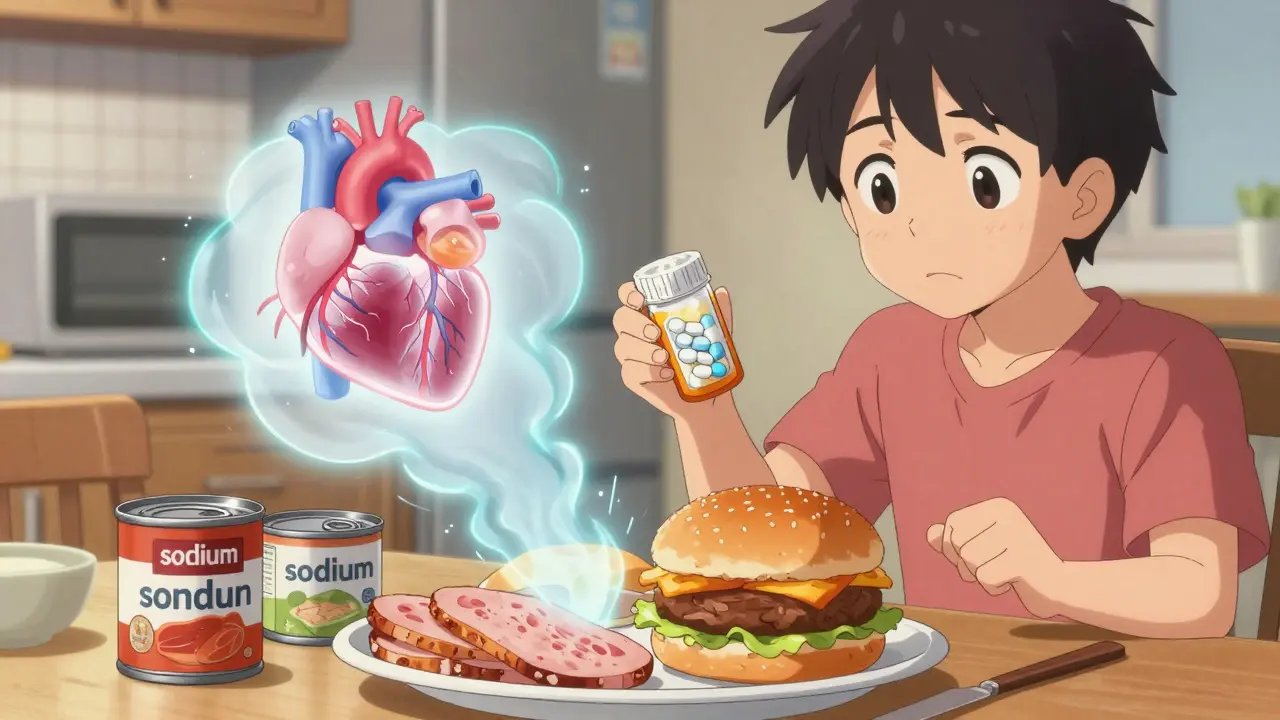
When you're taking blood pressure medication, the salt on your dinner plate might be working against you-sometimes more than you realize. It’s not just about avoiding the shaker. The real problem is hidden in the packaged snacks, canned soups, deli meats, and restaurant meals you eat every day. And if you’re not watching your sodium, your pills might not be doing their job.
Why Salt Makes Blood Pressure Meds Less Effective
Your blood pressure medications work by relaxing blood vessels, removing extra fluid, or blocking hormones that raise pressure. But too much sodium flips the script. Sodium pulls water into your bloodstream, increasing volume and forcing your heart and arteries to work harder. This directly counteracts the effects of drugs like ACE inhibitors, ARBs, and diuretics.A major 2023 study published in JAMA found that reducing sodium intake by about one teaspoon (2,300 mg) per day lowered systolic blood pressure by 6 mm Hg-just as much as starting a first-line blood pressure pill. The study included 213 adults, many already on medication, and showed that even people on multiple drugs saw clear drops in pressure when they cut back. The effect wasn’t small. It was clinically meaningful.
Dr. Deepak Gupta, one of the lead researchers from Vanderbilt, put it plainly: “When they eat more sodium, a lot of their blood pressure medications don’t work as well.” It’s not that the drugs fail. It’s that sodium overload creates a counterforce that neutralizes their impact. The same thing happens with kidney protection drugs-high salt increases protein in urine, making medications like ACE inhibitors less effective at shielding your kidneys.
How Much Sodium Are You Really Eating?
Most people think they’re cutting salt by not adding it to food. But that’s not where the problem lies. About 70% of the sodium in the average American diet comes from processed and restaurant foods, not the salt shaker. A single slice of bread can have 230 mg. A cup of canned soup? 800 mg or more. A fast-food burger? Over 1,000 mg. That’s already past the daily limit before you even sit down for dinner.The JAMA study found participants were eating an average of 4,500 mg of sodium daily-nearly double the American Heart Association’s upper limit of 2,300 mg. And 65% of them were Black, a group known to be more salt-sensitive. That means their blood pressure drops more sharply when sodium is reduced. The same pattern holds for older adults and those with existing hypertension.
Here’s the reality: if you’re on blood pressure medication and still eating like most Americans, you’re probably not getting the full benefit. You might think your meds are working because your pressure is “okay.” But it could be even better-if you cut the salt.
What Happens When You Cut Back?
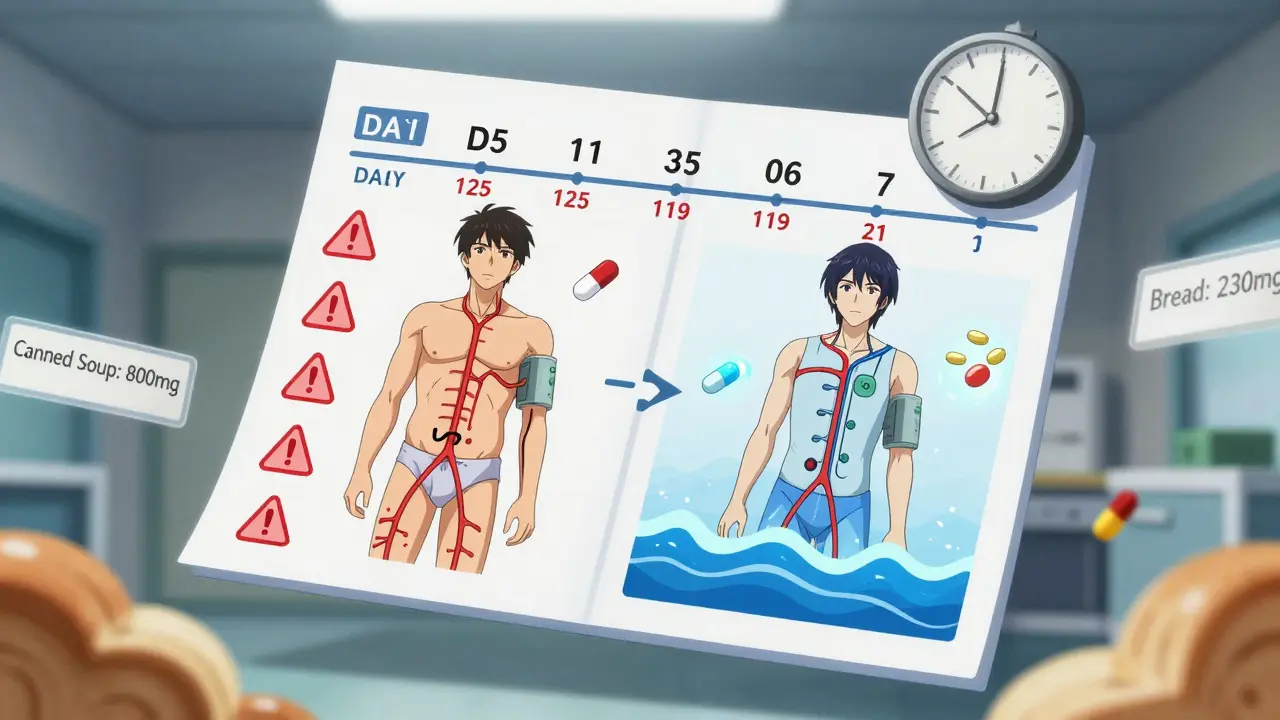
You don’t need to go cold turkey. The science shows results come fast. In the same study, participants saw measurable drops in blood pressure within just seven days of switching to a low-sodium diet (500 mg per day). That’s faster than waiting for a new medication to kick in.On a low-sodium diet, systolic pressure dropped from an average of 125 mm Hg to 119 mm Hg. That’s not just a number-it’s a real reduction in strain on your heart, arteries, and kidneys. And the benefits aren’t just about pressure. Lower sodium also reduces fluid retention, improves blood vessel function, and helps your body respond better to medication.
Even better? There’s almost no downside. The study tracked side effects and found only 8% of people on low sodium reported issues like fatigue or dizziness-similar to the 9.9% on high sodium. No major safety concerns. No dangerous electrolyte crashes. Just cleaner, more effective treatment.
Which Medications Are Most Affected?
Not all blood pressure drugs are equally impacted by sodium. But the ones that are, are the most commonly prescribed:- ACE inhibitors (like lisinopril): Sodium reduces their ability to relax blood vessels and protect kidneys.
- ARBs (like losartan): Work similarly to ACE inhibitors-high salt blunts their effect.
- Diuretics (like hydrochlorothiazide): These are supposed to flush out fluid, but too much sodium overwhelms them. You end up needing higher doses.
- Calcium channel blockers: Less affected, but still benefit from lower sodium because of reduced vascular resistance.
If you’re on one of the first three, sodium reduction isn’t just a good idea-it’s a necessary partner to your treatment. For many, cutting salt could mean lowering your pill dose, reducing side effects like dizziness or dry cough, and saving money on prescriptions.
How to Actually Reduce Sodium (Without Starving)
You don’t have to eat bland food. You just need to be smarter about what you buy and eat.- Read labels like a detective. Look for “mg of sodium,” not % Daily Value. Anything under 140 mg per serving is low. Avoid anything with more than 400 mg.
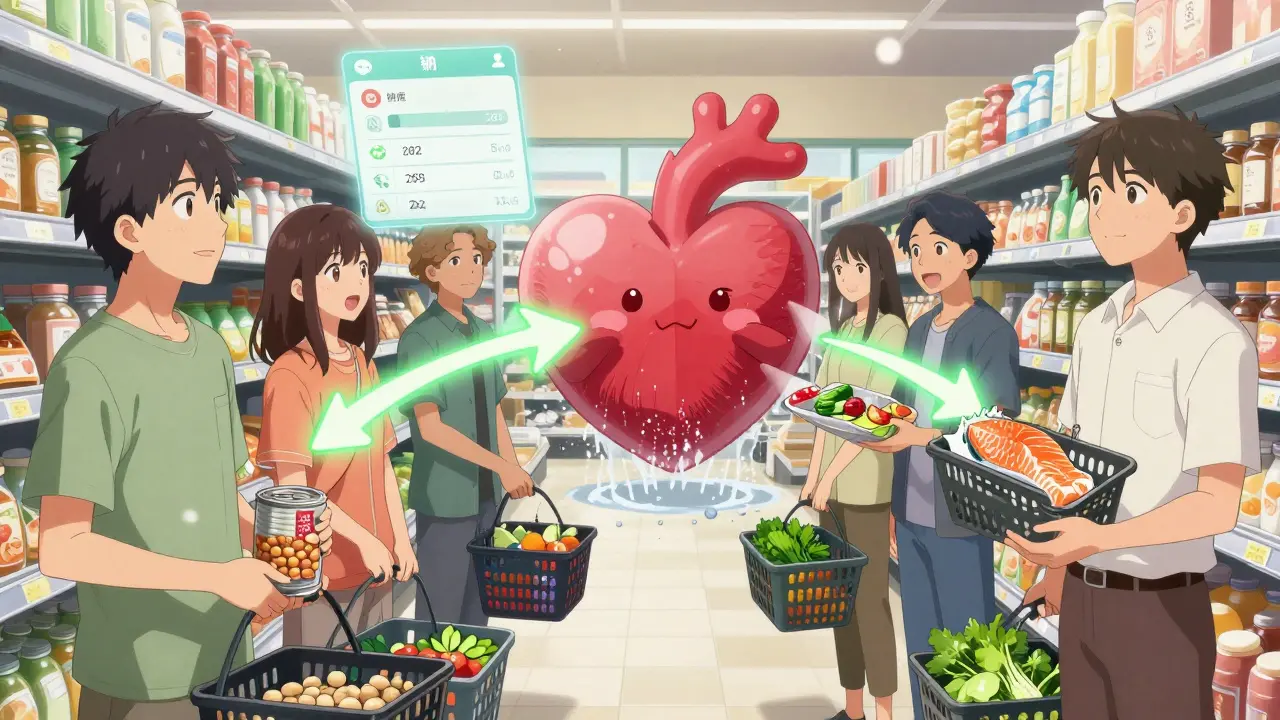
- Choose fresh or frozen over canned. Canned beans, veggies, and soups are sodium bombs. Rinse canned beans under water-it removes up to 40% of the salt.
- Swap processed meats. Deli turkey, bacon, sausage, and hot dogs are loaded. Try fresh chicken, fish, or tofu instead.
- Use herbs and spices. Garlic, paprika, cumin, lemon zest, and black pepper add flavor without sodium. Salt-free seasoning blends work great.
- Ask for no salt at restaurants. Most kitchens will accommodate. Request sauces on the side-they’re often salt bombs.
- Consider potassium-rich foods. Potassium helps balance sodium. Bananas, spinach, sweet potatoes, and white beans are great. But if you have kidney disease, check with your doctor first-too much potassium can be dangerous.
Don’t rely on salt substitutes like Lite Salt or NoSalt unless your doctor approves them. Many contain potassium chloride, which can be risky if you have kidney problems or take certain meds like ACE inhibitors.
Who Benefits Most-and Who Doesn’t?
About 70-75% of people see a clear drop in blood pressure when they cut sodium. That includes most people with hypertension, older adults, Black individuals, and those with diabetes or kidney disease.But about 25-30% of people are “non-responders”-their blood pressure barely budges when sodium drops. That doesn’t mean the effort is wasted. Even non-responders still benefit from reduced kidney strain, lower risk of stroke, and better heart function. And for those who do respond, the effect is powerful.
One key finding: salt sensitivity increases with age and baseline blood pressure. If you’re over 60 and your pressure is above 130/80, you’re very likely to respond. That’s why guidelines now treat sodium reduction as a Class I recommendation-meaning it’s as essential as taking your pill.
The Bigger Picture: Why This Matters Beyond Your Numbers
Lowering sodium isn’t just about getting your blood pressure to 120/80. It’s about protecting your organs over time. High salt increases protein leakage in urine, a sign of kidney damage. It stiffens arteries, raises your risk of heart failure, and makes strokes more likely.The American Heart Association estimates that if everyone in the U.S. cut sodium to 2,000 mg per day, we could prevent 280,000 to 500,000 cardiovascular deaths over the next decade. That’s not a guess. It’s based on CDC modeling and decades of data.
And here’s the hopeful part: you don’t need a miracle. You don’t need to overhaul your life. Just start by reading one label a day. Swap one processed item for a whole food. Ask for no salt at lunch. Those small steps add up-fast.
What’s Next? Technology and Policy Are Catching Up
Researchers aren’t stopping here. The team behind the JAMA study is developing a mobile app that tracks your sodium intake in real time and alerts you if it might interfere with your meds. It’s in testing now.The FDA has also set voluntary sodium reduction targets for food manufacturers, aiming to bring average intake down to 3,000 mg by 2026. But experts say that’s still too high. The ideal target? 1,500 mg per day. That’s the goal for people with high blood pressure.
The message is clear: managing sodium isn’t a side note to your treatment. It’s part of the treatment. Your medication works better when your plate is clean. And when it works better, you’re safer, healthier, and more in control.
Can I still eat salt if I’m on blood pressure medication?
You can, but you need to keep it very low-ideally under 1,500 mg per day. Most people on blood pressure meds need to cut back significantly because excess sodium makes their drugs less effective. Even small amounts from processed foods can interfere. It’s not about eliminating salt completely, but about controlling where it comes from.
How long does it take to see results after cutting salt?
You can see measurable drops in blood pressure in as little as one week. In the 2023 JAMA study, participants saw a 6 mm Hg drop in systolic pressure after just seven days of reducing sodium. This is faster than waiting for a new medication to take full effect.
Is sea salt or kosher salt better than table salt?
No. All types of salt-table, sea, kosher, Himalayan-are made of sodium chloride. The crystal size may differ, but the sodium content per gram is nearly the same. One teaspoon of any salt contains about 2,300 mg of sodium. Switching salt types doesn’t reduce your sodium intake.
Should I use salt substitutes like Lite Salt?
Only if your doctor says it’s safe. Many salt substitutes replace sodium with potassium chloride. That’s fine for healthy people, but if you have kidney disease or take ACE inhibitors, ARBs, or certain diuretics, too much potassium can be dangerous. Always check with your provider before using them.
Do I need to stop eating out completely?
No, but you need to be strategic. Ask for no added salt, choose grilled or steamed options, skip sauces and dressings, and avoid fried or breaded items. Many restaurants now list sodium content online. Use that info to pick smarter meals. Even one low-sodium meal a day makes a difference.
Can cutting salt reduce my medication dose?
Yes, for many people. In studies, reducing sodium by 2,300 mg daily had the same effect on blood pressure as adding a new medication. That means some patients can lower their pill dose under their doctor’s supervision. Never stop or change your meds without talking to your provider-but sodium reduction can be a powerful tool to help you use less.


Teresa Marzo Lostalé
December 27, 2025 AT 21:29So basically, my grandma was right all along-salt is the silent saboteur. 🌊 I thought I was being healthy by skipping the shaker, but then I realized my ‘healthy’ microwave ramen had more sodium than my entire body can handle. 😅 Feels like my meds were just putting on a show while my snacks were throwing a rave in my arteries.
ANA MARIE VALENZUELA
December 29, 2025 AT 08:47Stop pretending this is news. Everyone who’s been on BP meds for more than a year knows this. The real problem? Doctors don’t tell you. They’d rather write another script than explain that your lunch is sabotaging you. And now you’re stuck on three pills because you ate a bag of chips last Tuesday. Wake up.
Bradly Draper
December 29, 2025 AT 20:23I didn’t realize how much salt was in everything until I started reading labels. Now I buy unsalted nuts, rinse my beans, and skip the deli meat. My BP dropped 8 points in two weeks. No side effects. Just quieter heartbeats. It’s not magic-it’s just not eating poison.
Vu L
December 31, 2025 AT 06:01Yeah right. Next they’ll say coffee kills your kidneys and oxygen makes you fat. This is just fear-mongering wrapped in a JAMA sticker. My grandpa ate salted butter on everything and lived to 98. Science is just a trend.
James Hilton
January 1, 2026 AT 07:02So let me get this straight-my body’s like a broken phone, and salt is the app that keeps crashing it? 🤦♂️ And the meds? Just the ‘restart’ button. Cool. So instead of buying a new phone (new med), I just… stop downloading bad apps? Genius. I’m switching to air-dried kale and crying into my lemon pepper tofu now.
Ryan Touhill
January 2, 2026 AT 11:12It’s fascinating how the medical-industrial complex has quietly weaponized sodium reduction as a public health lever while simultaneously subsidizing the very food systems that produce the excess. The FDA’s 3,000 mg target is a joke-it’s not regulation, it’s surrender. The real solution lies in structural reform: banning sodium additives in processed foods, not asking individuals to become nutrition detectives. We’ve outsourced systemic failure onto the shoulders of the hypertensive.
Celia McTighe
January 3, 2026 AT 19:41OMG I just checked my favorite canned soup-800mg per cup?! 😱 I’ve been eating that for lunch every day. I’m switching to homemade broth tonight with garlic, thyme, and a pinch of sea salt (just because I love it, not because I’m reckless). Also, potassium-rich foods are my new BFFs. 🍌💚 Thanks for the wake-up call!
Nicole Beasley
January 4, 2026 AT 19:31Wait, so if I cut salt, can I actually lower my pill dose? Like… really? I’ve been scared to ask my doctor because I thought I was ‘doing everything right.’ But if salt is the hidden villain… maybe I’ve been fighting a ghost this whole time. 🤔
sonam gupta
January 6, 2026 AT 18:07