
Steroids with NSAIDs: How This Common Drug Combo Raises GI Bleeding Risk - And How to Prevent It
Steroid-NSAID Risk Calculator
Combining steroids and NSAIDs sounds simple - take one for inflammation, another for pain. But this common mix is one of the most dangerous drug interactions you’ve never heard of. Every year, thousands of people end up in the hospital with life-threatening gastrointestinal bleeding because their doctor never warned them about this combo. And here’s the worst part: it’s almost always preventable.
Why This Combo Is So Dangerous
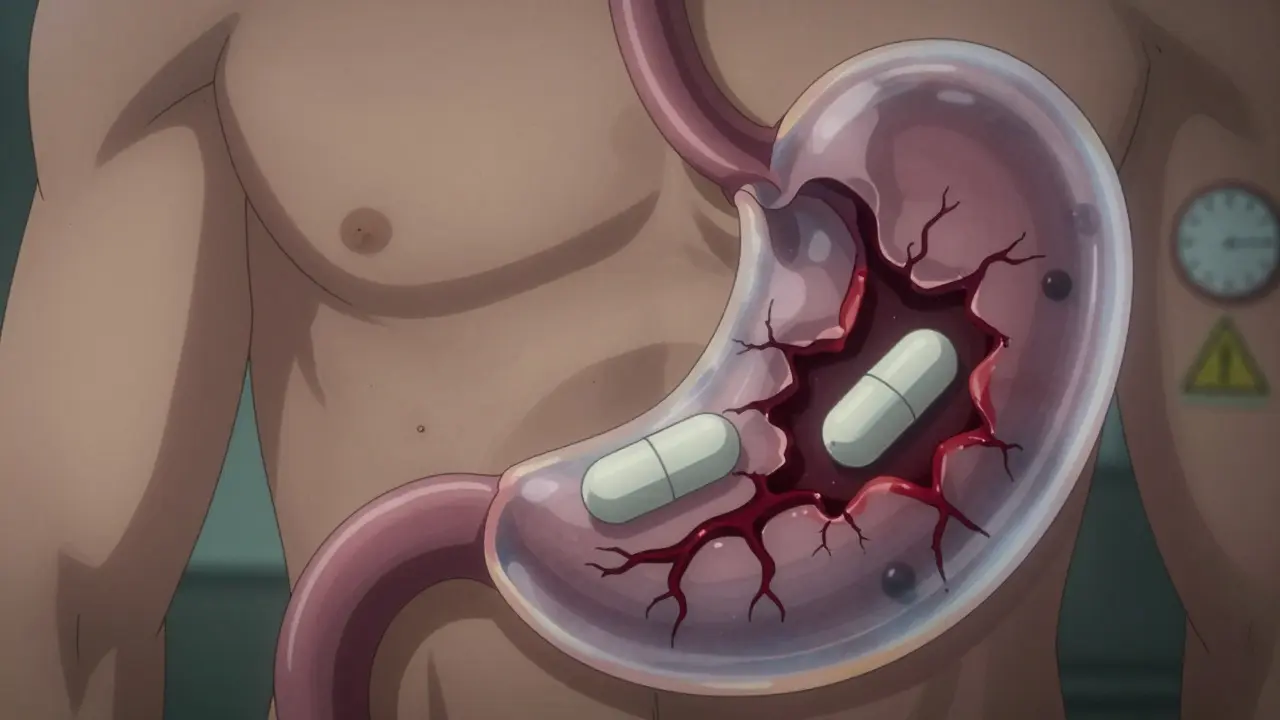
NSAIDs like ibuprofen, naproxen, and diclofenac hurt your stomach in two ways. First, they irritate the lining directly. Second - and more importantly - they block a natural protective chemical called prostaglandin. Without it, your stomach can’t repair tiny tears, produce enough mucus, or keep blood flowing to the lining. That’s why even a single dose of NSAID can start damaging your gut. Steroids like prednisone make it worse. They don’t just add to the damage - they multiply it. Steroids slow down healing, thin out the protective mucus layer, and hide symptoms. You might have a bleeding ulcer and feel fine because the steroid masks the pain. By the time you notice black stools or vomiting blood, it’s already too late. Studies show that taking NSAIDs alone raises your risk of upper GI bleeding by up to four times. Add steroids, and that risk jumps to nearly nine times higher. In high-dose cases - say, someone on 40mg of prednisone and 1200mg of ibuprofen daily - the risk spikes over 12 times. And this isn’t rare. About 28% of people taking NSAIDs in the U.S. are also on steroids within a 30-day window.It’s Not Just Stomach Ulcers
Most people think this risk is limited to peptic ulcers in the stomach or duodenum. But that’s outdated thinking. About one-third of NSAID-related bleeds happen in the lower GI tract - the colon or small intestine. These bleeds are harder to detect, often mistaken for hemorrhoids or food poisoning. A 1999 study found that 86% of patients with lower GI bleeding had taken NSAIDs. When you add steroids to the mix, the risk doesn’t just increase - it spreads.Not All NSAIDs Are Created Equal
Traditional NSAIDs (tNSAIDs) like naproxen and ibuprofen are the worst offenders. They block both COX-1 and COX-2 enzymes. COX-1 protects your gut. COX-2 causes inflammation. Blocking both means you get pain relief - but also a damaged stomach lining. COX-2 selective drugs like celecoxib were designed to avoid this. They mostly block COX-2, sparing COX-1. That’s why they cut upper GI bleeding risk by 50-60% compared to traditional NSAIDs. But here’s the catch: even celecoxib isn’t safe with steroids. The risk drops, but it doesn’t disappear. A 2017 trial called CONCERN showed that celecoxib plus a PPI still had fewer bleeds than naproxen plus a PPI - but the combo with steroids still carried elevated risk.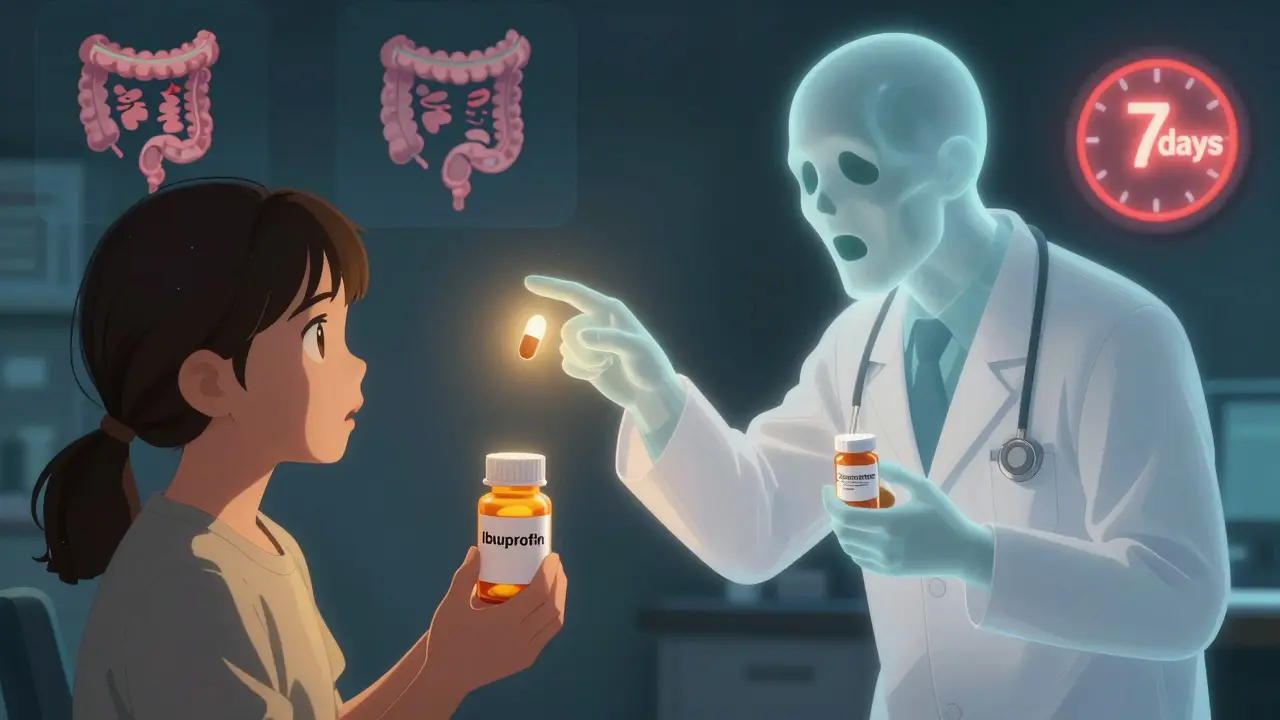
Who’s at Highest Risk?
Not everyone who takes this combo will bleed. But some people are sitting on a ticking time bomb. Here’s who’s most vulnerable:- People over 65
- Those with a past history of ulcers or GI bleeding
- Anyone on blood thinners like warfarin or apixaban
- Patients taking high-dose NSAIDs (ibuprofen ≥1200mg/day, diclofenac ≥100mg/day)
- People on multiple NSAIDs or long-term steroid courses
What Actually Works to Prevent Bleeding
The good news? You can stop this before it starts. The American College of Gastroenterology and the American Gastroenterological Association both say the same thing: if you’re on both steroids and NSAIDs, you need a PPI. Proton pump inhibitors - like omeprazole, esomeprazole, or pantoprazole - are the gold standard. They don’t just reduce acid. They let your stomach lining heal, restore blood flow, and rebuild mucus. Studies show PPIs cut NSAID-induced ulcers by 73%. H2 blockers like famotidine? They’re half as effective. Many doctors still prescribe them because they’re cheaper. Don’t let that happen to you. For low-risk patients: one daily dose of omeprazole 20mg is enough. For high-risk patients (age 65+, past bleed, on blood thinners): use 40mg of omeprazole daily. Some patients need even more - but that’s up to your doctor to decide.Real-World Failure: Why This Keeps Happening
You’d think this is common knowledge. But a 2022 study of over 12,000 hospital patients found that only 39% of those on both steroids and NSAIDs were given a PPI. In non-rheumatology clinics - like primary care or ERs - the rate dropped to just 22%. Why? Because most doctors don’t think about it. They focus on the arthritis, the asthma, the flare-up. They don’t connect the dots. Patients don’t know to ask. And OTC NSAIDs? People pop ibuprofen like candy - 400mg every 6 hours for back pain - without realizing they’re in danger. The FDA requires warnings on NSAID labels about GI bleeding. But none mention the steroid interaction. The EMA does - since 2019. The U.S. hasn’t caught up.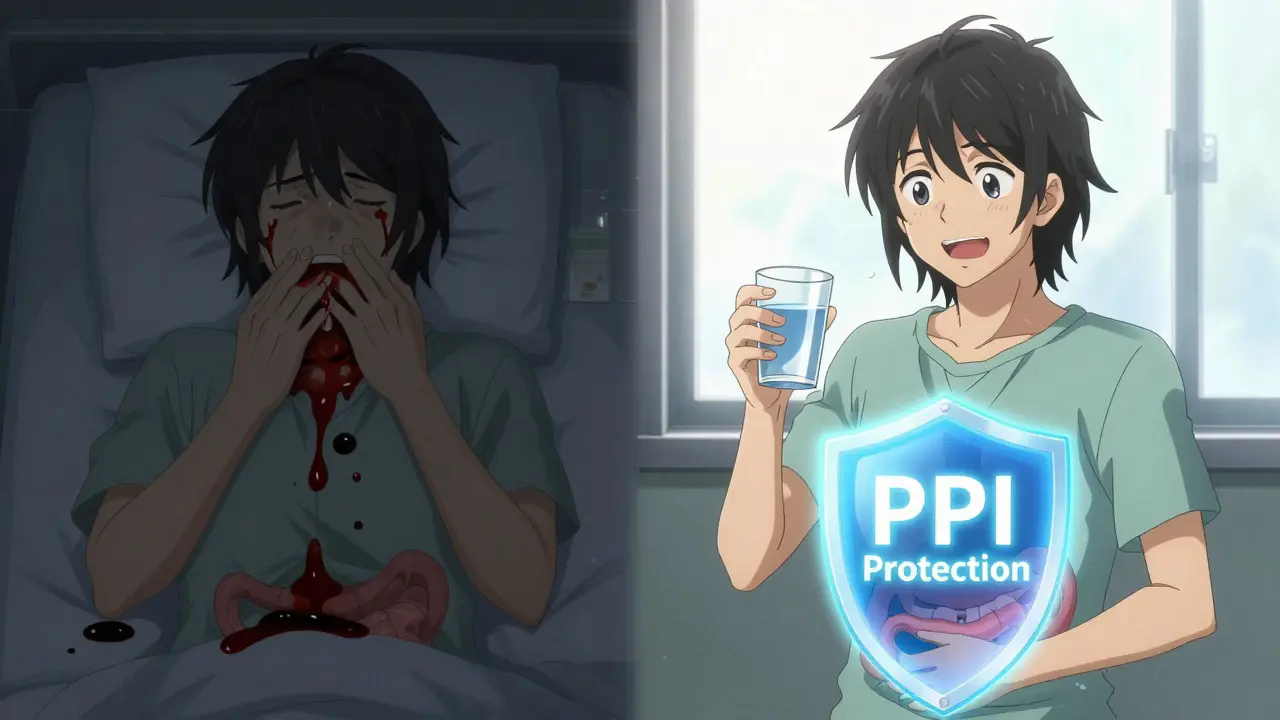
What You Can Do Right Now
If you’re on steroids - even a short course - and you take NSAIDs daily:- Ask your doctor: "Am I at risk for GI bleeding?"
- Ask: "Should I be on a PPI right now?"
- If they say no - ask why. If they say H2 blocker - push back. PPIs work better.
- If you’re taking OTC NSAIDs, stop them while on steroids. Use acetaminophen (Tylenol) instead - it doesn’t hurt your gut.
- Watch for warning signs: black/tarry stools, vomiting blood, sudden dizziness, or severe abdominal pain. Call your doctor immediately.
New Options and Future Hope
In 2023, the FDA approved Vimovo - a single pill combining naproxen and esomeprazole. It’s designed for high-risk patients. Early data shows 54% fewer ulcers than naproxen alone. But it’s expensive, and not everyone qualifies. Researchers are also looking at genetics. Some people have gene variants that make them 2.3 times more likely to bleed on this combo. In the future, a simple blood test might tell you if you’re at high genetic risk. But for now, the solution is simple: no PPI, no combo.Bottom Line
Steroids and NSAIDs together are not a harmless shortcut. They’re a recipe for disaster - unless you take action. The data is clear. The guidelines are solid. The fix is cheap and effective. If you’re taking both, you need a PPI. No exceptions. No excuses. Your gut doesn’t care how good your doctor is - it only cares if you’re protected.Can I take ibuprofen with prednisone if I have a history of ulcers?
No. If you have a past history of ulcers or GI bleeding, you should avoid combining NSAIDs like ibuprofen with steroids like prednisone entirely. If the combination is absolutely necessary, you must be on a high-dose proton pump inhibitor (PPI) like omeprazole 40mg daily. Even then, the risk remains elevated. Talk to your doctor about safer alternatives like COX-2 inhibitors (celecoxib) or non-NSAID pain relievers like acetaminophen.
Do I need a PPI if I’m only on steroids for 5 days?
Yes - if you’re also taking NSAIDs daily. Research shows the risk of GI bleeding rises within just 7 days of combining these drugs. Even short steroid bursts - like a 5-day prednisone pack for allergies or asthma - can trigger bleeding in people already using ibuprofen or naproxen. If you’re on daily NSAIDs, start a PPI the day you begin steroids and continue it for at least 7 days after you stop the steroid.
Is Tylenol (acetaminophen) safer than NSAIDs when on steroids?
Yes. Acetaminophen doesn’t affect prostaglandins or irritate the stomach lining. It’s the safest pain reliever to use with steroids. It won’t help with inflammation like NSAIDs do, but it’s very effective for pain. For conditions like arthritis, combining steroids with acetaminophen is much safer than steroids with ibuprofen or naproxen. Always check with your doctor before switching, but for GI safety, Tylenol is the clear choice.
I’m on Celebrex and prednisone. Do I still need a PPI?
Yes. While celecoxib (Celebrex) is less damaging to the gut than traditional NSAIDs, combining it with steroids still increases your bleeding risk. Studies show that even COX-2 inhibitors carry elevated GI risk when paired with corticosteroids. The American College of Gastroenterology recommends PPI prophylaxis for all patients on this combo. Don’t assume that because you’re on a "safer" NSAID, you’re protected. Add a PPI - it’s the only way to reduce the risk meaningfully.
Why do doctors still prescribe this combo without PPIs?
Many doctors don’t realize how dangerous the interaction is. A 2022 study found only 39% of patients on both steroids and NSAIDs received PPIs - and that number dropped to 22% outside of rheumatology clinics. Some think H2 blockers are enough. Others assume the patient is young and healthy. Many don’t know about the 7-day risk window. Patient education gaps, outdated protocols, and lack of clinical decision support tools all contribute. The science is clear - but practice hasn’t caught up.
Can I stop my PPI after the steroid course ends?
Only if you also stop the NSAID. If you continue taking ibuprofen, naproxen, or another NSAID after finishing steroids, you still need the PPI. The risk doesn’t disappear when the steroid does. Many patients stop their PPI too soon, thinking they’re safe. But NSAIDs keep damaging the gut. Continue the PPI for as long as you’re on the NSAID - even if the steroid is gone. Always check with your doctor before stopping any medication.

Charity Hanson
February 27, 2026 AT 11:01Y’all need to stop treating your body like a vending machine. I got prescribed prednisone for my asthma flare and was popping ibuprofen like it was candy. Then I started feeling dizzy and had black poop-turned out I was bleeding. My doctor was like, ‘You didn’t know this combo is dangerous?’ No, I didn’t. Now I’m on omeprazole and Tylenol. Life’s better. Don’t be me.
Noah Cline
February 28, 2026 AT 02:14Let’s be clear: the COX-1/COX-2 dichotomy is oversimplified. Prostaglandin suppression isn’t the only mechanism-NSAIDs also induce mitochondrial dysfunction in gastric epithelial cells, and steroids impair mucosal regeneration via glucocorticoid-mediated downregulation of EGFR and VEGF. The 9x relative risk is statistically valid, but clinical significance hinges on cumulative exposure duration and baseline mucosal integrity. PPIs are not prophylactic panaceas-they merely reduce acid-mediated erosion, not the underlying cytopathic insult. We need mucosal protectants like rebamipide or sucralfate in combination regimens.
Eimear Gilroy
February 28, 2026 AT 07:02Interesting that the FDA doesn’t require steroid-NSAID warnings but the EMA does. Is this just regulatory inertia, or is there a lobbying angle? I’ve been on prednisone for 3 months and ibuprofen for back pain. My PCP never mentioned this. Should I be worried? I’m 58, no past ulcers, but I do take a daily baby aspirin. Is that adding to the risk?
Ajay Krishna
March 2, 2026 AT 00:42Hey everyone, I’m a nurse in India and I see this all the time. People buy ibuprofen at the corner pharmacy and get steroid shots from the clinic without anyone connecting the dots. We need community health workers to spread this info-especially in rural areas. I’ve started handing out laminated cards with ‘PPI or No Combo’ in Hindi and Tamil. Simple. Visual. No jargon. One lady told me, ‘I thought Tylenol was just for headaches.’ We’ve got work to do. Let’s make this common knowledge, not a medical secret.
Lisa Fremder
March 2, 2026 AT 13:45THIS IS WHY AMERICA IS F***ED. Doctors don’t care. Pharma doesn’t care. FDA is asleep at the wheel. You think they’re protecting you? They’re protecting profits. PPIs cost pennies. Why not make them mandatory? Because they don’t make money off them. I’m on prednisone for my lupus and I had to beg for omeprazole. My insurance denied it. Then I found it on Amazon for $3 a month. They want you bleeding so you’ll need surgery. Wake up. This isn’t medicine. It’s a scam.
Sumit Mohan Saxena
March 2, 2026 AT 14:30It is imperative to recognize that the concomitant use of corticosteroids and non-selective NSAIDs constitutes a pharmacological synergy of mucosal insult. The risk stratification must account for concomitant anticoagulant use, age-related mucosal thinning, and Helicobacter pylori status, which may independently contribute to bleeding vulnerability. While PPIs remain the standard of care, emerging data suggest that in patients with CYP2C19 poor metabolizer phenotypes, higher dosing or alternative agents such as vonoprazan may be warranted. Clinical decision support systems must be integrated into EMRs to trigger alerts for this interaction.
Sneha Mahapatra
March 3, 2026 AT 21:04Reading this made me think about how we treat our bodies like machines that can be fixed with pills, but we forget they’re living, breathing ecosystems. The stomach isn’t just a container for acid-it’s a delicate garden. NSAIDs are like a weedkiller sprayed too broadly. Steroids are like a drought. And we act surprised when the soil dies. I’m glad someone’s talking about this. I’ve been on prednisone for my RA, switched to Tylenol, and started a PPI. It feels like I’m finally listening to my body. Thank you.
Angel Wolfe
March 4, 2026 AT 15:57THIS IS A GOVERNMENT PLOT. They don’t want you healthy. They want you dependent. PPIs? They’re just a gateway drug to lifelong medication. I stopped mine after 6 months and my stomach felt better. And guess what? I didn’t bleed. They’re lying about the risk. It’s all fearmongering to sell drugs. Why do you think the FDA is silent? Because they’re in bed with Big Pharma. Read the studies-most are funded by drug companies. I’m not taking any PPI. I’m going raw. Garlic. Ginger. Apple cider vinegar. That’s real medicine. Wake up sheeple.
Sophia Rafiq
March 4, 2026 AT 16:30My rheumatologist gave me celecoxib and prednisone and said I didn’t need a PPI. I trusted him. Then I got a GI bleed. Turns out, even COX-2 inhibitors aren’t safe with steroids. I’m now on 40mg omeprazole daily. Don’t assume your doctor knows everything. Do your own research. Google ‘NSAID steroid bleeding risk’ and read the ACG guidelines. It’s not that hard. And if they say H2 blocker? Walk out. PPIs work. Period.