
Why Generic Drugs Cost 80-85% Less Than Brand-Name Drugs
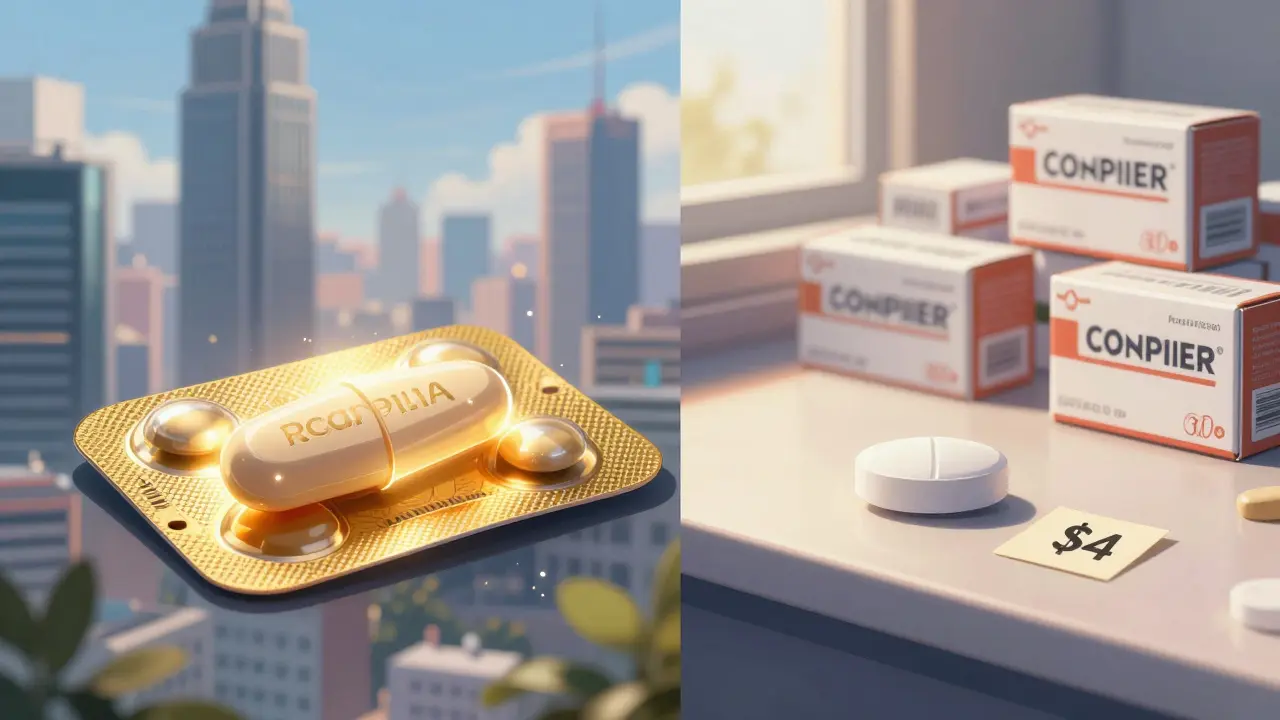
Every year, Americans spend over $400 billion on prescription drugs. But here’s the surprising part: generic drugs make up 90% of all prescriptions filled - and only 18% of the total cost. That’s not a typo. You’re paying 80-85% less for the exact same medicine, and it’s not magic. It’s science, regulation, and market forces at work.
Same Active Ingredient, Different Price Tag
A generic drug isn’t a cheaper version. It’s the same drug. The same active ingredient. Same dosage. Same way it works in your body. If your doctor prescribes atorvastatin, the generic version of Lipitor, it’s not a substitute - it’s the identical medicine. The FDA requires that generics deliver the same amount of active ingredient into your bloodstream at the same rate as the brand-name version. That’s called bioequivalence. And it’s not a loose standard. The FDA demands that generic drugs stay within 80-125% of the brand’s blood concentration levels. That’s tight enough to ensure your blood pressure, cholesterol, or thyroid levels respond exactly the same. So why does a 30-day supply of generic atorvastatin cost $4, while the brand-name Lipitor runs $500? The answer isn’t quality. It’s cost.The $2.6 Billion Hurdle
Brand-name drug companies don’t just wake up one day and start selling pills. They spend 8 to 12 years and an average of $2.6 billion developing a single new drug. That includes everything: lab research, animal testing, dozens of clinical trials with thousands of patients, regulatory paperwork, and marketing. The goal? Prove the drug is safe and effective - and get a patent. That patent gives them 20 years of exclusive rights to sell the drug without competition. Those 20 years aren’t just about making money. They’re about recouping the investment. If you spent $2.6 billion on research and only one in ten drugs makes it to market, you need to charge enough to cover the failures. That’s why brand-name drugs start at sky-high prices. It’s not greed. It’s economics.How Generics Skip the Cost
Once the patent expires, generic manufacturers don’t need to start from scratch. They don’t need to run new animal studies. They don’t need to repeat Phase I, II, and III clinical trials. Instead, they file an Abbreviated New Drug Application (ANDA) with the FDA. The word “abbreviated” is key. It means they only need to prove their version is bioequivalent to the brand-name drug. That cuts development time from 10+ years to 1-3 years - and costs from billions to $1-5 million per drug. The FDA still inspects their factories. They still require the same strict quality controls. The generic pill must stay potent within 90-110% of its label claim over its shelf life. The manufacturing standards are identical. The only thing that changes is the cost to get there.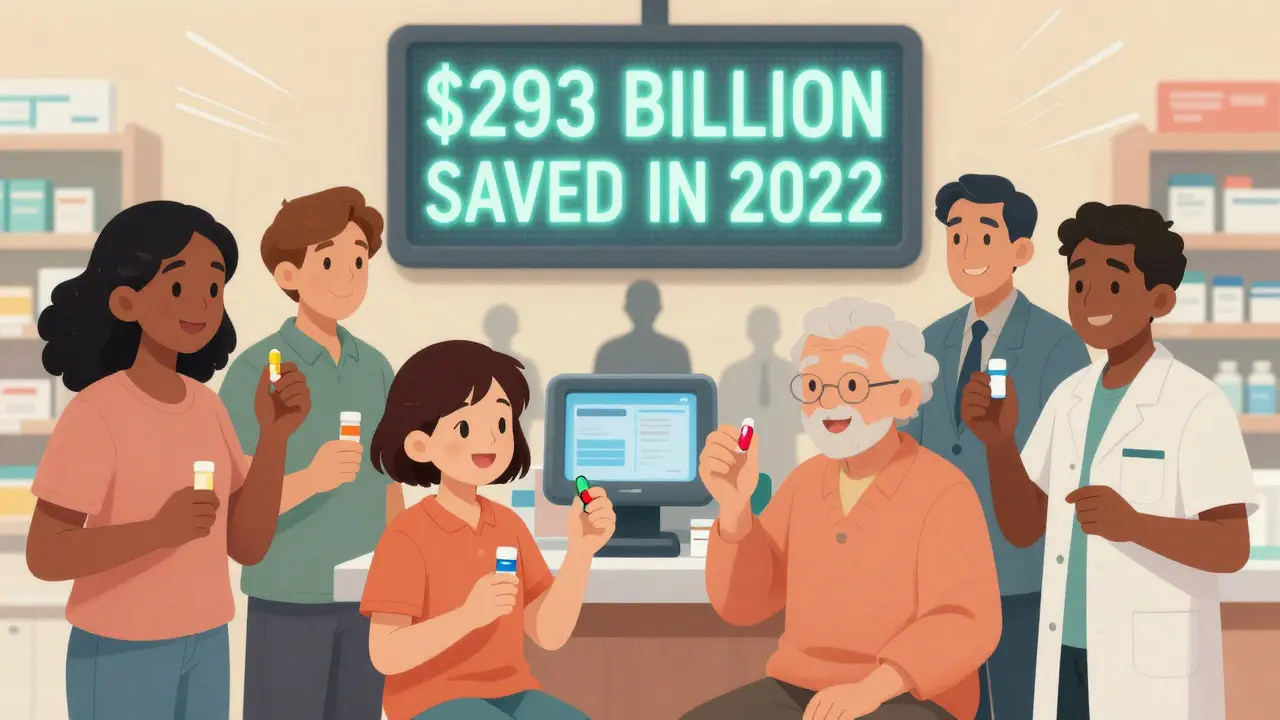
Competition Drives Prices Down
The real price drop happens after the first generic enters the market. Within a year, 5-10 more companies join. By the time 14 manufacturers are making the same drug, prices plummet. That’s not speculation. The Congressional Budget Office found that generic competition typically cuts prices by 80-90% in the first year. For some drugs, like metformin or lisinopril, you can buy a year’s supply for less than $10. It’s basic economics: more suppliers = lower prices. Brand-name companies don’t have that problem - they’re the only ones selling. Generics do. And they compete hard. That’s why pharmacies can offer $4 generic prescriptions at Walmart, CVS, and Target. It’s not a loss leader. It’s a profitable business model built on volume and low overhead.Why People Still Doubt Generics
Despite all the evidence, many people still believe generics are inferior. A 2023 survey found that 62% of Americans trust brand-name drugs more - even though 84% admit generics work just as well. Why the disconnect? It’s mostly about appearance. Generic pills look different. They’re a different color, shape, or size. That’s because trademark laws prevent generics from copying the brand’s look. So if you’ve been taking a blue oval pill for years and your pharmacist hands you a white capsule, your brain says, “This isn’t the same.” Some patients report side effects after switching. But studies show these are often placebo effects - or tied to other factors like stress, diet, or changing dosing schedules. The FDA has reviewed over 1,000 studies and found no consistent evidence that generics are less effective. There are rare exceptions. For drugs with a narrow therapeutic index - like warfarin, levothyroxine, or phenytoin - even tiny differences in absorption can matter. That’s why some doctors prefer to keep patients on the same brand or generic manufacturer. But even then, switching between FDA-approved generics is still safe. The issue isn’t the generic itself - it’s inconsistent switching between multiple generic brands.What You’re Really Paying For
When you pay $500 for Lipitor, you’re not paying for the chemical. You’re paying for the 12 years of research, the failed drugs, the marketing campaigns, the sales reps, and the corporate overhead. When you pay $4 for generic atorvastatin, you’re paying for the active ingredient, the capsule, the label, and a few cents for profit. The rest? Gone. Insurance plans know this. That’s why they push generics. Most have three-tier formularies: Tier 1 is generic (copay $0-$15), Tier 2 is brand-name (copay $25-$50), and Tier 3 is specialty drugs (coinsurance up to 33%). If you ask for the brand when a generic is available, your insurer will likely deny coverage - unless your doctor files a prior authorization.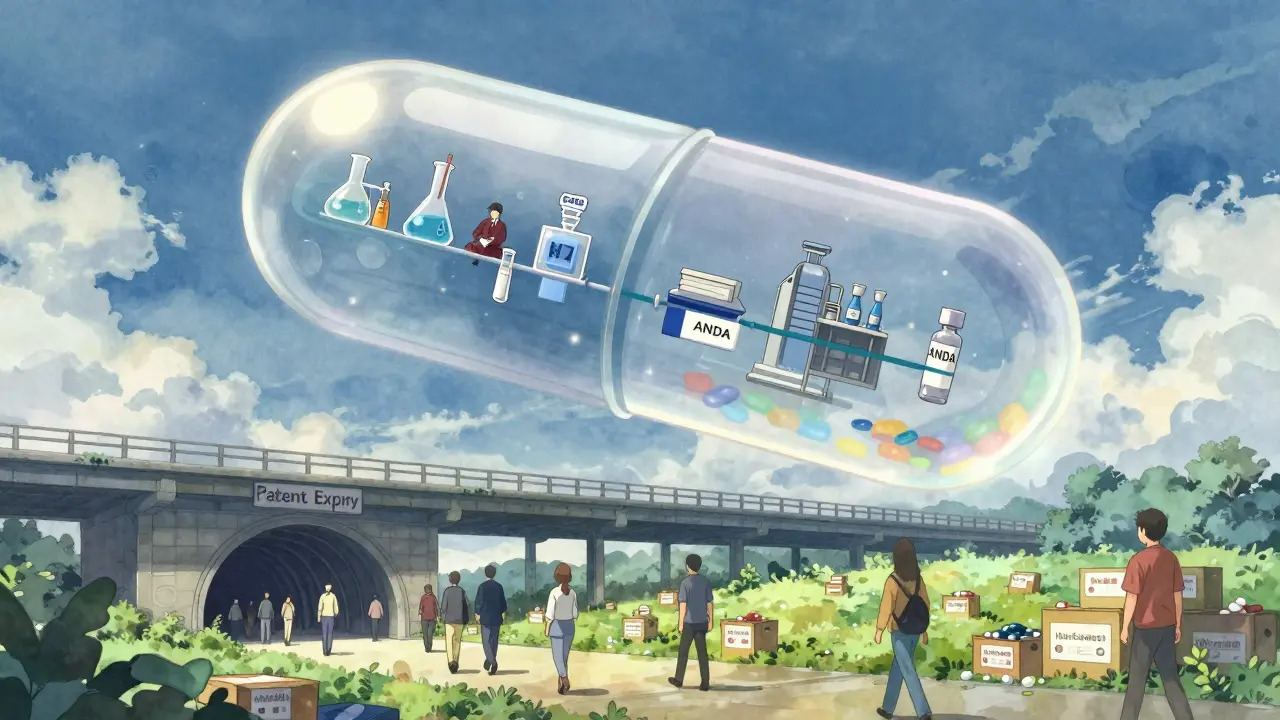
Generics Save Billions - And Lives
From 2007 to 2016, generic drugs saved the U.S. healthcare system $1.67 trillion. In 2022 alone, they saved $293 billion. That’s not just money. It’s access. People who can’t afford brand-name drugs skip doses, split pills, or go without. Generics change that. A 2023 study found patients on generics were 25% more likely to stick to their medication schedule. Companies like Teva, Mylan (Viatris), Sandoz, Amneal, and Aurobindo make most of the generics you take. They’re not flashy. They don’t run Super Bowl ads. But they’re the reason millions of Americans can afford insulin, blood pressure meds, and antidepressants.What You Should Do
If your doctor prescribes a brand-name drug, ask: “Is there a generic?” If they say no, ask why. For 90% of prescriptions, the answer will be yes. If cost is an issue, ask your pharmacist about patient assistance programs. Many manufacturers offer free or discounted generics through RxOutreach and other nonprofits. Don’t let the pill’s color or shape scare you. The FDA doesn’t approve a generic unless it works the same. If you notice a real change in how you feel after switching, talk to your doctor. But don’t assume the generic is the problem. Chances are, it’s working exactly as it should.What’s Next?
The FDA is speeding up approval for complex generics - things like inhalers, injectables, and ointments that used to take years to get approved. The Biden administration is pushing to end “pay-for-delay” deals, where brand companies pay generics to stay off the market. And with over 150 brand-name drugs set to lose patent protection by 2028, expect even more savings ahead. Generics aren’t a compromise. They’re the smart choice. They’re the reason millions of people can afford to stay healthy. And they’re not going anywhere.Are generic drugs as effective as brand-name drugs?
Yes. The FDA requires generic drugs to have the same active ingredient, strength, dosage form, and route of administration as the brand-name version. They must also prove bioequivalence - meaning they deliver the same amount of medicine into your bloodstream at the same rate. Over 1,000 studies confirm generics work just as well. For 90% of medications, there’s no difference in effectiveness or safety.
Why do generic pills look different?
Trademark laws prevent generic manufacturers from making their pills look identical to the brand-name version. That means color, shape, size, and flavor can be different - but the active ingredient is the same. These differences are purely cosmetic and have no effect on how the drug works in your body.
Can I switch between different generic brands?
For most drugs, yes. All FDA-approved generics meet the same standards. But for medications with a narrow therapeutic index - like warfarin, levothyroxine, or phenytoin - small changes in absorption can matter. If you’re on one of these, your doctor may recommend sticking with the same generic manufacturer. Always talk to your pharmacist before switching between generic brands.
Why are generics cheaper if they’re the same?
Brand-name drugs cost billions to develop and require years of clinical trials. Generics skip those costs because they don’t need to repeat safety and effectiveness studies. They only prove bioequivalence, which takes months, not years. Plus, once multiple companies start making the same drug, competition drives prices down. It’s not about quality - it’s about who paid for the research.
Are there any risks with generic drugs?
The risks are the same as brand-name drugs - side effects, interactions, and allergies. There’s no increased risk from using a generic. The FDA holds all manufacturers to the same quality standards. In rare cases, patients report feeling different after switching, but studies show this is usually due to psychological factors or changes in inactive ingredients - not the active drug. If you notice real changes, talk to your doctor.
How do I know if my insurance covers generics?
Most insurance plans put generics in Tier 1, with the lowest copay - often $0 to $15. Brand-name drugs are usually Tier 2 or 3, costing $25 to $50 or more. If you ask for the brand when a generic is available, your insurer may deny coverage unless your doctor requests an exception. Always check your plan’s formulary or ask your pharmacist.



Milla Masliy
January 13, 2026 AT 05:01Just wanted to say I switched my mom to generic lisinopril last year after her cardiologist said it was fine. She was nervous too-said the pill looked weird. But her BP’s been stable, and she’s saving $120 a month. Honestly? If the FDA says it’s the same, I trust them. No need to overpay for a logo.
Also, props to Teva and Sandoz. They’re the real MVPs of American healthcare.
sam abas
January 14, 2026 AT 16:20Look, I get the whole ‘same active ingredient’ spiel, but let’s be real-generics are made in factories that sometimes have more bugs than my Windows 98 desktop. I read a study once where one generic metformin had a 12% variance in dissolution rate. Not 12% bioequivalence-12% dissolution. That’s not within 80-125%, that’s a goddamn rollercoaster.
And don’t get me started on the fillers. Talc? Corn starch? Some of these generics have more inactive junk than my grandma’s pantry. I’m not saying they’re dangerous-I’m saying they’re not *exactly* the same. And if you’re on warfarin, you’re basically playing Russian roulette with a pill that looks like a Tic Tac.
Also, why do they always make generics look like vomit? Blue oval? Nah. White capsule with a weird stripe? That’s not medicine, that’s a failed art project.
Damario Brown
January 15, 2026 AT 23:10Bro. The FDA doesn’t even inspect 5% of these factories. You think they’re checking every batch? Nah. They get a tip from a whistleblower and then they show up with a flashlight and a clipboard. Meanwhile, your $4 generic is sitting in a warehouse in Mumbai with a temp of 110°F for 3 weeks. The active ingredient’s probably half-dead by the time it hits your cabinet.
And don’t even get me started on the ‘bioequivalence’ loophole. 80-125%? That’s a 45% window. If your brand drug hits 100% absorption and the generic hits 55%, you’re getting less than half the dose. You think your blood pressure knows the difference? It doesn’t. But your kidneys do.
Also, who the hell approves these things? A guy with a PowerPoint and a Starbucks cup?
Avneet Singh
January 17, 2026 AT 03:59While the economic rationale is compelling, one must interrogate the epistemological foundations of bioequivalence as a proxy for therapeutic equivalence. The FDA’s 80-125% confidence interval is statistically permissible but clinically negligent when applied to pharmacokinetic variables in heterogeneous populations. One cannot reduce therapeutic outcomes to a Gaussian distribution when human physiology operates in a nonlinear, polygenic space.
Furthermore, the commodification of pharmaceuticals under neoliberal market structures renders the ‘generic’ not as a democratizing force, but as a mechanism of pharmacological austerity. The pill may be identical, but the patient’s lived experience is not.
Also, the color of the capsule matters. It’s not placebo. It’s semiotics.
Adam Vella
January 18, 2026 AT 22:39It is imperative to recognize that the perception of inferiority toward generic medications stems not from empirical deficiency, but from a deeply ingrained cultural bias toward branded commodities. The human psyche associates visual familiarity with efficacy, a phenomenon well-documented in cognitive psychology. The color, shape, and imprint of a pill function as conditioned stimuli-reinforced by decades of advertising and institutional trust.
Moreover, the economic argument, while valid, fails to account for the moral hazard inherent in a system that incentivizes pharmaceutical innovation through monopolistic pricing. One cannot simultaneously decry corporate greed and demand that innovation be sustained by profit-driven patents.
Generics are not a compromise. They are a necessary correction to market failure. But the real tragedy is not the price-it is the lack of public literacy.
Nelly Oruko
January 19, 2026 AT 22:02My doc switched me to generic levothyroxine and I felt like a zombie for two weeks. Turns out, I was on a different generic brand every refill. My pharmacist didn’t tell me. Now I stick to one brand-same generic, same maker. No more guessing.
It’s not about brand vs generic. It’s about consistency.
vishnu priyanka
January 21, 2026 AT 06:51Man, I remember when I had to choose between buying my dad’s blood pressure med or groceries. Generic saved his life. I don’t care if it’s blue or white or smells like old socks-when your blood pressure drops from 190 to 120 and you’re not broke, you don’t ask questions.
Also, side note: the guy who makes generic metformin? He’s a hero. No Super Bowl ad. Just a guy in a lab coat making sure people don’t die because they can’t afford insulin. Respect.
Alan Lin
January 22, 2026 AT 20:21Let me be clear: if you’re still skeptical about generics, you’re not being cautious-you’re being irresponsible. The data is overwhelming. The FDA’s standards are among the strictest in the world. Every generic manufacturer is subject to the same inspections, same purity tests, same shelf-life requirements. The only difference? They didn’t spend $2.6 billion on a marketing campaign featuring a dancing pill.
And for those who say they ‘feel different’ after switching? You’re not alone. But it’s not the drug. It’s the fear. It’s the anxiety. It’s the fact that we’ve been conditioned to believe that more expensive = better. That’s not science. That’s capitalism.
If you’re on a narrow-therapeutic-index drug, fine. Stick with one manufacturer. But don’t let FUD keep you from saving hundreds a year. Your bank account-and your health-will thank you.
Lethabo Phalafala
January 23, 2026 AT 15:56OH MY GOD. I just realized I’ve been paying $500 for Lipitor for THREE YEARS. I just switched to atorvastatin and I’m crying. Not because I’m sad-because I’m FREE. I’m not rich, I’m not fancy, I’m just a single mom who works two jobs and now I can afford my kid’s asthma inhaler too.
Thank you to whoever wrote this. You just changed my life.
Lance Nickie
January 25, 2026 AT 01:54generics r just as good. stop being a simp for big pharma.
Clay .Haeber
January 25, 2026 AT 04:48Oh wow, so the ‘same drug’ is now a public service announcement? Congrats, you just turned a $2.6 billion R&D gamble into a morality tale for the working class. Let me guess-the next article is ‘Why Your iPhone 15 is Just As Good as the iPhone 1’ because Apple doesn’t need to ‘reinvent the wheel’?
Here’s the truth: generics aren’t cheaper because they’re better. They’re cheaper because the system *wants* you to believe they’re the same. So you don’t revolt when your insulin costs $300.
And hey, if you really believe in bioequivalence, why don’t you take the generic version of your antidepressant… and then post a selfie with it on LinkedIn? Just curious.