
Meglitinides and Hypoglycemia: Why Skipping Meals Is Dangerous with These Diabetes Drugs
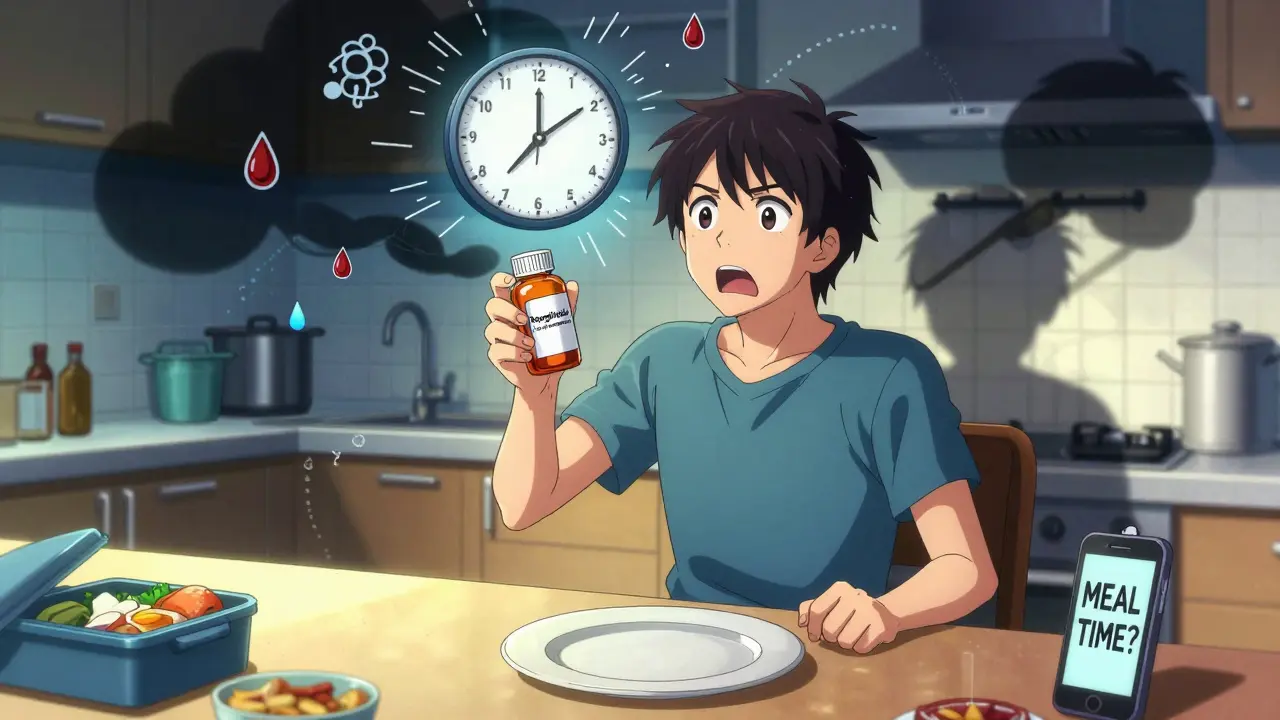
When you’re managing type 2 diabetes, meal timing isn’t just about eating healthy-it can be a matter of life or death if you’re taking meglitinides. These drugs, including repaglinide and nateglinide, are designed to help control blood sugar spikes after meals. But here’s the catch: if you skip a meal, your blood sugar can crash-fast. Unlike other diabetes medications, meglitinides don’t just work all day. They act like a switch: turn it on when you eat, turn it off when you don’t. And if you forget to eat? The switch stays on.
How Meglitinides Work (And Why It’s a Double-Edged Sword)
Meglitinides are fast-acting insulin secretagogues. That means they tell your pancreas to release insulin quickly-within 15 to 30 minutes of taking them. Repaglinide hits peak levels in about 30 to 60 minutes, while nateglinide does it even faster, within 15 minutes. Their effects last only 2 to 4 hours. This makes them perfect for people who eat at odd hours, work night shifts, or have unpredictable appetites.
But that same speed is what makes them risky. When you take a meglitinide, your body starts pumping out insulin whether or not food is coming. If you don’t eat within that window, insulin keeps working, glucose keeps dropping, and you can slip into hypoglycemia-low blood sugar-within 90 minutes. Studies show skipping just one meal after taking a meglitinide increases hypoglycemia risk by 3.7 times. That’s not a small bump. That’s a cliff.
Who’s Most at Risk?
You don’t have to be elderly to be vulnerable. But older adults are especially at risk. Why? Because aging often brings irregular eating patterns-forgetting meals, eating less, or having nausea from other medications. The American Diabetes Association’s 2025 Standards of Care specifically warn that older adults face higher hypoglycemia risk when meals are inconsistent. And it’s not just about age.
People with advanced kidney disease are another high-risk group. While repaglinide is metabolized mostly by the liver (making it safer than sulfonylureas in kidney patients), studies still show a 2.4-fold increase in hypoglycemia events in those with eGFR below 30 mL/min/1.73m². The body’s ability to clear insulin and regulate glucose slows down. So even a small insulin surge can overwhelm the system.
And if you’re taking more than one diabetes drug-say, a meglitinide plus insulin or a sulfonylurea-the risk multiplies. One 2017 study found combining meglitinides with insulin raised hypoglycemia risk with statistical significance (p=0.018). It’s not that the drugs are bad. It’s that together, they flood your system with insulin and leave you with no safety net if dinner is late.
The Meal-Timing Paradox
Meglitinides were created for people with irregular schedules. But they demand the opposite: extreme consistency. You can’t take them “just in case.” You can’t take them early. You can’t take them if you’re not sure you’ll eat. The official guidance from Memorial Sloan Kettering is clear: “Take it 15 minutes before you eat. Waiting too long to eat after you take the medicine raises the risk of hypoglycemia.”
Real-world data backs this up. Nearly 41% of all hypoglycemia episodes in meglitinide users happen between 2 and 4 hours after dosing-the exact time when insulin peaks. That’s not random. That’s predictable. And it’s avoidable.
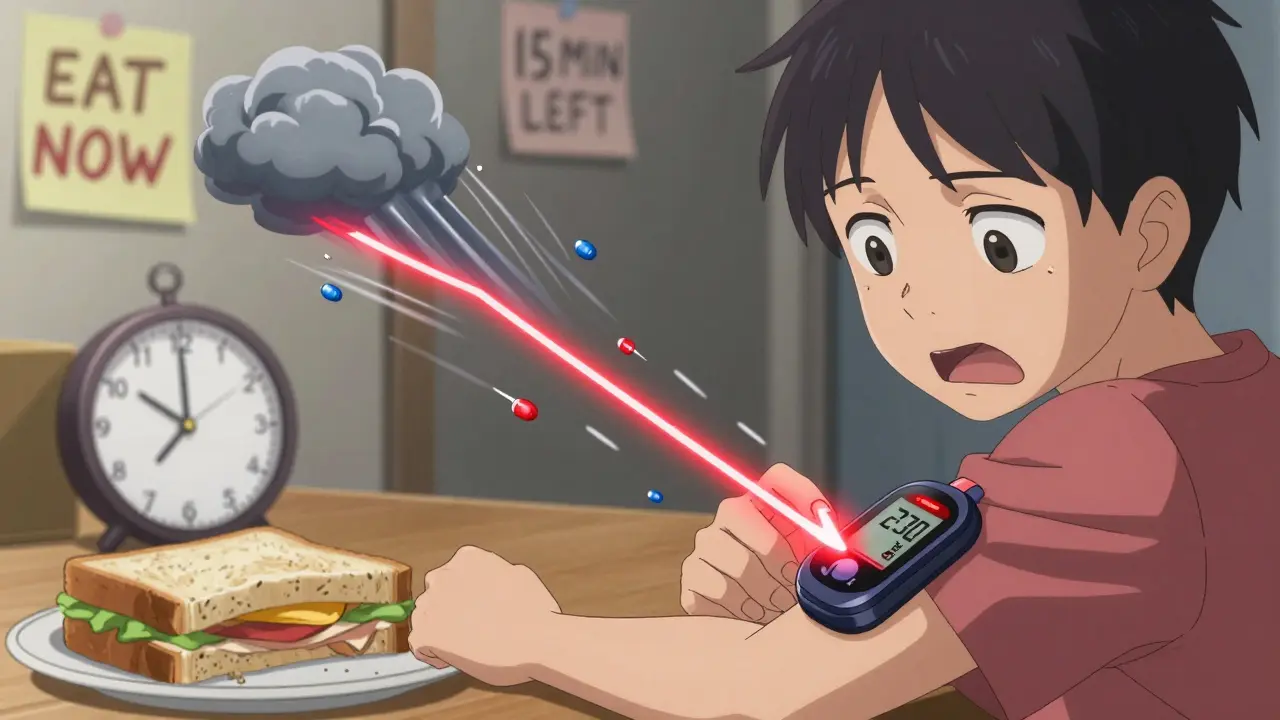
Many patients think, “I’ll just take it when I’m hungry.” That sounds logical. But it’s dangerous. If you’re hungry but don’t eat right away-maybe you’re stuck in traffic, or your child needs help, or you’re just not feeling well-you’ve already triggered insulin release. Now you’re on the clock. And if you wait 45 minutes to eat? You’re already in danger zone.
How to Stay Safe
There’s no magic fix. But there are proven strategies:
- Never dose unless you’re eating within 15 minutes. If you’re unsure, skip the dose. Better low blood sugar than no meal.
- Keep fast-acting carbs handy. Glucose tablets, juice boxes, or hard candies should be in your bag, car, and desk drawer. If you feel shaky, dizzy, or sweaty-eat something now.
- Use a meal reminder app. A 2023 trial showed patients using smartphone alerts for meals reduced hypoglycemia by 39%. Set a 20-minute pre-meal alarm. Even if you eat late, the reminder helps you pause and reassess.
- Consider continuous glucose monitoring (CGM). For anyone with irregular eating patterns, CGM is a game-changer. Studies show it cuts hypoglycemia episodes by 57% in meglitinide users. You’ll see your blood sugar drop before you feel it.
- Stick to consistent carb intake. Skipping meals is bad. Eating a huge meal after a skipped one is worse. Try to keep carbs within 30-45 grams per meal. It helps insulin do its job without overshooting.
How Meglitinides Compare to Other Drugs
Not all diabetes meds are the same. Here’s how meglitinides stack up:
| Medication | Duration of Action | Hypoglycemia Risk with Missed Meals | Best For |
|---|---|---|---|
| Repaglinide | 2-4 hours | Very High | Irregular meal schedules |
| Nateglinide | 2-4 hours | Very High | Post-meal glucose spikes |
| Sulfonylureas (e.g., glipizide) | 12-24 hours | High (always) | Consistent daily routines |
| Metformin | 24 hours | Low | First-line therapy |
| GLP-1 agonists (e.g., semaglutide) | 24-72 hours | Low (unless combined with insulin) | Weight loss + glucose control |
Notice something? Meglitinides are the only ones where hypoglycemia risk is almost entirely tied to meal timing. Sulfonylureas can cause low blood sugar anytime-day or night. But meglitinides? They’re silent until you miss lunch. Then they strike hard.

The Future: New Formulations and Better Tools
Researchers are trying to fix the problem. A Phase II trial in 2024 tested an extended-release version of repaglinide-called repaglinide XR. It lowered hypoglycemia episodes by 28% in patients with erratic eating patterns. That’s promising. But it’s still early. The core mechanism remains: insulin release triggered by food. That’s not going away.
Meanwhile, technology is stepping in. Apps that remind you to eat, CGMs that warn you before your blood sugar crashes, and even smart pill dispensers that won’t release the dose unless you confirm you’ve eaten. These aren’t sci-fi. They’re available now.
Bottom Line
Meglitinides aren’t for everyone. They’re a specialized tool for a specific group: people with unpredictable meals who can’t use sulfonylureas (maybe due to kidney issues) or who had bad reactions to other drugs. But if you’re on one, treat it like a loaded gun. Don’t take it unless you’re ready to eat. Keep snacks close. Set alarms. Use a CGM if you can. And never assume you’ll “just eat later.” Because in the world of meglitinides, later is too late.


Milad Jawabra
March 5, 2026 AT 16:29Richard Elric5111
March 6, 2026 AT 03:09Dean Jones
March 8, 2026 AT 02:46Betsy Silverman
March 9, 2026 AT 18:44Ivan Viktor
March 11, 2026 AT 01:19Jeff Card
March 12, 2026 AT 03:21Renee Jackson
March 13, 2026 AT 08:22RacRac Rachel
March 14, 2026 AT 21:47Jane Ryan Ryder
March 16, 2026 AT 16:45Callum Duffy
March 16, 2026 AT 21:02Sharon Lammas
March 17, 2026 AT 22:22Aisling Maguire
March 18, 2026 AT 16:19marjorie arsenault
March 19, 2026 AT 22:06Deborah Dennis
March 20, 2026 AT 13:02Shivam Pawa
March 22, 2026 AT 05:20