
Antiretroviral HIV Medications: Understanding Complex Interactions and Drug Resistance

HIV Drug Interaction Checker
Check for Potential Interactions
Select your HIV medication and other medications to see if there are dangerous interactions.
Interaction Results
Select HIV medication and other medications to see interaction results.
When someone is diagnosed with HIV today, the news doesn’t mean the same thing it did in the 1980s. Thanks to antiretroviral therapy (ART), HIV is no longer a death sentence-it’s a manageable condition. But behind that simple truth lies a complex web of drug interactions, resistance patterns, and biological challenges that can make treatment either smooth or risky. Not all medications work the same way. Not all people respond the same way. And skipping a dose, mixing pills with other drugs, or ignoring resistance testing can undo years of progress.
How Antiretroviral Drugs Work
Antiretroviral medications don’t cure HIV. They stop the virus from multiplying. There are six main classes of these drugs, each attacking HIV at a different stage of its life cycle. The most common are nucleoside reverse transcriptase inhibitors (NRTIs), like tenofovir and emtricitabine, which trick the virus into using faulty building blocks. Then there are non-nucleoside reverse transcriptase inhibitors (NNRTIs), such as doravirine and rilpivirine, that bind to the enzyme reverse transcriptase and jam it. Protease inhibitors (PIs) block the virus from cutting its proteins into usable pieces. Integrase strand transfer inhibitors (INSTIs), like dolutegravir and bictegravir, prevent HIV from inserting its DNA into human cells-the step that makes the infection permanent.These drugs are almost never used alone. Modern treatment always combines at least two NRTIs with a third drug from another class. Why? Because HIV mutates fast. If you hit it with one drug, it might evolve a way around it. But hit it with three different attacks at once, and it’s far less likely to survive. This is why first-line regimens today are usually pills like Biktarvy (a fixed-dose combination of bictegravir, emtricitabine, and tenofovir alafenamide) or Dovato (dolutegravir and lamivudine). These are simple, effective, and have high barriers to resistance.
Why Resistance Happens
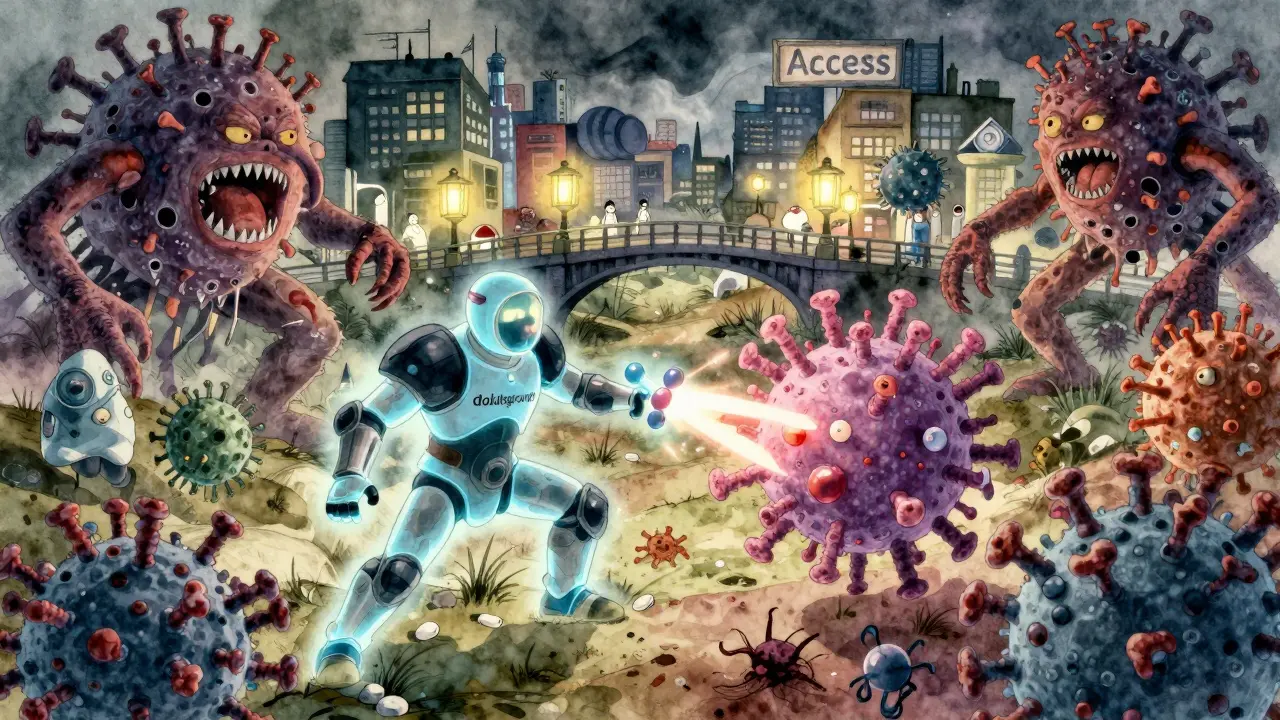
Resistance isn’t magic. It’s evolution. Every time HIV copies itself, it makes mistakes-mutations. Most of these mutations hurt the virus. But sometimes, one accidentally lets it escape a drug. If that person isn’t taking their meds perfectly, the drug levels drop just enough for that mutant strain to survive and take over. That’s resistance.Some drugs are easier to resist than others. Older NNRTIs like efavirenz can be knocked out by a single mutation-K103N. But dolutegravir? It needs multiple mutations in the right spots before it loses power. That’s why INSTIs like dolutegravir and bictegravir are now the gold standard. A 2025 study in JAMA found that only 0.4% of people on dolutegravir-based regimens developed resistance after two years, compared to 3.2% on efavirenz.
Even newer drugs aren’t foolproof. In early 2025, researchers presented data on a new INSTI called VH-184, designed specifically to fight strains resistant to dolutegravir. In a small trial, it cut viral load by nearly 2 logs in people who had failed other treatments. But here’s the catch: if you miss even one dose of a long-acting injectable like Cabenuva or the new six-month lenacapavir, drug levels stay low for weeks. That’s a perfect setup for resistance to build quietly.

Drug Interactions: The Silent Threat
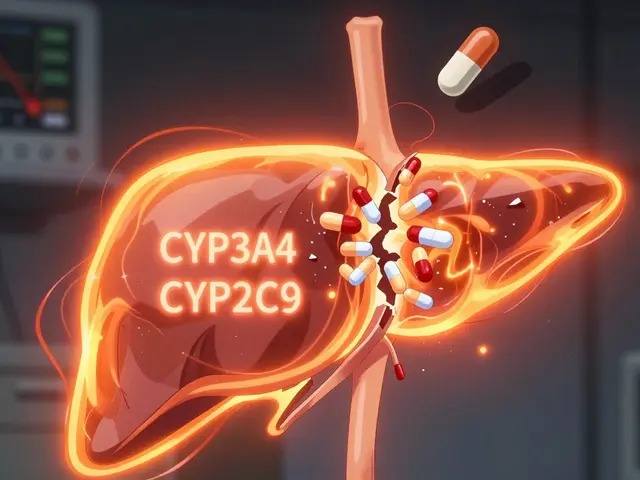
Many people with HIV also take medications for high blood pressure, diabetes, cholesterol, or mental health. Some of those drugs can dangerously interfere with ART.Boosted PIs-like darunavir or lopinavir-are especially risky. They’re often paired with a small dose of ritonavir or cobicistat to boost their effect. But those boosters also slam the brakes on liver enzymes (CYP3A4) that break down other drugs. The result? Toxic levels of statins, sedatives, or even some antidepressants can build up. Simvastatin? Absolute no-go. Midazolam? Seven times higher concentration. That’s why the Liverpool HIV Interactions Database lists over 12 major drug classes that can’t be safely combined with boosted PIs.
Even newer drugs aren’t clean. Doravirine is much safer than efavirenz, but it still interacts with some antifungals and seizure meds. Tenofovir can hurt kidney function, so combining it with NSAIDs like ibuprofen or certain antibiotics increases risk. And abacavir? It can trigger a life-threatening allergic reaction in people with the HLA-B*5701 gene variant. That’s why everyone gets tested for it before starting abacavir.
Here’s the reality: nearly half of people with HIV take five or more other medications. A single pharmacy visit can miss a dangerous combo. That’s why tools like the NIH’s HIV Drug Interaction Checker-used over 1 million times a year-are critical. Clinicians can’t rely on memory. They need real-time data.
The Human Side: Adherence, Side Effects, and Missed Doses
Resistance isn’t just about biology. It’s about behavior. On Reddit’s r/HIV community, 68% of recent posts about treatment failure cited missed doses. One person described stopping Atripla because the efavirenz gave them nightmares. Another stopped taking Truvada for PrEP because they forgot daily pills. Both ended up with resistant strains.Side effects matter. Tenofovir disoproxil fumarate (TDF) can cause bone loss and kidney stress. Studies show people on TDF lose 40% more bone density over 3 years than those on abacavir. That’s why tenofovir alafenamide (TAF) replaced it in most new regimens-it works at 90% lower doses and is gentler on bones and kidneys.
Neuropsychiatric side effects from NNRTIs like efavirenz still haunt people. Anxiety, depression, insomnia. One 2024 survey found 37% of those who switched regimens did so because of these effects. Meanwhile, 89% of people on dolutegravir-based pills reported no side effects that affected their daily life.
Long-acting injectables like Cabenuva (monthly shots) are changing the game. In clinical trials, 94% of users preferred them over daily pills. But 12% quit because of painful injection sites. And if you miss a shot? The drug lingers at low levels for months-just enough to let resistant strains grow without you even knowing.
Testing, Tracking, and the Future
Resistance testing isn’t optional anymore. The U.S. Department of Health and Human Services requires it at diagnosis and every time treatment fails. As of 2025, 82% of newly diagnosed people get tested-up from 45% in 2015. But access isn’t equal. Rural clinics often wait 30+ days for results. Urban labs deliver in 14.Interpretation is just as important as the test. A genotype report doesn’t just say “resistant.” It tells you which mutations are present, how they affect each drug, and what alternatives remain. Tools like the Stanford HIVdb algorithm help clinicians decode this. But not all providers are trained. Community doctors need 16 hours of special training just to read these reports accurately.
The future is moving fast. Lenacapavir, approved in 2022 and now recommended by WHO for prevention, is a game-changer. A single injection lasts six months. ViiV’s VH-184, still in trials, could handle even the toughest resistant strains. And AI tools like HIV-TRACE are being trained to predict transmission clusters based on genetic patterns-helping public health teams stop outbreaks before they spread.
But the biggest threat isn’t the virus. It’s inequality. In sub-Saharan Africa, nearly 30% of new HIV cases involve drug-resistant strains. In the U.S., it’s 16.7%. Why? Because in low-resource settings, people often start treatment with limited options, miss doses due to food insecurity or transportation issues, and lack access to resistance testing. The tools exist. The science is solid. But if access doesn’t catch up, resistance will keep growing.
What This Means for You
If you’re on ART, take your meds exactly as prescribed. Even one missed dose can matter, especially with newer long-acting options. Tell your provider every medication you take-even vitamins, herbs, or over-the-counter painkillers. Get resistance tested if your viral load rises. Don’t assume your regimen will work forever. And if you’re on a daily pill, consider whether a long-acting option might fit your life better.For everyone else: HIV treatment has come a long way. But it’s not simple. It’s not automatic. It’s a partnership between science, discipline, and access. And that partnership still has cracks.
What’s the difference between drug resistance and treatment failure?
Treatment failure means your viral load isn’t dropping or has gone back up. Drug resistance means the virus has mutated in a way that makes specific drugs ineffective. Not all treatment failure is due to resistance-sometimes it’s just missed doses or poor absorption. But if resistance is confirmed, your regimen must change.
Can I switch from a daily pill to an injection?
Yes, if you’ve been virally suppressed for at least six months and have no history of resistance to the drugs in the injectable. Cabenuva (cabotegravir + rilpivirine) and Sunlenca (lenacapavir) are options. But you must be able to stick to monthly or twice-yearly appointments. Missing an injection increases resistance risk.
Are generic HIV drugs as good as brand names?
For most NRTIs like tenofovir or lamivudine, yes-generics are identical in efficacy and safety. But for newer drugs like INSTIs, generics aren’t available yet. Even when they are, switching from a brand-name combo pill to separate generics can increase pill burden and risk non-adherence. Always consult your provider before switching.
Why is resistance testing done at diagnosis?
About 1 in 6 new HIV infections in the U.S. involve a drug-resistant strain. If you start treatment without knowing this, you might get a regimen that won’t work. Testing at diagnosis ensures your first regimen is effective from day one.
Can I take HIV meds with alcohol or recreational drugs?
Moderate alcohol is usually fine, but heavy drinking can hurt your liver and make adherence harder. Some recreational drugs-especially stimulants like methamphetamine-can interfere with medication timing and increase side effects. Certain combinations, like PIs with poppers, can cause dangerous drops in blood pressure. Always discuss substance use with your provider.
What happens if I develop resistance to all drugs?
It’s rare, but possible. In those cases, clinicians turn to salvage regimens using newer drugs like lenacapavir, fostemsavir, or experimental agents like VH-184. These are often given as combinations with multiple new drugs, sometimes including infusions. Research is ongoing, and clinical trials are the best path forward. No one is truly out of options.


Anil bhardwaj
February 24, 2026 AT 00:36Man, I've been on ART for 8 years now. Never missed a dose, never had a blip. But I still get nervous every time I refill. It's not the pills I worry about-it's the other meds. My doc gave me ibuprofen for my back last year. Didn't think twice. Then I read that tenofovir + NSAIDs = kidney trouble. Scared the hell out of me. Now I keep a list of everything I take. Even turmeric supplements. You never know what's hiding in the background.
Vanessa Drummond
February 25, 2026 AT 14:40Let’s be real-most people don’t care about resistance until their viral load spikes. Then it’s panic mode. I’ve seen friends stop meds because they got tired of being ‘the HIV person.’ One guy switched to CBD oil because ‘it felt more natural.’ Guess what? His resistance profile now looks like a horror movie. Science doesn’t care how you feel. It just mutates.
Southern Indiana Paleontology Institute
February 26, 2026 AT 21:47Yall act like HIV is some super complex science thing. Nah. You take the pills. You dont skip. You dont mix with meth or beer. You get tested. Done. Stop overcomplicating it. My cousin in Texas is on generics, works fine. No drama. Just take the damn pills.
kirti juneja
February 27, 2026 AT 11:08My cousin in Delhi got diagnosed last year. She’s on a generic combo-tenofovir, lamivudine, dolutegravir. Her clinic? No fancy labs. No interaction checker. Just a nurse with a printed pamphlet and a prayer. She’s doing great, but I worry. What if she needs to take an antibiotic for a tooth infection? Or her mom gives her ashwagandha for stress? No one told her about interactions. The science is advanced, but the system? Still stuck in the 90s.
Dinesh Dawn
March 1, 2026 AT 05:36I work in a pharmacy in Bangalore. We get so many people coming in asking if they can take their HIV meds with chai or garlic tablets. I always smile and say, ‘Let’s check.’ I keep a little printed cheat sheet for common combos. No one’s ever mad. They’re just scared. If we can make it simple, we can save lives. No need for jargon. Just kindness and clarity.
Joanna Reyes
March 2, 2026 AT 18:30It’s not just about adherence or drug interactions-it’s about the invisible labor of managing HIV. You’re not just taking pills. You’re managing your identity, your relationships, your fear of being seen as ‘contagious,’ your anxiety about side effects, your guilt over skipping a dose because you were too depressed to get out of bed. The science gives us tools, but it doesn’t give us emotional scaffolding. And that’s where real failure happens-not in the lab, but in the quiet moments when no one’s watching.
David McKie
March 3, 2026 AT 03:38Oh, so now we’re romanticizing ‘adherence’ like it’s some noble virtue? Let me guess-you’re the type who thinks if you just ‘believe’ in your meds, the virus will bow down? Newsflash: HIV doesn’t care about your moral fiber. It cares about drug concentration thresholds. Miss a dose? Your virus throws a party. Take a new med? Your liver throws a tantrum. This isn’t yoga. It’s a high-stakes game of molecular Russian roulette-and too many people treat it like a lifestyle blog. Stop glorifying discipline. Start demanding systemic support.
Nick Hamby
March 4, 2026 AT 01:24The elegance of modern ART lies not in its complexity, but in its precision. We have drugs that can suppress viral replication with near-perfect fidelity-so long as pharmacokinetic integrity is maintained. Yet, the greatest vulnerability remains human behavior: the forgotten pill, the unreported supplement, the delayed lab visit. The science has outpaced our social infrastructure. We’ve engineered molecules that outwit evolution, but we’ve failed to engineer empathy, access, and consistent care. Perhaps the next frontier isn’t another drug-but a healthcare system that sees the patient as whole, not just a viral load.
Nerina Devi
March 4, 2026 AT 08:29My sister’s been on Cabenuva for a year. She hates needles. But she loves not having to think about pills every morning. She says it gave her back her peace. Last month, she missed her shot because her bus broke down and she had to work double. She was terrified. We called her clinic-they said, ‘It’s okay. We’ll monitor. You’re still protected.’ That’s the kind of care that saves lives-not just the science, but the humanity behind it.