
FDA Orange Book: How Approved Generic Drugs Are Listed
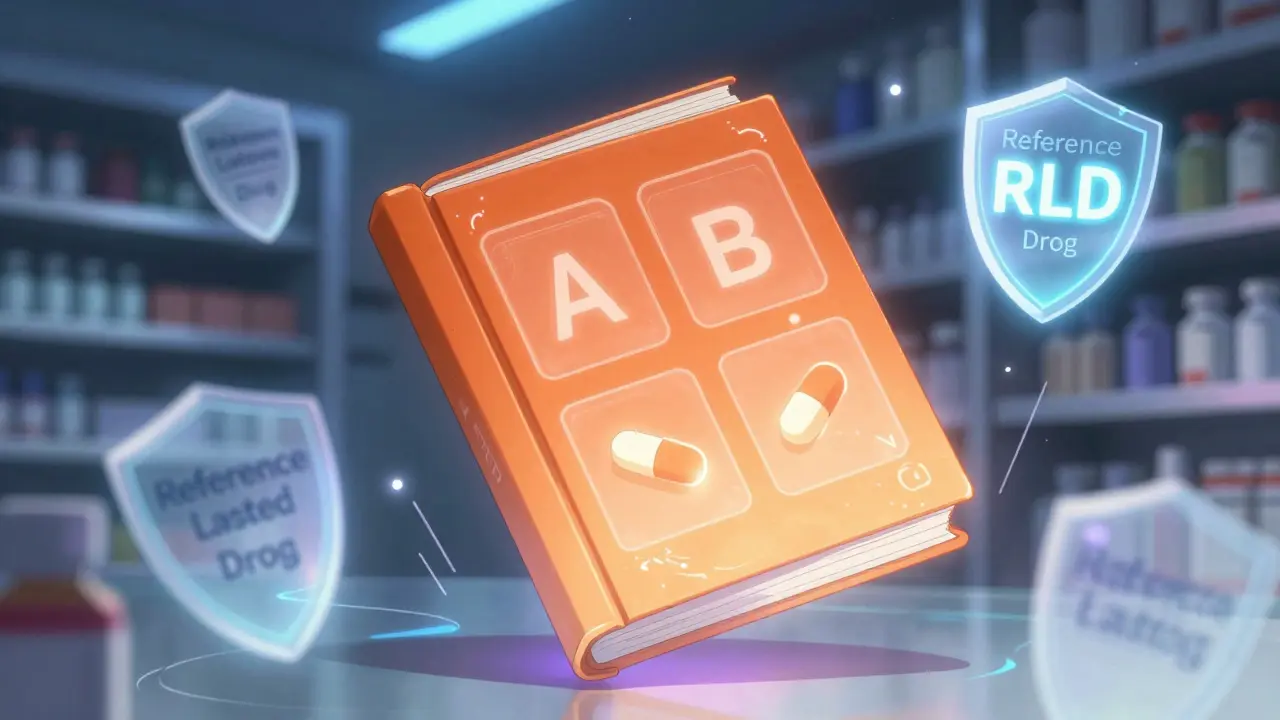
The FDA Orange Book is the official government list that tells pharmacists, doctors, and insurance companies which generic drugs can safely replace brand-name medications. It’s not just a directory-it’s the rulebook for how generics enter the U.S. market and compete with brand-name drugs. If you’ve ever picked up a prescription and been handed a cheaper pill with a different name, the Orange Book is why that swap was allowed.
What Is the FDA Orange Book?
The official name is Approved Drug Products with Therapeutic Equivalence Evaluations. It’s been around since 1984, created under the Hatch-Waxman Act to balance two goals: letting generic drugs reach the market faster, while still protecting the patents of original drugmakers. Today, it includes over 16,000 approved drug products-both prescription and over-the-counter. About 90% of all prescriptions in the U.S. are filled with generics, and the Orange Book is the reason that’s possible.
The FDA updates the Orange Book every month. You can search it online for free through the Electronic Orange Book. It’s used daily by pharmacists, pharmacy benefit managers, and generic drug manufacturers to figure out which drugs are interchangeable and which aren’t.
How Generic Drugs Get Listed
Generic drugs don’t go through the same long, expensive testing as brand-name drugs. Instead, they use a faster process called an Abbreviated New Drug Application (ANDA). To get approved, a generic company must prove their drug is bioequivalent to the original. That means it delivers the same amount of active ingredient into the bloodstream at the same rate.
Every generic must reference a specific brand-name drug as its Reference Listed Drug (RLD). The RLD is the original drug that the FDA already approved. For example, if you’re making a generic version of Lipitor (atorvastatin), Lipitor is your RLD. The Orange Book clearly marks which product is the RLD with a "Yes" in the RLD column. All the generics that follow it get marked "No."
Once the FDA approves the ANDA, the generic drug appears in the Orange Book-usually within a month of approval. It’s not enough to just have the same ingredient. The dosage form (tablet, capsule, injection), strength, route (oral, topical, etc.), and labeling must all match the RLD.
Therapeutic Equivalence (TE) Codes: What They Mean
The Orange Book doesn’t just list drugs-it rates them. Each approved product gets a Therapeutic Equivalence (TE) Code. These codes tell you if a generic can be substituted without any clinical risk.
- A codes mean the drug is therapeutically equivalent. These are the ones pharmacists can swap freely.
- B codes mean there are potential issues. Maybe the drug has a different release mechanism, or the bioequivalence data is shaky. These aren’t automatically interchangeable.
- BN means it’s a single-source product-no generics are approved yet.
- BM means it’s a multi-source product, but no therapeutic equivalence rating has been assigned yet.
For example, a generic with an "A" code for metformin can be swapped with the brand-name Glucophage. But if a generic has a "B" code for an inhaler, your pharmacist might not be allowed to substitute it-even if the active ingredient is the same-because the delivery device matters.
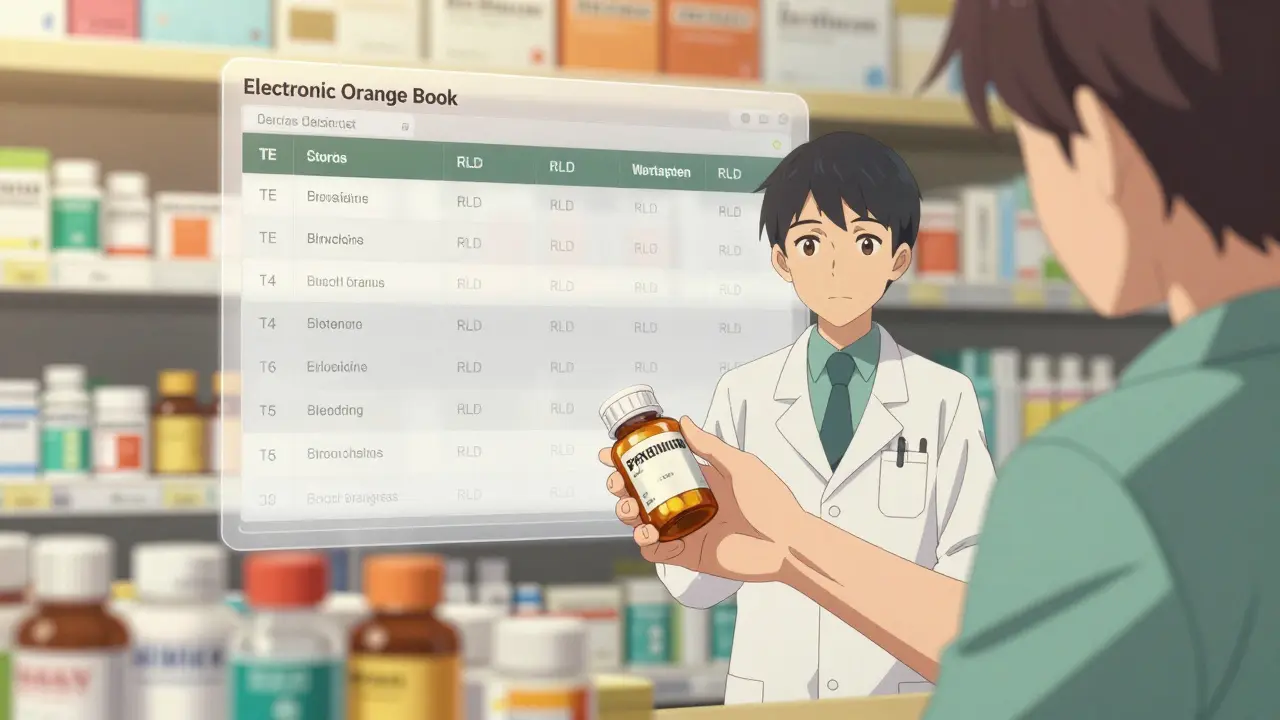
Authorized Generics: The Hidden Option
There’s another kind of generic you won’t find in the Orange Book: the authorized generic. These are the exact same drug as the brand-name version, just sold without the brand name. The manufacturer is the same company that made the original. For example, the generic version of Prilosec made by AstraZeneca is an authorized generic-it’s identical to the brand, just cheaper.
Authorized generics aren’t listed in the Orange Book because they’re approved under the original brand’s New Drug Application (NDA), not an ANDA. Instead, the FDA keeps a separate list on its website called the List of Authorized Generic Drugs. This list is updated quarterly and includes the brand name, the generic version’s name, the manufacturer, and the date it launched.
Why does this matter? Sometimes, authorized generics hit the market before any traditional generic. That means patients get lower prices faster-even before the Orange Book shows any competitors.
Patents and Exclusivity: The Gatekeepers
The Orange Book doesn’t just list drugs-it lists patents. When a brand-name company gets FDA approval, they must submit any patents covering the drug’s chemical structure, formulation, or medical use. The FDA then publishes those patents in the Orange Book.
Each patent gets a number, an expiration date, and a patent use code (like U-123). These codes describe what the patent protects-for example, "U-567" might mean "treatment of high blood pressure."
These patents create legal barriers. If a generic company files an ANDA before a patent expires, the brand-name company can sue. If they do, the FDA can delay approval for up to 30 months while the court case plays out. This is called the "30-month stay."
But here’s the twist: not all listed patents are fair. Some companies file dozens of weak or irrelevant patents to delay competition-a practice called "patent evergreening." The FDA has cracked down on this in recent years, especially after new guidance in January 2023. Now, they’re more strict about what qualifies for listing.
How to Use the Orange Book
Searching the Electronic Orange Book is simple, but it helps to know what you’re looking for.
- Start with the proprietary name (brand name) or the active ingredient (like "ibuprofen").
- Filter by dosage form (tablet, liquid, patch) and route (oral, injection, etc.).
- Look at the RLD column to find the original drug.
- Check the TE code next to each generic. Only "A" codes are fully interchangeable.
- Scroll down to see patent and exclusivity information if you’re tracking market entry.
Pharmacists often use this to verify substitutions. But even they get tripped up by complex products-like combination inhalers or topical gels-where the delivery system affects how the drug works. In those cases, the TE code might say "A," but real-world experience shows the generic doesn’t work the same way.
What’s Changing in 2025
The FDA is working on a Digital Orange Book, set to launch by the end of 2025. It will be faster, more searchable, and updated in near real-time-not just monthly. It will also include better data on complex products like inhalers and injectables, where equivalence is harder to prove.
Another big change: the FDA now requires manufacturers to report more detailed data on how their generics perform in real-world use. This is partly in response to complaints from pharmacists and patients who’ve seen cases where a generic didn’t work as expected-even though the Orange Book said it was equivalent.
And the numbers keep growing. In 2023, the FDA approved 795 new generics. That’s up from 750 a year ago. The average review time for an ANDA has dropped from 36 months in 2010 to just 10 months today. That’s thanks to the Generic Drug User Fee Amendments (GDUFA), which gives the FDA more funding to review applications faster.
Why It Matters to You
If you take prescription drugs, the Orange Book affects your out-of-pocket costs. A generic with an "A" code can save you 80% or more compared to the brand. Insurance companies often require you to try the generic first.
But if your drug has a "B" code or is still under patent protection, you might be stuck paying more. That’s why it’s worth asking your pharmacist: "Is this the generic with an A code?" If it’s not, find out why.
For people with chronic conditions-like diabetes, high blood pressure, or asthma-switching between generics can be risky if the TE code isn’t clear. The Orange Book is meant to prevent that. But it’s not perfect. Some states have their own substitution laws that don’t always match the FDA’s ratings. Always double-check with your provider if you’re unsure.
The Orange Book isn’t flashy. It doesn’t make headlines. But it’s one of the most important tools in American healthcare-keeping drug prices down, ensuring safety, and letting competition work. It’s how millions of Americans get the medicine they need without going broke.
Is the FDA Orange Book the same as Drugs@FDA?
No. The FDA Orange Book only lists drugs that have been fully approved and have a therapeutic equivalence rating. Drugs@FDA includes all applications-approved, pending, tentative, and withdrawn. A drug might appear in Drugs@FDA but not in the Orange Book if it’s still under review or only tentatively approved.
Can a generic drug be pulled from the Orange Book?
Yes. If a generic drug is withdrawn from the market, fails quality control, or if its approval is revoked, it’s moved to the Discontinued Drug Product List. It no longer appears in the Active section. This can happen even if the drug was previously rated "A" for therapeutic equivalence.
Why do some generics have different TE codes even if they have the same active ingredient?
Because the formulation, delivery system, or inactive ingredients can affect how the drug works. For example, two different generic versions of an inhaler might have the same chemical, but if one uses a different propellant or valve system, it might not deliver the same dose. That’s why the FDA assigns different TE codes based on the entire product-not just the active ingredient.
Are over-the-counter (OTC) drugs listed in the Orange Book?
Yes, they’re listed-but not evaluated for therapeutic equivalence. The Orange Book includes an OTC section, but since these drugs don’t require a prescription, the FDA doesn’t assign TE codes to them. You can still see which OTC products are approved, but you can’t use the Orange Book to determine if one OTC brand can be swapped for another.
What happens if a patent in the Orange Book is invalid?
Even if a patent is later found to be invalid or improperly listed, it doesn’t automatically get removed from the Orange Book. The FDA doesn’t judge the validity of patents-it just lists what’s submitted. Only a court can force its removal. Until then, the patent still triggers the 30-month stay for generic approval.


Randolph Rickman
December 16, 2025 AT 14:24Man, I never realized how much the Orange Book affects my monthly script costs. Just found out my generic blood pressure med has an 'A' code-saved me $40 this month. Pharma companies really don’t want you to know this stuff exists.
Thanks for laying it out so clearly.
SHAMSHEER SHAIKH
December 18, 2025 AT 10:10Dear esteemed contributors, I am profoundly grateful for this illuminating exposition on the FDA Orange Book; it is a beacon of clarity in an ocean of pharmaceutical obfuscation.
It is imperative, nay, a moral obligation, that every patient, pharmacist, and policy-maker acquaint themselves with the nuances of Therapeutic Equivalence (TE) codes, as they are the silent guardians of equitable healthcare access.
May this knowledge ripple outward, transforming the landscape of prescription affordability across the globe.
Dan Padgett
December 20, 2025 AT 06:25So the Orange Book’s like the Yelp for pills? You check the ratings before you take the pill, and if it’s got an 'A', you’re good to go.
But then again… why do some generics still make me feel weird? Like, same chemical, same dose, but my brain’s like, 'nah, this ain’t the one.' Maybe it’s placebo? Or maybe the FDA’s got blind spots.
Either way, I’m still paying cash for my antidepressants. No way I’m trusting a 'B' code with my mental health.
Arun ana
December 20, 2025 AT 11:23Wow this is super helpful 😊
Just checked my last prescription and it was an 'A' code! So happy I didn't get stuck with a more expensive brand 😄
Thanks for sharing!
Kayleigh Campbell
December 21, 2025 AT 13:52So let me get this straight-our entire healthcare system runs on a spreadsheet that updates once a month, and we’re supposed to trust it?
Meanwhile, my cousin’s generic Adderall makes her feel like a zombie, but the Orange Book says it’s 'A' equivalent. Cool. Thanks, FDA.
Also, 'authorized generics'? So the same company that made the brand just slaps a white label on it and calls it a discount? That’s not capitalism. That’s a magic trick.
Kim Hines
December 23, 2025 AT 03:56Used this last week when my pharmacy tried to swap my inhaler. Found the TE code, called them out. They apologized. Saved me a trip to the ER.
Thanks for the guide.
Cassandra Collins
December 24, 2025 AT 13:03EVERYTHING IN THE ORANGE BOOK IS MANIPULATED. YOU THINK THEY'RE LISTING PATENTS TO PROTECT INNOVATION? NO. THEY'RE LISTING THEM SO BIG PHARMA CAN BUY OFF LAWMAKERS AND KEEP PRICES HIGH.
THEY KNOW SOME 'A' CODES DON'T WORK. THEY JUST DON'T CARE. THE FDA IS A BRANCH OF THE PHARMA INDUSTRY. THEY'RE ALL IN ON THIS.
AND THE 'DIGITAL ORANGE BOOK'? THAT'S JUST TO TRACK YOUR PRESCRIPTIONS. THEY'RE BUILDING A DATABASE TO DENY YOU MEDS LATER.
DO YOUR RESEARCH. ASK FOR THE BRAND. ASK FOR THE MANUFACTURER. ASK WHY THEY'RE HIDING THINGS.
Joanna Ebizie
December 26, 2025 AT 10:01Ugh, people still think generics are safe? I’ve been on 3 different 'A' code metformin brands. Two gave me diarrhea, one made me hallucinate. The brand? Perfect. The Orange Book is a joke.
Stop trusting spreadsheets. Trust your body.
Elizabeth Bauman
December 27, 2025 AT 16:59Thank you for this. As an American taxpayer, I’m sick of paying $200 for a pill that’s made in China, then sold to us as a 'generic' while the CEO of the brand company vacations in the Hamptons.
The Orange Book is the only thing keeping this system from collapsing. It’s not perfect, but it’s OUR system. And we should defend it.
Stop complaining about 'B' codes. If you can’t afford the brand, be grateful you have ANYTHING at all.
AMERICA FIRST. MEDS FIRST.
Dylan Smith
December 29, 2025 AT 16:44I just looked up my asthma inhaler and it's got a 'B' code. But the generic is half the price. I’m still using it. I’ve been on it for 8 months. No issues.
Why does the FDA even have 'B' codes if people are fine? It’s just another way to scare people into buying the brand.
Also, the 30-month stay thing? That’s just corporate greed dressed up as law.
And why isn’t this on the front page of every newspaper?
Mike Smith
December 31, 2025 AT 02:36Let me offer a few clarifications on the regulatory framework surrounding the Orange Book, as this is a critical component of our public health infrastructure.
The Hatch-Waxman Act was a landmark achievement in balancing innovation with access, and the Orange Book remains the most transparent, scientifically grounded tool available to ensure therapeutic equivalence.
While anecdotal experiences with generics vary, the aggregate clinical data overwhelmingly supports their safety and efficacy. The FDA’s rigorous bioequivalence standards are among the most stringent in the world.
Moreover, the upcoming Digital Orange Book represents a quantum leap in real-time data transparency, empowering prescribers and patients alike with dynamic, accurate information.
Let us not confuse market-driven anxieties with regulatory failure. The system works. It just needs more public awareness.
Kitty Price
January 1, 2026 AT 05:16Just used this to convince my mom to switch to the generic. She was scared. Now she’s saving $60/month and says she feels fine 😊
Thanks for making it so easy to understand!
Colleen Bigelow
January 1, 2026 AT 11:36They don’t want you to know this, but the Orange Book is a trap. The 'authorized generics'? They’re not cheaper because of competition-they’re cheaper because the brand company owns the generic too. Same factory. Same pills. Same profit margin.
And the patents? They’re not even real. They’re just legal loopholes written by lobbyists who used to work at Pfizer.
Every time you take a generic, you’re helping Big Pharma sell you the same drug under a different name. It’s a pyramid scheme with insulin.
Billy Poling
January 2, 2026 AT 17:32It is my professional opinion, as a former regulatory affairs consultant with the Department of Health and Human Services, that the current structure of the FDA Orange Book, while functionally adequate, suffers from systemic inefficiencies in the categorization of complex drug delivery systems, particularly with regard to transdermal patches and metered-dose inhalers, wherein the physicochemical properties of the excipients and the aerosolization dynamics are not adequately captured by the current TE code paradigm.
Furthermore, the monthly update cycle is an anachronism in the digital age, and the absence of real-time adverse event correlation data from the FAERS database constitutes a critical gap in post-market surveillance.
I would strongly recommend the integration of machine learning algorithms to dynamically reclassify TE codes based on aggregated real-world outcomes, and the mandatory inclusion of manufacturing facility identifiers to enhance traceability and quality control.
Until such reforms are implemented, the Orange Book remains a necessary but insufficient tool in the modern pharmacoeconomic landscape.
Souhardya Paul
January 4, 2026 AT 12:05Just read the part about authorized generics. That’s wild. So the brand company makes the generic version themselves and sells it cheaper? That’s not competition-that’s just them playing both sides.
But hey, at least we get lower prices. I’m not mad. Just… confused.
Also, anyone know if the new Digital Orange Book will let you filter by manufacturer? Would love to avoid the ones made in that one factory that keeps getting flagged for quality issues.