
How to File a Direct Complaint with the FDA as a Patient
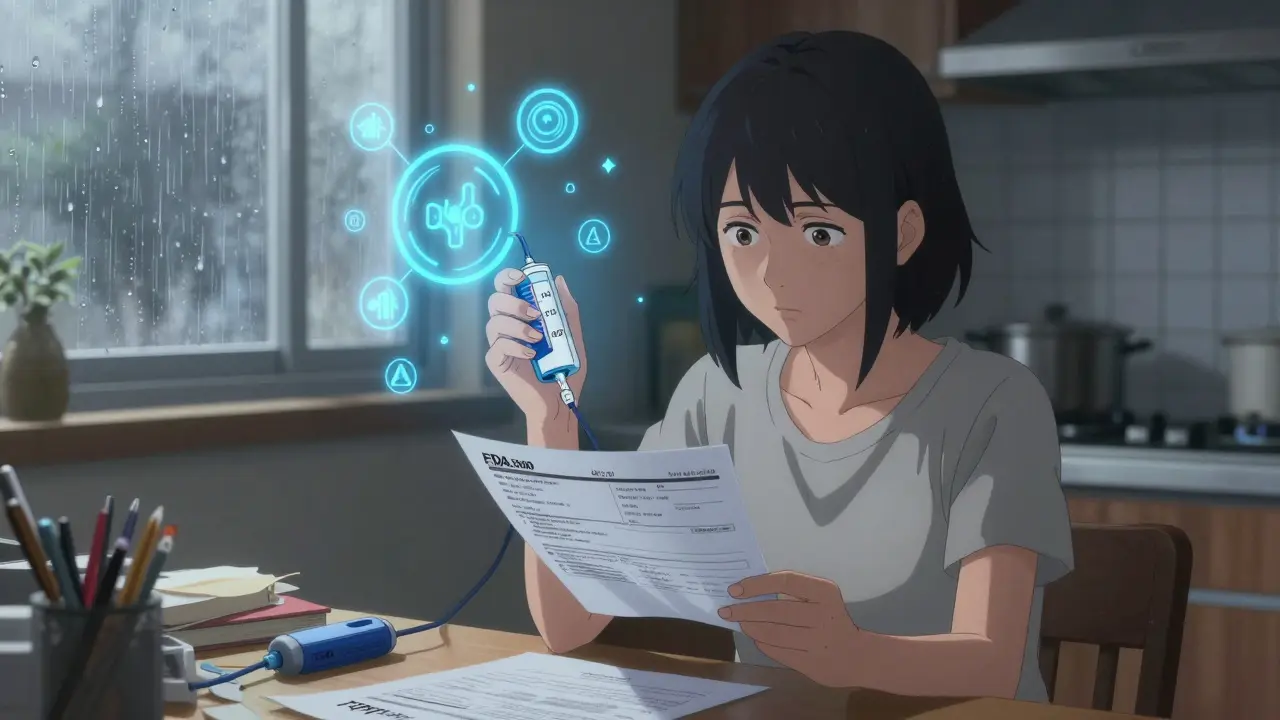
Every year, tens of thousands of people in the U.S. experience side effects, product failures, or dangerous mistakes with medications, medical devices, or even cosmetics. But most never report them. If you’ve had a bad reaction to a drug, noticed a faulty insulin pump, or seen your child’s formula cause an unexpected reaction, you’re not alone-and you can help protect others by reporting it directly to the FDA.
What counts as a reportable issue?
You don’t need to be a doctor or a scientist to know when something’s wrong. The FDA defines three main types of issues you can report:- Adverse reactions: Unexpected or severe side effects from drugs, biologics, or supplements. Think seizures after a new migraine pill, severe rash from a skin cream, or sudden dizziness from a blood pressure med.
- Product quality problems: Damaged packaging, wrong pills in the bottle, expired product, or a device that doesn’t work as intended-like a glucose monitor giving false readings.
- Therapeutic failure or use errors: When a treatment doesn’t work at all, or you used it incorrectly because the instructions were unclear. For example, an inhaler that won’t spray, or a patient misusing an insulin pen because the labeling was confusing.
You don’t need to prove it caused harm. If you believe it’s connected, report it. The FDA doesn’t expect you to be an expert-they’re looking for patterns. One report might seem small. But 50 similar reports? That’s a red flag they can’t ignore.
How to file a report: 4 ways to get it done
The FDA makes it simple to report, even if you’re not tech-savvy. Here are your options:- Online: Safety Reporting Portal (SRP) - This is the fastest way. Go to fda.gov/medwatch and click "Report a Problem." You’ll fill out a form that walks you through each detail. It takes 15 to 20 minutes. The system auto-fills some fields if you’ve used it before. But here’s the catch: since August 2024, the portal has crashed or timed out for many users. If it freezes, try again later or switch to another method.
- Phone: Call 1-800-FDA-1088 - Available Monday through Friday, 8 a.m. to 8 p.m. Eastern Time. You’ll speak to a live person who types your report into the system. This works well if you’re unsure how to describe your symptoms or can’t find product details. They’ll ask for your name and contact info, but you can ask to remain anonymous.
- Mail: Paper Form FDA 3500 - Download the form from the FDA website or request one by calling the number above. Fill it out by hand and mail it to the address on the form. It takes longer-25 to 30 minutes to complete-but it’s reliable. This is what many older adults and people without reliable internet use. The paper form has been updated as of March 2024 to be clearer and more user-friendly.
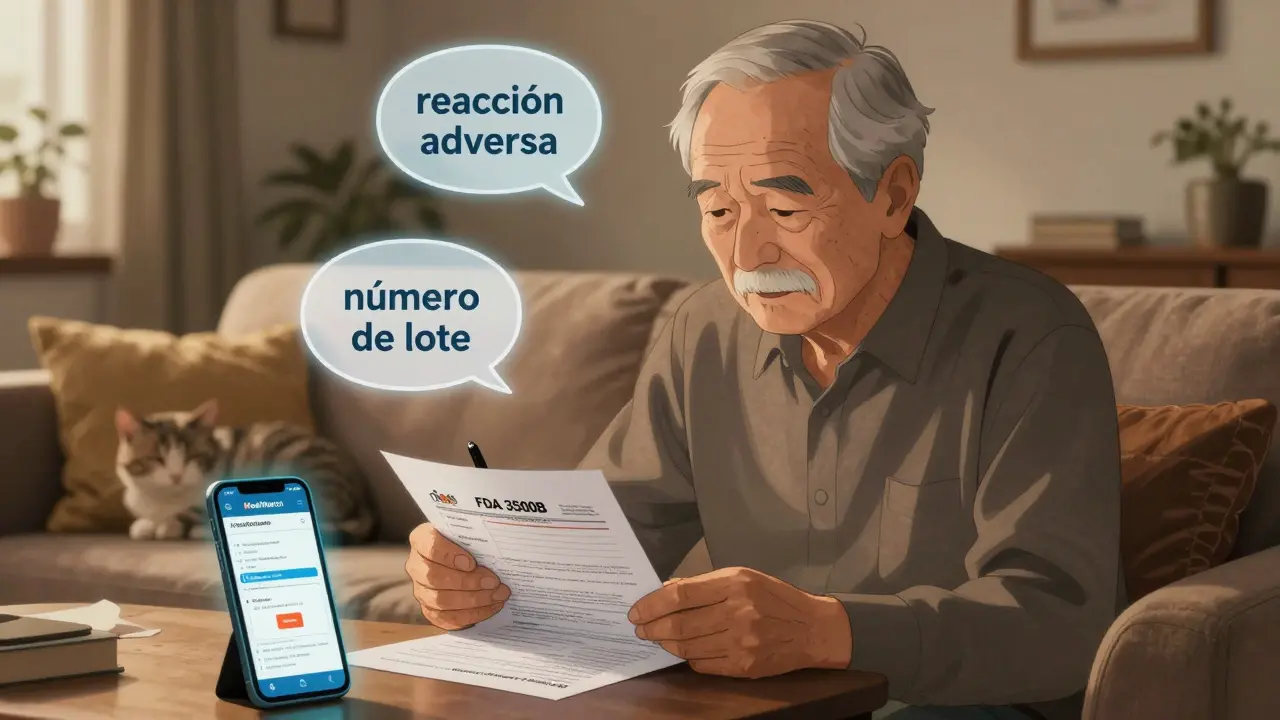
- Spanish-language form: FDA 3500B - If you’re more comfortable in Spanish, use this version. It’s identical to the English form but translated accurately. Many patients with limited English proficiency have found this option lifesaving when reporting reactions to diabetes or heart medications.
Pro tip: If you’re reporting a medical device like a pacemaker, CPAP machine, or infusion pump, try to include the lot number and expiration date. These are printed on the device packaging or the device itself. If you don’t have them, write "unknown"-it’s better than leaving it blank.
What information do you need?
You don’t need a medical degree, but you’ll need a few key details:- Product name: Exact brand and generic name. If you don’t know the generic, just use the brand. Example: "Lipitor" or "atorvastatin." For devices: "Medtronic MiniMed 780G."
- Lot number and expiration date: Found on the box or container. If you threw it out, say so. The FDA knows not everyone keeps packaging.
- Your details: Age, sex, weight (if known). You can skip your name if you’re worried about privacy.
- What happened: Describe symptoms clearly. Don’t say "I felt bad." Say: "Three days after starting the new antidepressant, I had chest tightness, shaking hands, and couldn’t sleep for four nights. I stopped the pill and symptoms faded in 48 hours."
- Other meds or supplements: List everything you were taking-even OTC painkillers or herbal teas. Interactions are a common cause of hidden side effects.
- Outcome: Did you go to the ER? Were you hospitalized? Did it resolve on its own?
Don’t worry if you’re not sure about medical terms. The FDA’s new Patient Reporting Toolkit, released in November 2024, includes a symptom wizard that suggests plain-language descriptions. Type "my arm went numb," and it helps you pick the right medical term like "paresthesia"-but you don’t have to use it. They’ll understand your words.
Why your report matters
Most people think: "It’s just me. The FDA won’t care." But that’s not true. Clinical trials test drugs on 500 to 3,000 people. Real life? Millions use the same product. A side effect that happens to 1 in 10,000 people won’t show up in trials-but it will show up in patient reports.Here’s what patient reports have actually caught:
- In February 2024, 287 patients reported that their insulin pens weren’t working properly after being stored in hot cars. The FDA issued a safety alert within weeks-saving lives.
- A 2023 study found patient reports included 37% more detail about when symptoms started than doctor reports. That timing helps the FDA pinpoint whether a reaction is linked to the product.
- Patient reports were 2.3 times more likely to describe new ways people were misusing devices-like using a nebulizer for a different drug than approved.
Dr. Robert M. Caplan, former FDA deputy director, says patient reports are the only way to catch off-label use or real-world misuse. Doctors don’t always know how people are really using their meds. Patients do.
What the FDA doesn’t tell you
There are real flaws in the system-and you should know them before you report.- Underreporting is huge. A 2024 study in JAMA Internal Medicine found only 5% to 10% of adverse events are ever reported. That means 90% of problems vanish into silence.
- It takes time. Your report might sit in a queue for 15 to 30 days before it’s reviewed. The FDA’s new AI system cut processing time from 22 to 9 business days in late 2024-but it’s still not instant.
- Language limits. Only English and Spanish forms are officially available. If you speak Mandarin, Arabic, or Tagalog, you’re on your own. The FDA plans to add five more languages by 2027, but for now, you’ll need help translating.
- Confidentiality is real-but not well known. By law (21 CFR 10.75), the FDA can’t reveal your name without your permission. But a 2024 University of Michigan survey found 68% of patients didn’t know this. Your identity is protected.

What happens after you file?
You won’t get a call. You won’t get a refund. But your report goes into the FDA Adverse Event Reporting System (FAERS), a database with over 25 million reports since 1969. Analysts look for patterns. If 10 people report the same issue with the same drug lot, the FDA may:- Send a safety alert to doctors and pharmacies
- Require the manufacturer to change the label
- Ask for a recall
- Launch a formal investigation
Some reports lead to changes in minutes. Others take years. But if no one reports, nothing changes.
What to do if the portal crashes
If you’ve tried the online portal and it keeps failing, don’t give up. Here’s what to do:- Try again later. The system is often down during peak hours (9 a.m. to 1 p.m. EST).
- Use the phone line: 1-800-FDA-1088. You’ll speak to a live person.
- Print the paper form, fill it out, and mail it. It’s slower, but it works.
- Ask a pharmacist or nurse to help you file. Many are trained to assist.
One patient in Pittsburgh, who reported a dangerous reaction to a new thyroid drug, said: "I tried the portal five times. It crashed every time. I called the FDA. A woman named Lisa helped me over the phone. She said, ‘We need your story.’ I didn’t know I mattered. Now I do."
What’s next for patient reporting?
The FDA is building a new system called the Next Generation Safety Reporting System (NGSRS). Launching in phases since January 2025, it will:- Auto-detect lot numbers from barcode scans
- Use AI to match your symptoms to known reactions
- Allow reporting through smartphone apps (some device makers like Medtronic already do this)
- Combine all reporting channels into one portal by 2028
By 2027, you’ll be able to report in French, Chinese, Hindi, Arabic, and Vietnamese. By 2026, the goal is to review every report in under 5 business days.
This isn’t just bureaucracy. It’s a safety net. And it only works if people use it.
Can I report a reaction even if I’m not sure it was caused by the product?
Yes. The FDA encourages reports even if you’re unsure. They’re looking for patterns, not proof. If you suspect a connection, report it. They’ll investigate whether there’s a link. Many life-saving alerts started with a patient saying, "I don’t know, but it happened right after I took this."
Will the FDA contact me after I file a report?
Usually not. The FDA doesn’t follow up with individual reporters unless they need more information. You will, however, receive a confirmation email within 5 business days if you provided an email address. If you don’t get one, your report may not have gone through-try another method.
Can I report a problem with a dietary supplement or cosmetic?
Yes. The FDA regulates dietary supplements and cosmetics under the same reporting system as drugs and devices. If you had a severe allergic reaction to a face cream or got sick from a weight-loss pill, report it. These products aren’t tested the same way as prescription drugs, so patient reports are critical.
Do I need to tell my doctor before reporting to the FDA?
No. You don’t need permission or a doctor’s note. Your report is independent. That said, telling your doctor can help them adjust your treatment. But if they’re dismissive or too busy to file, you can-and should-file on your own.
Is patient reporting only for serious reactions?
The FDA prioritizes serious reactions-those that led to hospitalization, disability, birth defects, or death. But they also collect information on less severe issues, especially if they’re unusual or happening to many people. If a common headache medicine suddenly causes nausea in 20 people, that’s worth reporting-even if no one was hospitalized.
If you’ve had a bad experience with a medical product, your voice matters. You’re not just a patient-you’re a watchdog. And right now, the system needs more of them.





Shawn Peck
January 31, 2026 AT 09:57Yo, if you're not reporting bad meds, you're basically letting Big Pharma get away with murder. I had a cousin die from a faulty insulin pump and no one said a word. That's on us. The FDA doesn't read minds. You gotta speak up or shut up.
Niamh Trihy
February 1, 2026 AT 17:06This is one of the most important guides I've seen in years. I work in healthcare in Ireland and we have no equivalent system here-patients just suffer in silence. The fact that the FDA allows anonymous reporting is huge. If anyone needs help filling out the form in Irish or needs translation help, I'm happy to assist.
Diana Dougan
February 2, 2026 AT 07:57Lmao so the FDA finally got around to making a form that doesn't crash? Took 'em long enough. And now they're adding Spanish? Wow. What took 50 years? Meanwhile, my grandma mailed in a report in 2018 and still hasn't heard back. Probably lost in a filing cabinet with a bunch of other 'non-priority' deaths.
Claire Wiltshire
February 4, 2026 AT 07:56Thank you for writing this with such clarity and compassion. I’ve helped several elderly patients file reports over the past year, and many were terrified they’d get in trouble or blamed. The fact that the FDA protects anonymity under 21 CFR 10.75 is critical-and far too few know it. Please share this with your local senior centers, pharmacies, and clinics. This is public health advocacy at its best.
Darren Gormley
February 5, 2026 AT 21:20😂😂😂 so the FDA’s new AI system cut processing time from 22 to 9 days? That’s progress? I’ve seen faster responses from my cable company. Also, why is the system still in 2012 tech? If I can scan my groceries and auto-fill a form on my phone, why can’t the FDA do that? 🤦♂️
Mike Rose
February 6, 2026 AT 20:59bro why is this even a thing? like if your pill makes you feel weird, just stop taking it. why are we making the government do our job? also i think the portal is fine i just dont wanna type
Russ Kelemen
February 8, 2026 AT 20:48There’s a quiet revolution happening here. Every report is a tiny act of rebellion against systems that treat patients as afterthoughts. You’re not just reporting a side effect-you’re reclaiming your voice in a world that told you to be quiet, to trust the doctor, to not make waves. That’s powerful. And it matters. Even if you never hear back. Even if no one else reports. You changed the system just by showing up.
Diksha Srivastava
February 9, 2026 AT 08:41I’m from India and I just reported my daughter’s reaction to a imported baby formula. I didn’t know I could do this. Thank you for showing us the way. We need more people like you speaking up. Let’s make sure no other child suffers silently. 💪❤️
Sheila Garfield
February 10, 2026 AT 11:37I used to think reporting was pointless, but after my mom’s reaction to a blood pressure med, I did it. Two months later, the label changed to warn about dizziness in seniors. I didn’t expect that. It felt good. Not because I got a thank you-but because I didn’t let it slide. Small actions matter more than we think.
Blair Kelly
February 11, 2026 AT 13:12THE FDA’S PORTAL IS A JOKE. I SPENT 3 HOURS TRYING TO SUBMIT A REPORT. IT CRASHED. I CALLED. THEY PUT ME ON HOLD FOR 45 MINUTES. THEN THE LINE DROPPED. I HAD TO MAIL A FORM. I’M NOT A TECH SUPPORT TECHNICIAN. I’M A PATIENT. THIS IS ABUSE.
Rohit Kumar
February 12, 2026 AT 18:39In my culture, we don’t question authority. Doctors are gods. But this post made me realize: if your body is screaming, even gods can be wrong. I reported my father’s reaction to a supplement he bought online. No one in my family understood. But now, I’m teaching others. Sometimes truth is louder than tradition.
Carolyn Whitehead
February 14, 2026 AT 14:41Natasha Plebani
February 15, 2026 AT 19:17The epistemological framework underpinning FAERS is fundamentally flawed-it relies on spontaneous reporting bias, which is inherently non-representative and confounded by recall bias. The signal-to-noise ratio is abysmal, and without probabilistic causality modeling, these reports are merely anecdotal noise masquerading as pharmacovigilance. The AI integration is a band-aid on a hemorrhage.
Kelly Weinhold
February 16, 2026 AT 16:07Guys. I just want to say-you’re not alone. I reported my son’s reaction to a new ADHD med last year. I was scared. I thought no one would care. But then I got an email saying, 'We’ve seen 12 similar reports.' And now the label says 'May cause agitation in children under 10.' That’s because of you. That’s because of me. That’s because we didn’t stay quiet. Keep going. Your voice is the medicine they can’t buy. 💛
Kimberly Reker
February 17, 2026 AT 19:16My sister used to say, 'If you don’t report it, it never happened.' She was right. I didn’t know how to file until I found this post. I did it last week-paper form, mailed it. Took me 20 minutes. I cried after. Not because I was sad. Because I finally felt like I did something real. Thank you for making this easy to understand. You changed my life.