
Sleep Apnea and Heart Risk: How Untreated Breathing Problems Raise Blood Pressure and Trigger Arrhythmias
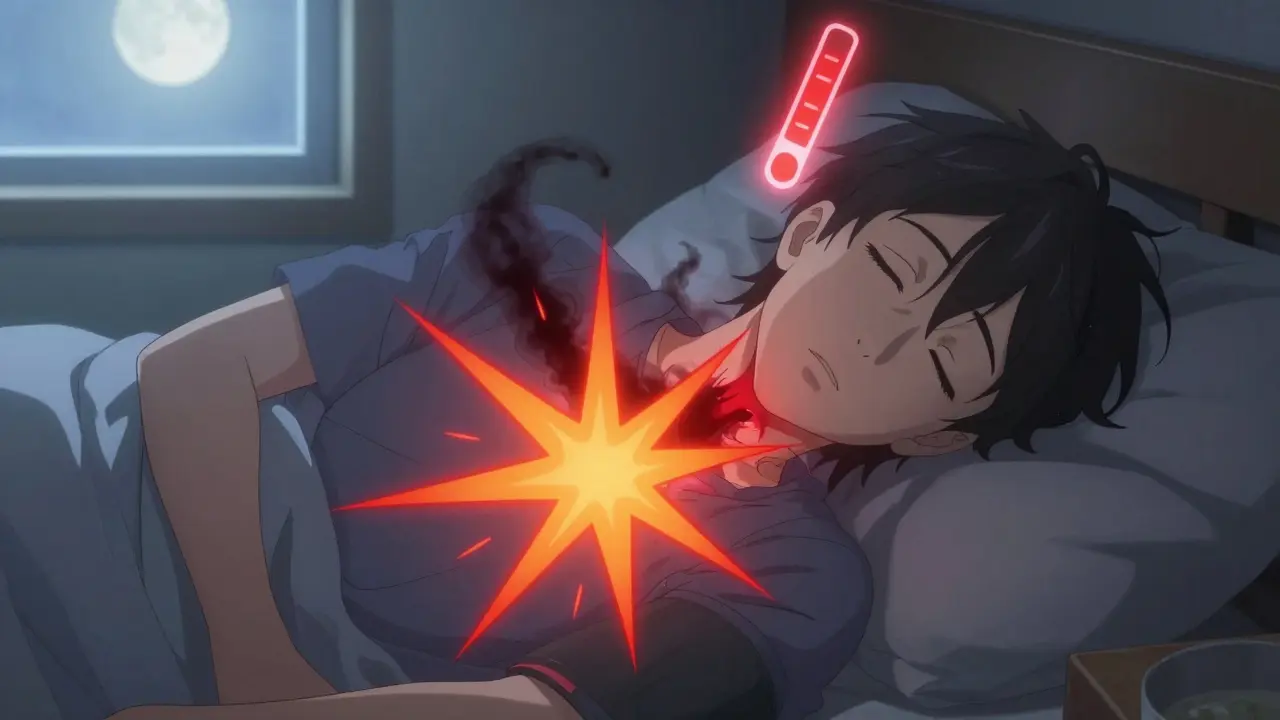
If you snore loudly, wake up gasping for air, or feel exhausted even after a full night’s sleep, you might think it’s just bad sleep. But what if that snoring is quietly damaging your heart? Sleep apnea isn’t just an annoyance-it’s a silent driver of high blood pressure, irregular heartbeats, and even heart failure. And the worst part? Most people don’t know they have it.
What Sleep Apnea Does to Your Heart
Obstructive sleep apnea (OSA) happens when your throat muscles relax too much during sleep, blocking your airway. Each time this happens, your body stops getting enough oxygen. Your brain panics, jolts you awake-just enough to breathe again-then you fall back asleep. This cycle can repeat dozens of times an hour, often without you ever realizing it.
Every time your airway collapses, your oxygen levels drop. Your body responds by flooding your system with stress hormones. Your heart rate spikes. Your blood pressure surges by 20 to 40 mmHg in seconds. These spikes don’t just vanish when you wake up. Over months and years, they wear down your blood vessels and force your heart to work harder than it should.
By morning, your blood pressure doesn’t drop like it should. Instead, it stays elevated. Studies show that 30 to 40% of people with high blood pressure have undiagnosed sleep apnea. And for those with resistant hypertension-blood pressure that won’t budge even with three different medications-up to 80% have OSA.
The Arrhythmia Connection
It’s not just high blood pressure. Sleep apnea is one of the strongest triggers for atrial fibrillation (AFib), the most common type of irregular heartbeat. People with severe sleep apnea are three to five times more likely to develop AFib than those without it.
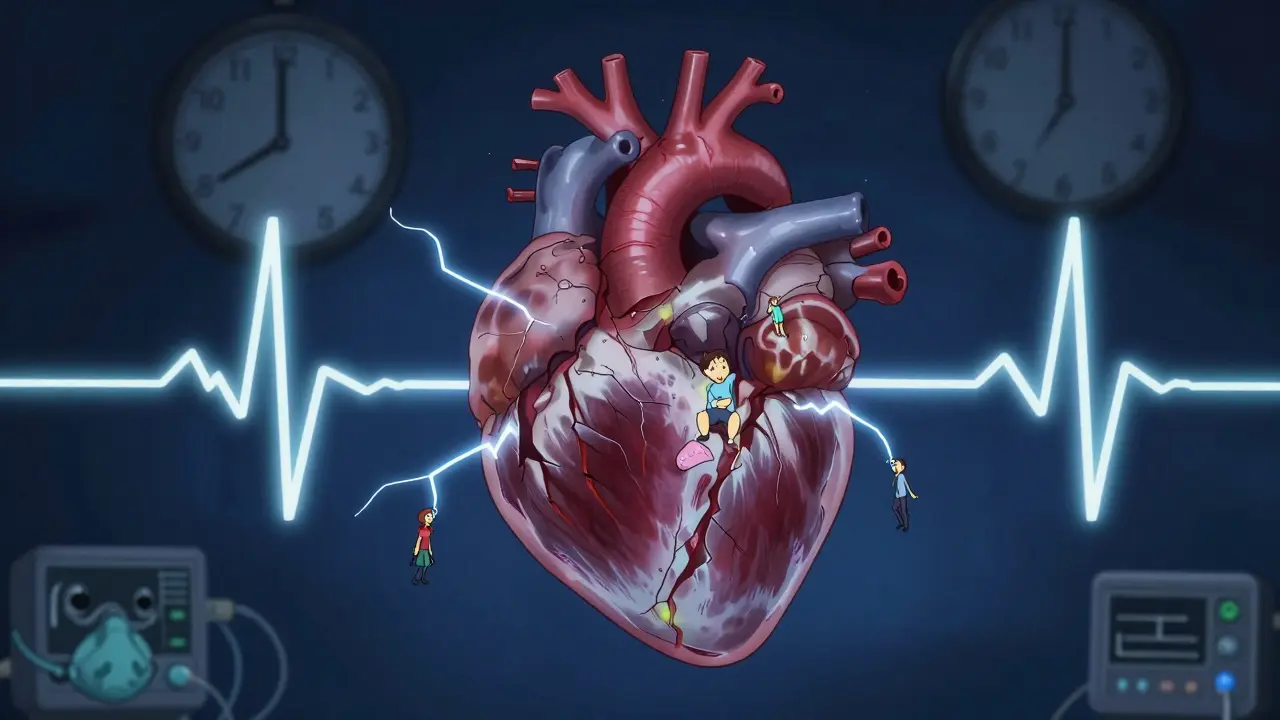
Here’s why: during each apnea episode, your body swings between extreme stress and sudden relief. Your sympathetic nervous system (the one that ramps up your heart rate) goes into overdrive. Then, when you breathe again, your parasympathetic system (the one that slows you down) kicks in hard. This wild rollercoaster of nerve signals messes with your heart’s electrical system. The result? Extra beats, skipped beats, or full-blown AFib episodes.
Research from UT Southwestern Medical Center in 2024 found that OSA patients had significantly more atrial fibrosis-scar tissue in the upper chambers of the heart-than people without sleep apnea. This scar tissue is what makes AFib stick around and come back after treatment. And here’s the kicker: OSA increases your risk of AFib by 140%, while high blood pressure only raises it by about 50%.
Why OSA Is Worse Than You Think
Many assume that if you’re not overweight or don’t snore loudly, you’re safe. But OSA doesn’t care about your body type. It can affect thin people, young adults, and even children. A 2024 study showed that OSA increases heart disease risk even in people under 40-something doctors used to think only happened in older patients.
And it’s not just about the heart. OSA raises your stroke risk by 60% and your chance of developing coronary artery disease by 30%. It also worsens heart failure by 140%. These aren’t small numbers. They’re bigger than the risk from smoking or high cholesterol in some cases.
What makes OSA so dangerous is that it’s not just one problem-it’s a cascade. Low oxygen → stress hormones → high blood pressure → heart strain → electrical chaos → arrhythmias → structural damage. And it happens every night, over and over, for years.
How to Know If You Have It
You don’t need to be loud and snoring to have OSA. Some people just wake up with a dry mouth, headache, or overwhelming fatigue. Others notice they’re forgetful, irritable, or have trouble concentrating during the day. If you’ve been told you stop breathing while you sleep-even if it’s just once or twice a night-that’s a red flag.
Doctors now recommend screening for OSA if you have:
- High blood pressure, especially if it’s hard to control
- Atrial fibrillation or other heart rhythm problems
- Heart failure or a history of stroke
- Unexplained daytime sleepiness
- Waking up gasping or choking
Screening is simple. Most people can start with a home sleep test-a small device you wear overnight that tracks your breathing, oxygen levels, and heart rate. If results are unclear or you have other health issues, an overnight sleep study in a lab gives the full picture.
Treatment Works-But Only If You Use It
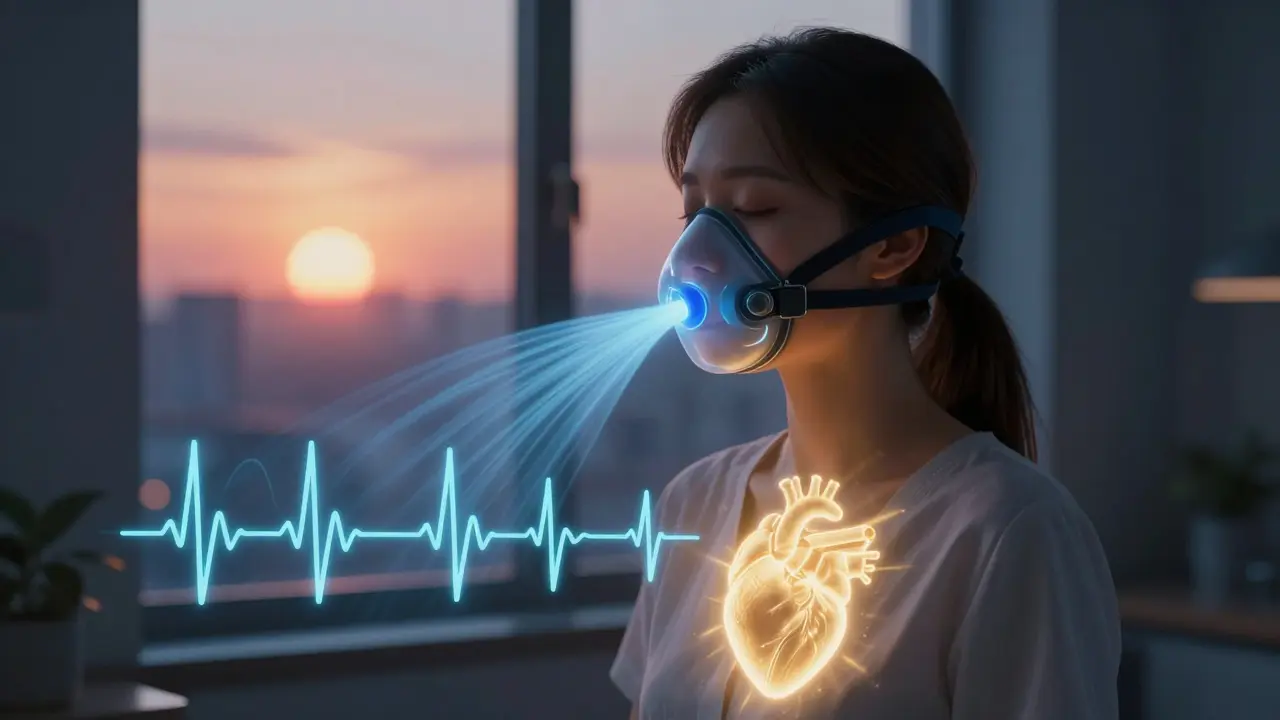
The good news? Treating sleep apnea directly improves your heart health. Continuous Positive Airway Pressure (CPAP) therapy is the gold standard. It uses a gentle stream of air through a mask to keep your airway open while you sleep.
Studies show that after 12 months of consistent CPAP use:
- Systolic blood pressure drops by 5 to 10 mmHg
- Atrial fibrillation recurrence falls by 42%
- Daytime energy improves in 78% of users
- People need fewer blood pressure medications
One user on Reddit shared that after being diagnosed with severe OSA (AHI of 42), his blood pressure dropped from 160/95 to 128/82 in just three months with CPAP. Another person with frequent AFib episodes went from weekly attacks to once every two to three months after six months of therapy.
But here’s the catch: only about 46% of people use CPAP as recommended-4 or more hours a night. The rest quit because the mask feels uncomfortable, the air feels dry, or they just can’t get used to it.
That’s fixable. Modern machines have ramp settings that start with low pressure and slowly increase. Humidifiers prevent dry mouth. There are nasal pillows, full-face masks, and even mini-masks that cover just the nostrils. Most people adapt within 2 to 4 weeks. And after 30 days of consistent use, 85% say their sleep quality improved dramatically.
What If CPAP Doesn’t Work?
Some people can’t tolerate CPAP. That’s where alternatives come in.
Oral appliances-custom-fitted mouthpieces that hold your jaw forward-are effective for mild to moderate OSA. They’re less invasive and easier to travel with.
For severe cases, a newer option is Inspire Therapy: a small implant that stimulates the nerve controlling your tongue and upper airway muscles. It turns on automatically when you fall asleep. In clinical trials, it reduced apnea events by 79% and improved daytime sleepiness by 68%.
Weight loss helps too-especially for those who are overweight. Even a 10% drop in body weight can cut apnea severity in half.
The Bigger Picture
The global market for sleep apnea devices is expected to hit $14.7 billion by 2028. Why? Because doctors now see it as a heart disease risk factor-not just a sleep problem. The American Heart Association now classifies OSA as a Class I risk factor for atrial fibrillation, the same level as obesity and high blood pressure.
Yet, only 20 to 25% of at-risk patients are even screened. That means hundreds of thousands of people with undiagnosed OSA are walking around with a ticking time bomb in their chest.
If you have high blood pressure, AFib, or unexplained fatigue, ask your doctor about sleep apnea. Don’t wait for a heart attack or stroke to happen. The damage is happening now-while you sleep.
Treatment isn’t perfect. It takes effort. But it’s one of the few heart interventions that actually reverses damage instead of just slowing it down. Your heart doesn’t just need medication-it needs rest. And if you’re not breathing well at night, you’re not giving it that.
Can sleep apnea cause high blood pressure even if I’m not overweight?
Yes. While obesity is a common risk factor, sleep apnea can occur in people of any body type. The mechanical obstruction of the airway during sleep triggers stress responses that raise blood pressure independently of weight. Studies show that up to 40% of people with OSA are not overweight, yet still develop persistent hypertension.
Does treating sleep apnea lower the risk of heart attack?
Yes. Consistent use of CPAP therapy reduces the risk of heart attack and other cardiovascular events by up to 50% in people with severe sleep apnea. This is because treatment lowers nighttime blood pressure spikes, reduces inflammation, and improves oxygen levels-each of which directly protects the heart muscle and arteries.
Can I stop my blood pressure meds if I start CPAP?
Some people do reduce or even stop certain blood pressure medications after consistent CPAP use, but never do this without your doctor’s guidance. CPAP helps lower blood pressure, but it doesn’t replace all medications. Your doctor will monitor your pressure over several months and adjust meds based on your results.
Is sleep apnea linked to sudden cardiac death?
Yes. People with untreated severe sleep apnea have a significantly higher risk of sudden cardiac death, especially between midnight and 6 a.m.-the time when apnea events are most frequent. The combination of low oxygen, high blood pressure, and heart rhythm disturbances creates the perfect storm for fatal arrhythmias.
How long does it take for CPAP to improve heart health?
You may notice better sleep and less fatigue within days. But heart-related benefits like lower blood pressure and reduced arrhythmias typically take 3 to 6 months of consistent use. The most significant improvements in heart structure and function show up after 12 months of using CPAP 4+ hours per night.
Are home sleep tests reliable for diagnosing sleep apnea?
Yes, for most people. Home sleep tests correctly diagnose obstructive sleep apnea in about 80% of cases, especially when symptoms are clear. They measure breathing patterns, oxygen levels, and heart rate. If you have other conditions like COPD, heart failure, or neurological disorders, your doctor may recommend an in-lab sleep study for a more detailed analysis.
What to Do Next
If you’re over 40 and have high blood pressure, or under 40 and have unexplained fatigue or snoring, talk to your doctor. Ask for a sleep apnea screening. Don’t wait for a heart problem to happen. The tools to fix this exist. The science is clear. And the clock is ticking-every night you go untreated, your heart is paying the price.



kenneth pillet
January 17, 2026 AT 13:36been using cpap for 8 months now. my bp dropped from 158/96 to 124/80. no more midday crashes. i used to think it was just aging. turns out i was suffocating every night.
just got my first full night of real sleep in 12 years. weird feeling.
Kristin Dailey
January 19, 2026 AT 11:54if you’re not american, your doctor won’t even test you. insurance won’t cover it. that’s why this problem stays hidden.
Zoe Brooks
January 20, 2026 AT 07:56my mom had this for years and didn’t know. she thought she was just tired from working two jobs. after the diagnosis, her mood improved, her memory came back, and she stopped falling asleep in the car.
cpap saved her life. don’t ignore the snoring. it’s not just noise-it’s your heart screaming.
Pat Dean
January 21, 2026 AT 15:24you think this is about sleep? it’s about control. the medical industry profits from you being tired. they sell you a mask so you don’t ask why your body’s failing. wake up. the real problem is your lifestyle. not your airway.
Jay Clarke
January 22, 2026 AT 19:28people think cpap is the answer. it’s not. it’s a bandage. the real fix is sleeping on your side, avoiding dairy, and quitting the late-night snacks. but nobody wants to hear that because it means taking responsibility.
the mask is easier than changing your life.
Stacey Marsengill
January 23, 2026 AT 08:39they told me i had 'mild' apnea. then i had a stroke at 39. now i’m on blood thinners and a cpap machine. they don’t warn you. they wait until it’s too late. this isn’t medicine-it’s a waiting game.
Robert Cassidy
January 24, 2026 AT 13:35the government and big pharma are pushing cpap because it’s profitable. the real cure? sleep on your stomach. breathe through your nose. stop eating processed food. but they don’t want you to know that. they want you dependent on a machine.
Ryan Otto
January 25, 2026 AT 14:06the data presented here is statistically significant but methodologically flawed. the studies cited rely on self-reported adherence to cpap, which is notoriously unreliable. the placebo effect in sleep interventions is profound, and the longitudinal data on cardiac reversal is anecdotal at best. one must question whether the observed improvements are causative or merely correlational, especially given the absence of double-blind, placebo-controlled trials in this domain.
the american heart association’s classification is based on observational cohort studies with significant confounding variables-obesity, age, metabolic syndrome-which are rarely adequately controlled for. one cannot equate association with causation without rigorous experimental design.
furthermore, the economic projections cited-$14.7 billion by 2028-are not evidence of medical efficacy but of market expansion. one must ask: who benefits from pathologizing snoring? the device manufacturers, the sleep clinics, the insurance companies. not the patient.
Andrew Qu
January 27, 2026 AT 08:41if you’re reading this and you’re scared, you’re not alone. i was too. i hated the mask, hated the noise, hated feeling like a robot.
but here’s what helped: start with 1 hour a night. just one. don’t aim for 8. aim for 1. get used to the feel.
then 2. then 3. after 2 weeks, you won’t notice it’s there. your body will thank you before your mind does.
and if your mask chafes? try nasal pillows. if it’s dry? get a humidifier. if it’s loud? newer machines are whisper-quiet.
you don’t need to be perfect. you just need to show up. your heart doesn’t need a hero. it needs you.
Tyler Myers
January 27, 2026 AT 21:27they say cpap works but they don’t tell you the machines are hacked. the data they collect? sold to insurers. your sleep patterns determine your premiums. you’re not getting treatment-you’re being monitored. they’re building a profile on you while you sleep.
Jodi Harding
January 29, 2026 AT 05:53my husband stopped breathing for 40 seconds last night. i didn’t know what to do. i shook him. he woke up gasping. i cried. this isn’t just ‘bad sleep.’ it’s terror. every night. and no one talks about it.
Dayanara Villafuerte
January 30, 2026 AT 09:02just got my home sleep test results. AHI 38. i’m 32, 140 lbs, runs 5k weekly. no obesity. no snoring. just exhaustion.
turns out i’m one of those ‘invisible’ cases.
they don’t test thin people. they assume you’re fine.
so now i’m the poster child for ‘sleep apnea doesn’t care how you look.’ 🤡💤
Aysha Siera
January 30, 2026 AT 11:10they say cpap helps but what if the machine is poisoning you? i heard the plastic emits microplastics when heated. your lungs are breathing plastic every night. they don’t tell you that.
Wendy Claughton
January 30, 2026 AT 11:35i used to think sleep apnea was just for older guys who snore like chainsaws. then i saw my sister-28, yoga instructor, vegan, never smoked-and she had a 45 AHI. she cried when she found out. i cried too.
it doesn’t care how healthy you are. it doesn’t care how young you are. it just waits.
please, if you’re tired all the time-ask. just ask. it’s not weak. it’s brave.
Eric Gebeke
January 31, 2026 AT 13:12you think you’re being helped? you’re being conditioned. they give you a mask, then they give you anxiety about forgetting to use it. then they give you guilt if you miss a night. then they track your compliance like a prisoner. this isn’t medicine. it’s behavioral control disguised as care.