Ankylosing Spondylitis Guide: Managing Spine Inflammation and Mobility
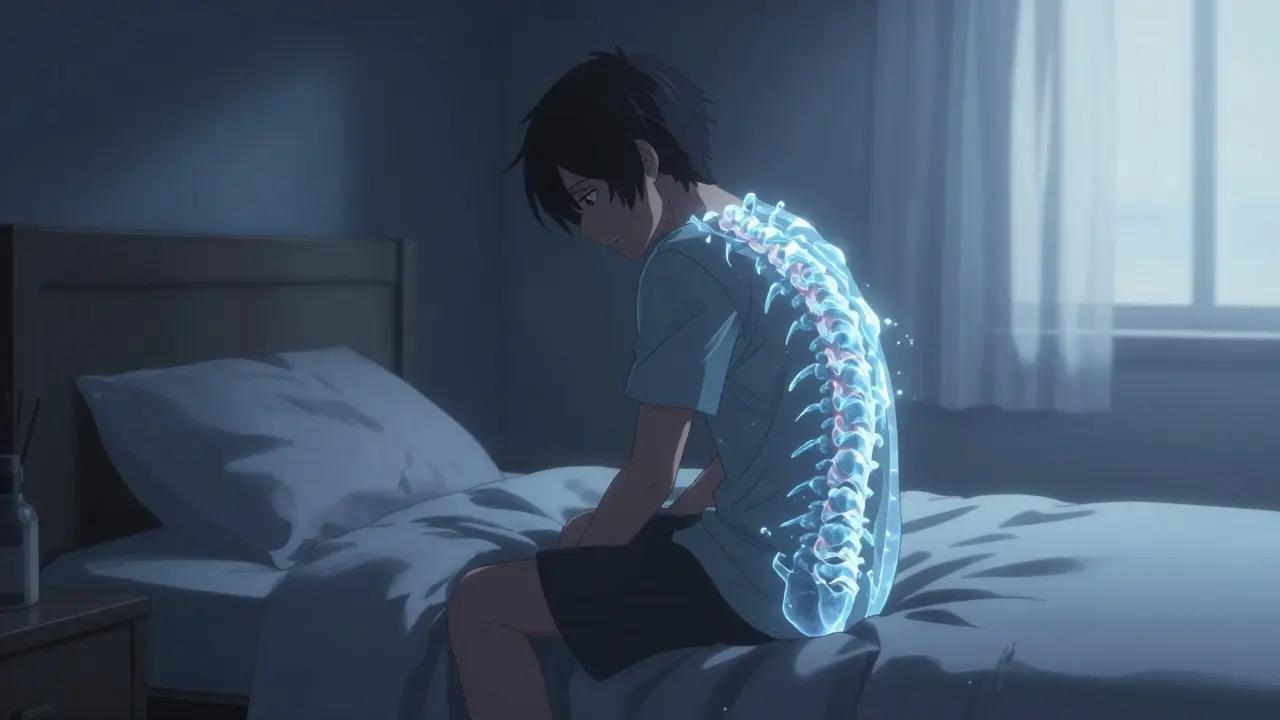
Imagine waking up at 4 AM with a back that feels like it's been frozen in a block of ice. You try to stretch, but your spine resists. For people living with Ankylosing Spondylitis is a chronic inflammatory disease that primarily targets the spine and sacroiliac joints, often leading to structural changes and spinal fusion. Also known as AS or Bechterew's disease, it doesn't just cause pain; it threatens the very way you move through the world.
The real danger here isn't just the discomfort-it's the risk of Ankylosing Spondylitis progressing to a "bamboo spine," where the vertebrae fuse together, leaving the back rigid. However, the game has changed. With the right combination of medication and aggressive mobility strategies, most people can maintain their independence and keep their spines flexible for decades. The goal is to stop the inflammation before it turns into bone.
Quick Summary of Key Takeaways
- AS is an inflammatory condition often linked to the HLA-B27 gene.
- Inflammatory back pain improves with movement but gets worse with rest.
- Early use of NSAIDs and biologics can significantly slow down spinal fusion.
- Daily structured physical therapy is as vital as medication for preserving mobility.
- MRI is the gold standard for early detection before X-ray changes appear.
Understanding the Inflammatory Process
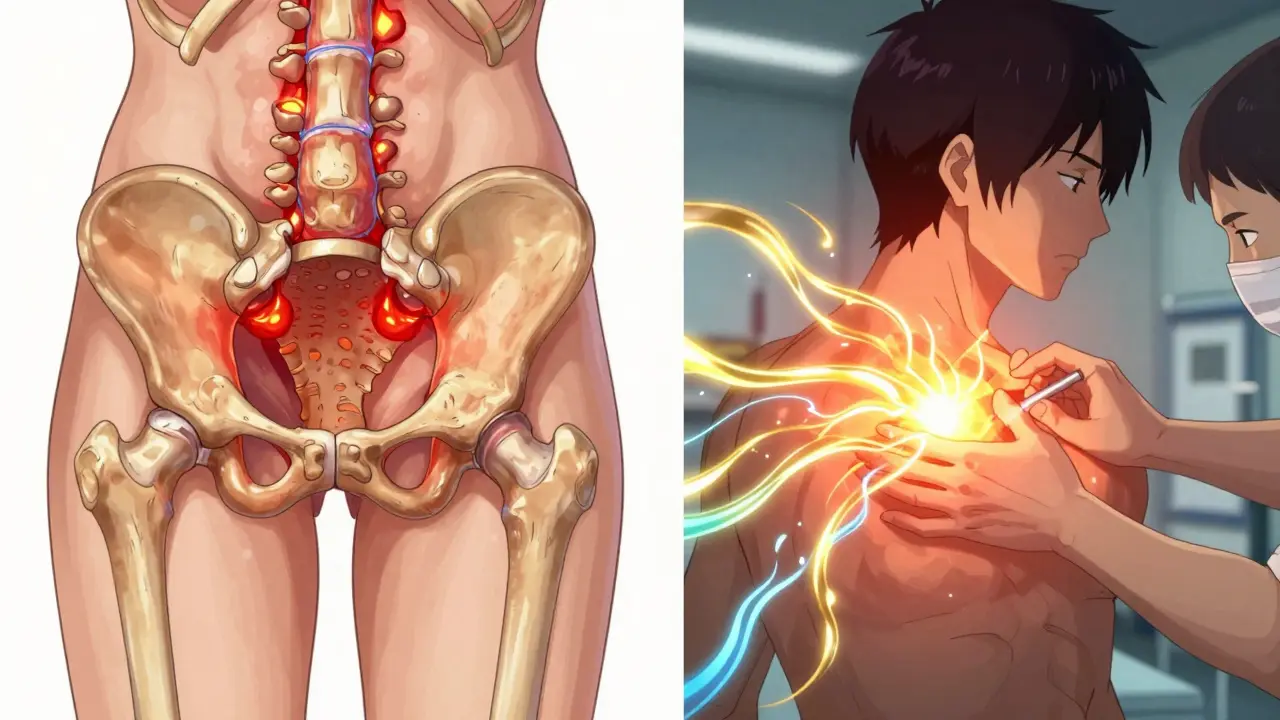
To fix the problem, you have to understand where it's happening. AS doesn't just attack the joints; it targets the entheses, which are the specific spots where your ligaments and tendons attach to the bone. When these areas become inflamed, your body tries to heal them by creating new bone. This is how syndesmophytes-bony growths between vertebrae-form. Over time, these bridges of bone lock the spine in place.
This process usually starts in the sacroiliac joints (where your spine meets your pelvis), causing what doctors call sacroiliitis. This is why early back pain in AS feels different from a pulled muscle. While a typical strain feels better when you lie down, AS pain is a nightmare during sleep and improves once you start moving around. If you're under 45 and waking up with stiffness that lasts over 30 minutes, it's a red flag that requires a specialist's eye.
The Diagnostic Puzzle: AS vs. Mechanical Pain
Getting a diagnosis for AS can be frustratingly slow. Many patients spend years visiting general practitioners who mistake their symptoms for simple mechanical back pain or even depression. The key difference lies in the behavior of the pain. Mechanical pain is usually "positional"-it hurts when you move a certain way. Inflammatory pain is "systemic"-it's a constant throb that eases with exercise.
| Feature | Inflammatory (AS) | Mechanical (Strain/Disc) |
|---|---|---|
| Onset | Insidious (gradual) | Acute (sudden) |
| Effect of Rest | Makes pain worse | Relieves pain |
| Effect of Exercise | Improves stiffness | Often increases pain |
| Morning Stiffness | Lasts > 30 minutes | Short-lived/Mild |
| Age of Onset | Typically 17-45 years | Any age |
Because X-rays often don't show damage until 10 years after symptoms start, MRI has become the preferred tool. It can spot inflammation in the sacroiliac joints long before bone changes are visible, which is the window where treatment is most effective.
Medication Strategies to Stop Progression
The first line of defense is almost always NSAIDs (non-steroidal anti-inflammatory drugs). When used early and consistently, they don't just hide the pain; they can actually reduce the speed of radiographic progression by up to 50%. However, for many, these aren't enough to stop the disease in its tracks.
When NSAIDs fail, rheumatologists turn to TNF inhibitors. These are biologics that block a specific protein called Tumor Necrosis Factor, which drives the inflammation. Clinical data shows that about 40-60% of patients see a massive improvement in symptoms within 12 weeks of starting this therapy. More recently, JAK inhibitors (like upadacitinib) and IL-17 inhibitors have entered the scene, offering new hope for those who don't respond to TNF blockers.
It's worth noting that AS isn't just about the back. About 30% of patients deal with acute anterior uveitis (eye inflammation), and up to 50% might have Inflammatory Bowel Disease (IBD). This makes a coordinated care plan between a rheumatologist and a gastroenterologist essential for total health.
Mastering Mobility: The Non-Negotiable Strategy
Medication handles the chemistry, but physical therapy handles the geometry. You cannot "medicate away" the stiffness; you have to move it out. The gold standard for AS is a daily 30-45 minute routine that focuses on spinal extension and deep breathing. The goal is to keep the chest expanding and the spine from curving forward (kyphosis).
If you're starting out, the "morning hurdle" is the hardest part. To get around this, try these steps:
- In-bed warming: Perform gentle pelvic tilts and knee-to-chest stretches while still under the covers.
- Heat therapy: Use a heating pad for 20 minutes before your main exercise routine to "thaw" the joints.
- Low-impact cardio: Swimming is a favorite among the AS community because it provides buoyancy that reduces joint stress while allowing a full range of motion.
- Posture checks: Use a firm mattress and lumbar support cushions at work to prevent the spine from settling into a permanent slump.
Consistent movement can lead to a 25-30% improvement in spinal mobility scores over six months. The key is adherence. Many find that using digital tracking apps or joining support groups helps them stick to the routine even during fatigue-heavy flares.

Living with the Long-Term Impact
Dealing with AS is a marathon, not a sprint. Fatigue is one of the most underestimated symptoms, with over 70% of patients reporting it as a major hurdle in their work productivity. It's not just "being tired"; it's a deep, systemic exhaustion caused by the body constantly fighting inflammation.
Workplace accommodations are often necessary. Using a standing desk or taking five-minute movement breaks every hour can prevent the stiffness that accumulates during a typical office day. While structural damage is irreversible once it happens, the current standard of care allows 75% of patients to maintain functional independence 20 years after diagnosis-a massive leap from the outcomes seen just a few decades ago.
Can Ankylosing Spondylitis be completely cured?
There is currently no cure for AS, as it is a lifelong autoimmune condition. However, it is highly manageable. With a combination of biologic medications to stop inflammation and daily physical therapy to maintain flexibility, most people can live active, productive lives and prevent the complete fusion of the spine.
Does having the HLA-B27 gene mean I will get AS?
Not necessarily. While about 90% of Caucasian AS patients have the HLA-B27 gene, only a small percentage of the general population with the gene ever develop the disease. The gene increases your susceptibility, but other environmental and genetic factors must also be present to trigger the condition.
What is the "Bamboo Spine" and can it be prevented?
"Bamboo spine" is the medical term for the total fusion of the spinal vertebrae, making the spine look like a solid piece of bamboo on an X-ray. It can be prevented or significantly delayed through early intervention with NSAIDs and TNF inhibitors, along with consistent spinal extension exercises that prevent the spine from fusing in a hunched position.
Why does exercise help AS pain but not normal back pain?
AS pain is inflammatory. Inflammation causes a buildup of fluid and stiffness in the joints that "loosens up" as the body warms up and blood flow increases during activity. Mechanical pain, like a herniated disc, is caused by physical pressure on nerves, which usually gets worse as you put more stress on the area through movement.
Are biologics safe for long-term use?
Biologics like TNF inhibitors are generally safe, but they do suppress the immune system, which can increase the risk of certain infections. This is why doctors require screening for tuberculosis and other latent infections before starting treatment. The trade-off is usually worth it, as these drugs prevent permanent disability and spinal fusion.
Next Steps for Management
If you suspect you have AS, your first step is to request a referral to a rheumatologist. Don't just ask for an X-ray; ask specifically if an MRI is appropriate, as it is far more sensitive for early-stage sacroiliitis. Once diagnosed, build a "mobility toolkit" that includes a firm mattress, a heating pad, and a scheduled time for daily stretching.
For those already in treatment, consider tracking your "stiffness duration" each morning. If your morning stiffness is creeping back up toward an hour, it may be a sign that your current medication dose needs adjusting or that your exercise intensity needs to increase. Stay proactive-the goal is to keep moving, regardless of the pace.