
How to Store and Label Breast Milk During Temporary Medication Courses
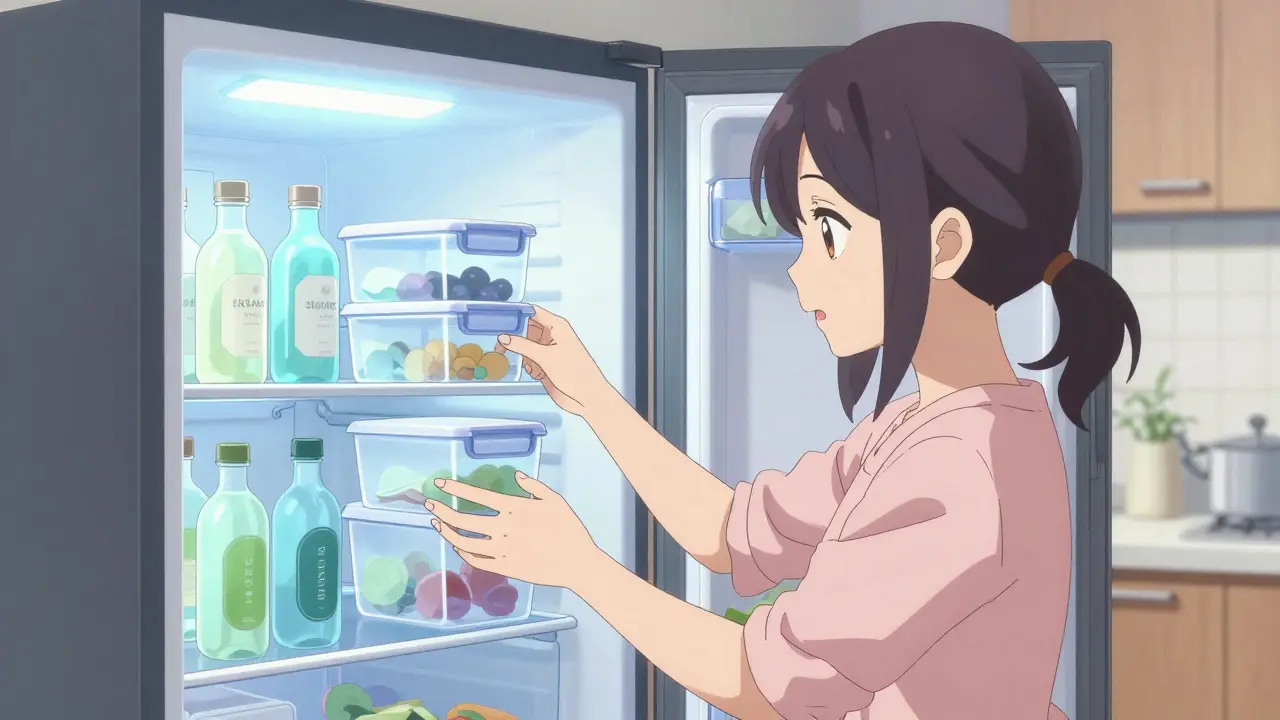
Don't Toss That Bottle Just Yet
You are taking a prescribed antibiotic for an ear infection, and suddenly your doctor tells you to be careful with breastfeeding. Your first instinct might be to panic, pump, and immediately discard every ounce of milk you express until the course is finished. We have seen countless mothers do exactly that out of fear. However, modern clinical data confirms that fewer than 2% of medications actually require stopping breastfeeding entirely. For the vast majority of short-term prescriptions, you don't need to throw away your hard-won supply. You just need a smarter system for storing and labeling.
Think of your freezer not just as a storage unit, but as a timeline management tool. By treating your milk supply as batches of data-some taken before the medication, some during, and some after-you can keep feeding your baby safely without the heartbreak of wasting gallons of nutrition. In this guide, we will walk through exactly how to modify your storage routine when a prescription lands on your counter.
The Core Rules of Standard Storage
Before we layer medication specifics on top, let's lock in the baseline standards for handling human milk. These rules are non-negotiable regardless of your pill schedule. The Centers for Disease Control and Prevention (CDC) and the Academy of Breastfeeding Medicine (ABM) maintain consistent guidelines that serve as our foundation. Understanding the "Rule of 4s" is essential before adding complexity.
- Room Temperature: Up to 4 hours max (if below 77°F/25°C).
- Refrigerator: Up to 4 days (ideally in the back, not the door).
- Freezer (inside fridge): About 2 weeks.
- Deep Freeze (standalone): 6 to 12 months for best quality.
- Cooler Bag: Up to 24 hours with frozen ice packs.
These durations apply to healthy full-term infants. Premature babies or those with compromised immune systems often require stricter timelines, usually limiting refrigeration to just 24 hours. When you introduce medication into this equation, you aren't changing these physical chemistry rules; you are changing the contents rule. The cold slows bacterial growth, but it does not stop pharmaceutical compounds from staying in the fluid. That is why labeling becomes the most critical safety step.
What Goes on the Label?
If standard milk storage requires a date and volume, medication-affected storage demands a pharmacological history. You must know exactly what was in your system at the moment of expression. This turns a simple sticky note into a critical medical record. Without precise labeling, a caregiver down the line (a babysitter, partner, or child care provider) might unknowingly feed your baby milk containing peak drug concentrations.
Here is the mandatory checklist for your labels:
- Date and Time of Expression: Exact hour matters. Drugs have half-lives; knowing if this was pumped one hour after your dose or four hours later changes its usability.
- Medication Name: Write the active ingredient, not just the brand name. Generic names (like Ibuprofen vs Advil) prevent confusion if you switch pharmacies.
- Dosage and Frequency: Did you take 500mg once or twice? Higher doses linger longer.
- "Safe Window" Indicator: Mark whether this was expressed before the first dose, during the maintenance phase, or after the last dose.
The Mayo Clinic recommends using waterproof ink and pre-made containers if possible. Sticky notes peel off in the freezer humidity, and condensation ruins standard paper tape. We advise using permanent markers on the lid or durable freezer tape. Some communities now use digital QR code stickers linked to a medication log, which helps when multiple people are managing your stash.
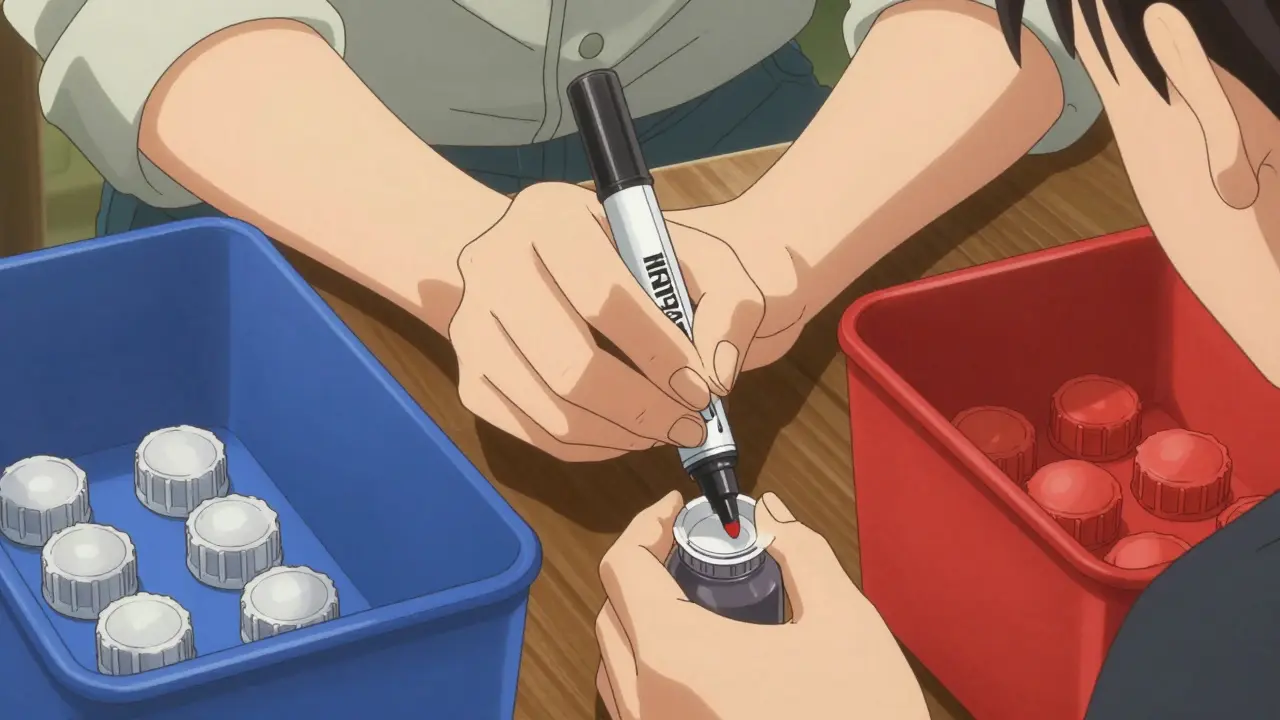
Separating "Clean" and "Medicated" Batches
This is the logistical pivot point where most mistakes happen. Many mothers assume all milk in the fridge is uniform. When you are on a temporary course, such as a 5-day round of antibiotics, your milk essentially cycles through three phases:
| Phase | Milk Status | Recommended Action |
|---|---|---|
| Pre-Dose (Stockpile) | No medication residue | Store as primary "safe" inventory. Keep separate. |
| Peak Levels (During Dosing) | Contains drug concentration | Isolate these containers. Check with LactMed/Pharmacist for safety window. |
| Post-Course (Clearance) | Residue dissipating | Mark as "Clearing". Often usable after 5-7 half-lives. |
The American Academy of Pediatrics emphasizes that separating these visually prevents accidental usage. Use a different colored bin in the freezer, or store the "medicated" bottles on a specific shelf that is easy to spot. For example, if you are taking Amoxicillin, which is generally considered low risk (L1/L2 level on Dr. Thomas Hale's safety scale), you might not need to discard it at all. However, if you are on something requiring a "pump and dump," that milk must be distinctly marked and discarded after 24 hours post-dose to ensure clearance.
Why separate? Because sometimes, despite the data, you simply want the peace of mind of having a known-safe stockpile for the day you get home from the hospital or return to work. Having five 4-ounce bottles of pre-medication milk allows you to nurse through a feverish night without worry.
Navigating the "Pump and Dump" Myth
Pumping and dumping sounds drastic, but the truth is nuanced. In most cases, you do not need to do this unless explicitly told by your physician or pharmacist. Most drugs excrete into milk at such low percentages (less than 1% of maternal dose) that they pose negligible risk to the infant. The LactMed database (part of NIH resources) is the gold standard here.
However, there are exceptions. Short-acting sedatives, specific chemotherapy agents, or certain psychiatric meds may warrant discarding milk for a set window. When a medication falls into the "discard" category, you must adhere to the half-life rule. Generally, it takes five half-lives for a drug to clear your system completely. If a drug stays in your blood for 4 hours, wait roughly 20 hours after the last dose before considering new milk "clean." Do not guess this number. Ask your doctor: "How many hours after my last dose can I resume storing milk?" Write that number on your calendar so you know when to start refilling your clean stash.

Handling Travel and Logistics
Taking medication doesn't just happen at home. Maybe you are traveling for treatment, going to a specialist appointment, or working shifts. Transporting milk requires extra vigilance. An insulated cooler bag with gel packs can keep milk cold for up to 24 hours, according to CDC standards. This is vital if you have expressed "medicated" milk that needs to be frozen immediately upon returning home to preserve separation.
Do not mix travel milk directly into your freezer main batch until you have verified its status. If you pumped at a clinic while on Day 2 of antibiotics, that container belongs in a quarantine bag until you label it correctly. Mixing it blindly with your Day 0 pre-med milk defeats the purpose of the system. Always thaw the contents of the travel bag and check the temp before adding anything to your main supply chain. Never leave a cooler car-sit in the sun, even for ten minutes. The temperature spike increases bacterial risks which, combined with unfamiliar medication residue, creates unnecessary health variables.
Deciding When to Discard Milk
Knowing when to toss milk is just as important as knowing when to save it. Smell isn't enough. While rancid milk smells sour, medication taste can be neutral. If your label clearly states the medicine was active during pumping, follow the clearance window. Once that window passes, the milk is chemically "safe," but nutritionally it may be degraded if it has been stored too long. Don't freeze milk that has already spent 4 days in the fridge hoping to make it last longer; bacteria counts rise over time.
If you are unsure about the label, assume the worst. If the bottle is ambiguous-say, the sticker faded and you don't remember if you took your pills that day-do not feed it to your baby. The cost of a single bottle of formula or donor milk is far less than the potential harm of exposure to an unvetted substance. Trust your intuition and the protocol over a single bottle.
Frequently Asked Questions
Can I mix medicated milk with non-medicated milk?
No. You should never combine milk from different times or medication statuses. If you pour a "medicated" 2-ounce bottle into a larger "clean" 4-ounce bottle, you contaminate the entire supply with the drug, wasting all of it.
Does freezing medication-infused milk help break it down?
Freezing preserves the composition; it does not degrade the pharmaceutical compounds inside the milk. If a drug is present at peak concentration, freezing locks that concentration in place until thawed.
Who should I call to verify if a medicine is safe?
Consult an International Board Certified Lactation Consultant (IBCLC) or check the LactMed database. They can interpret the half-life and safety scores better than general practitioners.
What if my baby refuses the milk after I finish the meds?
Sometimes the smell of the medication alters the milk's taste slightly. Try offering smaller amounts or mixing a little bit of the "medicated" (but safe) milk with fresh milk to test acceptance.
Is it okay to give the "unsafe" milk to someone else?
No. Never donate or share milk that you labeled with medication warnings. Other families may have infants with different sensitivities or health conditions.




Molly O'Donnell
April 1, 2026 AT 04:29You really need to stop panicking over antibiotics. Most drugs don't transfer that much anyway. Just label it properly or you'll lose your stash.
Rod Farren
April 2, 2026 AT 17:23The pharmacokinetics here are actually fascinating regarding half-lives. Bioavailability drops significantly when freezing occurs but concentration stays locked. You should utilize the Rule of 4s consistently for optimal storage dynamics.
Jenny Gardner
April 2, 2026 AT 22:59This is SO important!!! Seriously though. We cannot forget the date AND time on the sticker. If you mess that up its dangerous!!!
Owen Barnes
April 4, 2026 AT 08:18I thnk this info helps alot for new mums who worry too much u shouldnt stress
Callie Bartley
April 5, 2026 AT 13:08Most people just ignore labels anyway so why bother trying.
Christopher Beeson
April 5, 2026 AT 21:25People think they know medicine but they don't understand the systemic implications.
Eleanor Black
April 6, 2026 AT 12:38I read through the entire guide on storage protocols today. It is quite detailed indeed. Many mothers do not realize the risks involved with medication transfer. We must prioritize safety above everything else for the infant. The labeling section provides crucial clarity on this matter. Without accurate dates we cannot track drug half-lives properly. Freezing preserves quality but does not remove compounds. That is a vital distinction to keep in mind always. Please consult your lactation consultant before discarding supply. Wasting nutrition is heartbreaking for many families right now. However safety is the primary directive we must follow strictly. The CDC guidelines serve as our baseline foundation perfectly. Adhering to the four hour rule prevents bacterial contamination issues. Separating batches visually reduces the risk of accidental consumption later. I hope everyone utilizes these resources effectively going forward :)
Julian Soro
April 8, 2026 AT 03:43Great points on the LactMed database. I always check that first before stressing too much. It saves so much time and worry.
Cullen Zelenka
April 8, 2026 AT 17:13Storage tricks help a lot more than people expect. Keep that fridge organized. You will thank yourself later.
Sharon Munger
April 10, 2026 AT 07:45i totally agree with the separation idea keeps things safe for the baby and makes sorting easier later
Cara Duncan
April 11, 2026 AT 10:17Yes keeping them separated is key 🙌 don't want any confusion 🍼👶
Owen Barnes
April 13, 2026 AT 08:45Dont toss ur milk without checking lctmed first it costs too much to replace innat way